Estimated reading time: 15 minutes
After a deep tissue massage, let your body settle. Drink fluids as usual, move around gently, and skip hard workouts if you feel sore. Keep an eye out for anything unusual. Mild soreness or tiredness is normal, but don’t ignore severe pain, swelling, numbness, or trouble moving.
Deep tissue massage uses slower, more focused pressure than a regular relaxation massage. The aftercare you need depends on how strong the session was, which areas were worked on, your recent activity, and how used to firm pressure you are. If you have a chronic condition or past injury, talk with your therapist about aftercare and any special needs before and after your session.
Why post-massage care matters
Aftercare is not about “flushing toxins” or following a strict detox plan. The main goal is to avoid extra strain on sore spots, keep moving comfortably, and pay attention to how your body is recovering.
Some people feel relaxed and loose after a deep tissue massage, while others notice some soreness, heaviness, or tiredness, especially if the massage worked on tight areas. Research shows that mild effects like soreness, stiffness, or headache are common, but serious problems are rare when massage is done properly.
Quick Answer
After a deep tissue massage, drink fluids as usual, move gently and postpone strenuous exercise while treated areas feel tender. Mild soreness or tiredness may occur and should gradually improve. Seek appropriate advice for severe or worsening pain, marked swelling, weakness, numbness, fever or difficulty moving normally.
What can feel normal after a deep tissue massage?
You may notice:
- Mild tenderness when touching a worked area;
- A dull, exercise-like ache;
- Temporary stiffness the following morning;
- Tiredness or a desire to rest;
- A general sense of relaxation or easier movement.
These effects should be mild and fade with time, not get worse. You do not need to feel sore for a deep tissue massage to work. Stronger pressure is not always better, and you can ask your therapist to use less pressure at any time.
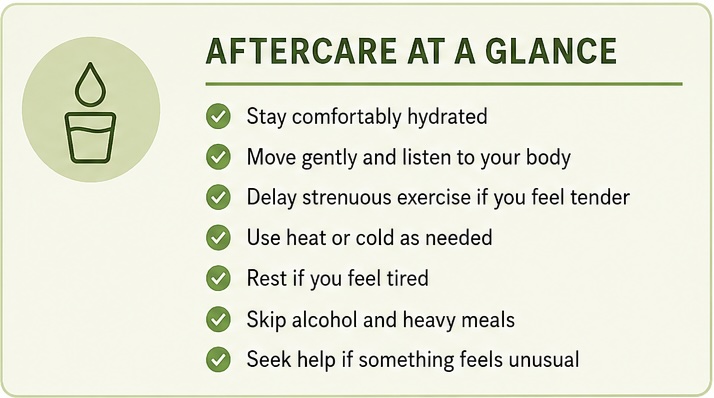
Deep tissue massage aftercare at a glance
After a deep tissue massage, drink normally, choose gentle movement and postpone strenuous training while treated areas feel tender. Mild soreness should gradually improve. Seek appropriate advice for severe or worsening pain, marked swelling, weakness, numbness, fever or difficulty moving normally.
Deep tissue massage soreness: how long can it last?
You might feel a little sore later that day or the next morning, especially if the session was new or very firm. This should start to improve as you return to your normal activities.
There is no set timeline for everyone. How you feel depends on the pressure used, how long the session lasted, which areas were treated, your recent activity, and your own sensitivity.
See a doctor if you have severe or worsening pain, a lot of swelling, weakness, numbness, more bruising, fever, redness, or trouble using the area as usual. ‘Severe’ means pain that stops you from doing your normal daily activities, pain that is much worse than mild soreness, or discomfort that does not get better after a day or two. If pain makes it hard to walk, sleep, or use the area as you normally would, it is important to get professional help.
Illustrative case study 1: desk-related shoulder tension
This composite example illustrates a common aftercare discussion and does not describe an identifiable client.
A London office worker booked a firm upper-back, neck and shoulder session after several weeks of desk-related tightness. The pressure remained comfortable, but the upper back felt mildly tender later that evening.
Rather than returning immediately to a heavy upper-body gym session, the client took a gentle walk, changed position regularly while working and used a warm shower for comfort. The tenderness eased by the following day.
The point is not that everyone needs to avoid activity for a certain amount of time. Aftercare should match how strong the treatment was and how your body feels. Moving comfortably and taking it easy with workouts is usually better than pushing yourself too soon.
Seven post-massage care tips
1. Stay comfortably hydrated
Drink when you are thirsty and keep up your normal fluid intake. Staying hydrated is good for your health, but you do not need to drink extra water to “flush out toxins” after a massage. There is no need to force yourself to drink more than usual.
Sip water throughout the day, especially if you have travelled, exercised, or have not had much to drink before your appointment. Too much alcohol can make you feel more tired or dehydrated, so taking it easy after a strong massage can help you feel better.
2. Choose gentle movement
You do not always need to rest completely. Taking a gentle walk, doing some easy shoulder rolls, or moving comfortably can help prevent stiffness after your massage.
Suitable options may include:
- A short, easy walk;
- Slow neck and shoulder movements;
- Gentle back or hip mobility;
- Light stretching that stays within comfort.
The goal is not to push for more flexibility. Stop if any movement causes pain or feels unsteady.
Clients who prefer pressure combined with therapist-guided movement may also explore Thai Yoga Massage, where positions and assisted stretches can be adapted to mobility and comfort.
3. Delay strenuous exercise when you feel tender
There is no strict rule that says you must avoid exercise for exactly 24 hours. But after a strong deep tissue massage, tough workouts can make soreness worse or feel uncomfortable.
Consider postponing heavy lifting, intense running, high-impact classes or strenuous sports until the treated areas feel comfortable again. For some people, this may mean taking the remainder of the day off; after a firmer or unfamiliar session, it may mean waiting until the next day.
A review of sports massage found it does not directly boost sports performance, though it may help a bit with flexibility and muscle soreness. Massage works best as part of your overall recovery routine, not as a quick fix for faster results. It can support wellbeing, ease tension, and help you recover from training or everyday stress, but it is not a cure-all. Keeping expectations realistic helps you get the most from your treatment. Active clients may also find our guide to sports massage for runners and gym-goers helpful when planning treatment around training.
4. Use heat or cold carefully
Soft heat may feel soothing when an area feels generally stiff. You might choose:
- A warm shower;
- A warm towel;
- A heat pad on a low setting for a short period.
If an area feels especially sore, using a wrapped cold pack might feel better. Don’t use heat or cold at extreme temperatures, and don’t use them to hide serious or unexplained symptoms.
People with reduced skin sensation, circulation problems, certain medical conditions or recent injuries should seek professional advice before using heat or cold. Common relevant conditions include diabetes, neuropathy, or being on blood thinners, as well as recent surgery or injury. If you are unsure, check with a healthcare provider to make sure heat or cold is safe for you.
5. Shower or bathe according to comfort
You do not normally need to wait several hours before showering. If oil or balm was used, leaving it on or washing it away is a matter of skin comfort and personal preference unless your therapist gives a specific product-related instruction.
Use lukewarm water if your skin or muscles are sensitive. Skip very hot baths if you feel dizzy, extra tired, or unwell.
6. Eat normally and rest when needed
There’s no special diet needed after a massage. Eat when you’re hungry. If you’re tired, a light meal might feel better, but no food will speed up recovery or change your circulation.
Some people feel very relaxed and want to go to bed early. Taking deep breaths, having a relaxing evening, and getting enough sleep can help you relax, but these are not medical treatments.
7. Pay attention to unusual symptoms
Mild soreness should go away on its own. Do not think that severe pain, a lot of swelling, or flu-like symptoms mean the massage was effective.
Contact a healthcare professional if symptoms are intense, persistent, or getting worse. Assessment is particularly important for unexplained pain or swelling affecting one leg. Call 999 when these symptoms occur with sudden breathlessness or chest pain, as NHS guidance identifies this combination as a possible blood-clot emergency.
| Usually reasonable | Consider avoiding temporarily | Seek advice for |
|---|---|---|
| Normal hydration | Demanding exercise while tender | Severe or worsening pain |
| Gentle walking | Forceful stretching | Marked swelling |
| Comfortable mobility | Excessive alcohol | Weakness or numbness |
| Rest when tired | Extreme heat or cold | Fever or reduced function |
The first 24 hours after a deep tissue massage
Immediately afterwards
Stand up slowly and tell your therapist if you feel dizzy, have unexpected pain, or feel uncomfortable before you leave. Drink as usual and take a few easy steps before heading home, especially if you have a long trip.
During the first few hours
Return to your normal light activities and avoid poking or testing any sore spots. A warm shower, a good meal, and a gentle walk are usually enough.
Later that day
Cut back on tough workouts if your muscles feel sore or sensitive. Avoid too much alcohol and rest when you need to.
The following morning
Reassess how you feel before training. Check how you feel before working out again. If mild stiffness is getting better, gentle movement can help. If pain, swelling, numbness, weakness, or trouble moving gets worse, see a professional.
This composite example shows how treatment timing can influence aftercare and does not describe an identifiable client.
A recreational runner booked deep tissue work for the calves, thighs and hips after a demanding training week, with speed intervals planned for the following morning.
During the consultation, the therapist explained that firmer work close to intense training could leave the legs temporarily tender. The pressure was adjusted, and the client replaced the next morning’s intervals with an easy walk and light mobility. Normal training resumed once the legs felt comfortable.
The main point is not that you must avoid exercise for 24 hours after a massage. It is best to talk about your training plans before your session. If you are preparing for a race, recovering from injury, or training hard, you might need different pressure or timing than someone with a lighter schedule.
- Force painful stretches;
- Complete a demanding workout to “test” the treatment;
- Drink excessive alcohol;
- Apply intense heat or ice repeatedly;
- Book another strong treatment before marked tenderness settles;
- Ignore sharp, worsening or unexplained symptoms;
- Assume that bruising or severe soreness proves the massage was effective.
You do not have to stay in bed all day. Moving comfortably is usually better than getting stiff, unless you have an injury or a medical reason to rest.
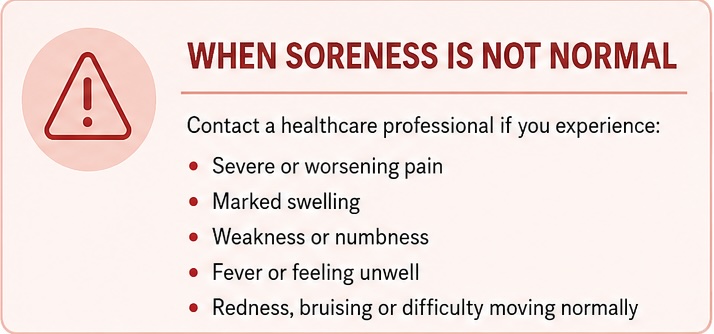
When soreness is not normal
Massage therapy is generally safe when done by a trained professional. Serious problems are rare, but they can happen, especially with strong techniques or in people who are more at risk for injury.
Seek medical advice for:
- Severe or increasing pain;
- Marked or unexplained swelling;
- Weakness, numbness or radiating symptoms;
- Worsening bruising;
- Significant heat, redness or fever;
- Pain that interferes with walking or ordinary movement;
- Symptoms following a recent injury or operation;
- Any reaction that concerns you or fails to improve.
Seek urgent advice for unexplained pain and swelling affecting one leg. Call 999 for sudden breathlessness or chest pain, particularly when these occur alongside possible DVT symptoms.
Deep tissue massage benefits and realistic expectations
Many people choose deep tissue massage because they prefer slow, focused pressure on tight muscles. Some people feel more relaxed, notice where they hold tension, or move more easily after a session. Research shows massage may help a bit with soreness or flexibility, but it doesn’t directly improve sports performance.
At Asiatic, the consultation should help the therapist understand your pressure preference, recent activity, sensitive areas and relevant health information. Pressure can be adjusted throughout the appointment.
A good massage should feel focused and controlled, not like a test to see how much discomfort you can handle.
Does aftercare differ by massage type?
Aftercare depends more on how intense your session was and how you feel afterwards, not just the type of massage you had.
A gentle Swedish or aromatherapy massage may leave little tenderness. Firm deep tissue or sports-focused work may require a calmer remainder of the day. Thai Yoga Massage may combine compression with assisted movement so that clients may notice a stretched or worked feeling rather than soreness from one localised area.
There is no single ‘best’ style. The right choice depends on why you are booking, how much pressure you like, your comfort, mobility, and recent activity.
When can you book another deep tissue massage?
Wait until any soreness from your last session has gone before booking another strong massage. For most people, having a deep tissue massage every 2 to 4 weeks is a safe general guideline. Still, the right interval depends on how your body responds, your activity level, and your personal goals. Most people do not need or benefit from daily deep tissue treatments.
Some clients book every few weeks as part of a wider wellbeing routine. Others arrange a session occasionally when desk work, travel or training leaves them feeling tight.
Spacing should reflect:
- How your body responded;
- The pressure and duration used;
- Your training or workload;
- Your goals and preferences;
- Any medical or injury-related considerations?
Be wary of strict schedules that claim to work for everyone. Your therapist can help you decide on a good interval, but if you have ongoing or repeated pain, it’s better to see a medical expert than to get more frequent massages. Some medical conditions or medications may mean that deep tissue massage is not suitable, or may require extra care. If you have any concerns or long-term health issues, check with your healthcare provider or speak to your therapist before booking a session. For a broader guide to treatment frequency, read how often should you get a massage?
London clients: desk work, commuting and training
Many London clients come in after long hours at a desk, commuting, working out, or feeling generally stiff. These situations don’t always mean you need the deepest pressure.
A client with upper-back tension may prefer focused Deep Tissue Massage. Anybody seeking supported movement may prefer Thai Yoga Massage. A shorter Back, Neck and Shoulder Massage may suit a localised concern, while other clients may choose a gentler aromatherapy session.
At Asiatic’s Angel and Highbury studios, you can talk about your recent activity and how much pressure you prefer before your massage. Each session should be adjusted to how your body feels that day, not just follow a set routine.
From the treatment room
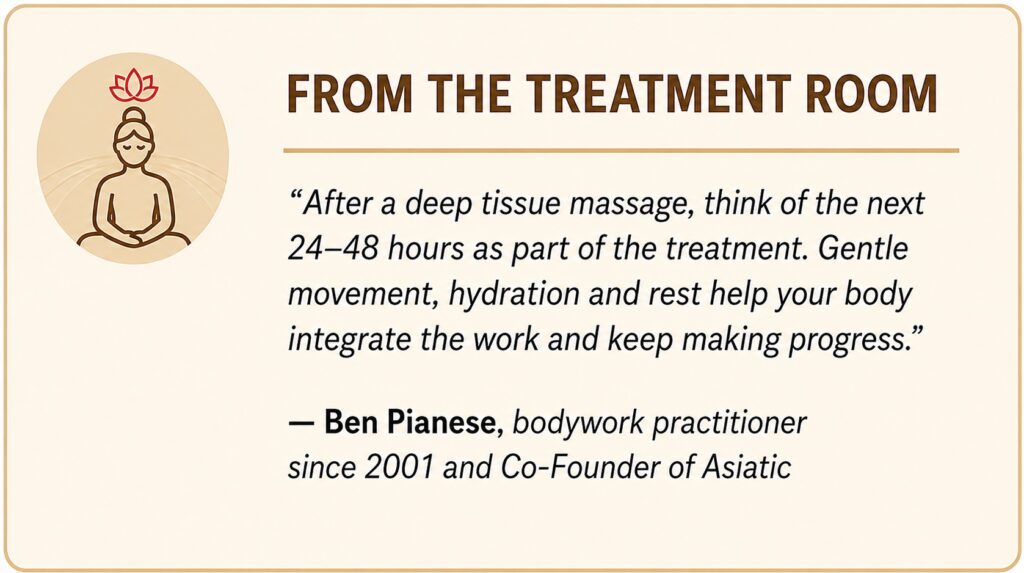
“After a firmer session, we encourage clients to notice how the treated areas feel rather than follow a rigid aftercare formula. Mild tenderness may settle with comfortable movement and rest, but increasing or unusual pain should not be ignored.”
Ben Pianese
Co-Founder of Asiatic and bodywork practitioner since 2001
Final thoughts: how to get the most from deep tissue massage
The best aftercare is simple: drink as usual, move gently, hold off on tough workouts if you’re sore, rest when you need to, and keep an eye out for anything unusual. Mild soreness or tiredness can occur after firmer bodywork, but severe pain, marked swelling, numbness, weakness or worsening symptoms should not be normalised. Massage can form an aspect of a broader wellbeing routine, but it does not replace medical assessment where symptoms suggest injury or illness.
For clients who prefer firm, focused pressure, deep tissue massage at Asiatic may be a suitable place to begin. People seeking pressure combined with assisted movement may also explore Thai Yoga Massage.
Contact Team Asiatic if you need help choosing the right treatment or deciding which studio suits you best.

Practical aftercare FAQs
Can I exercise after a deep tissue massage?
You don’t have to avoid all activity. Gentle walking and easy movement are usually better than tough workouts while any treated areas are still sore.
If your session was especially firm or unfamiliar to you, think about waiting until later that day or the next day before doing any hard exercise.
Can I shower or take a bath after a massage?
Yes, you can shower whenever you feel ready. Lukewarm water is best if your skin or muscles are sensitive.
If oils were used, you can leave them on for a bit or wash them off—it’s up to you, unless your therapist gave you special instructions.
How long should soreness last?
You might feel a little sore later that day or the next morning, but it should start to get better, not worse.
Get advice if your pain is severe, keeps getting worse, doesn’t go away, or comes with swelling, weakness, numbness, fever, or trouble moving.
Should I use heat or an ice pack?
Gentle heat can help with general stiffness, while a wrapped cold pack might feel better on a sore spot.
Use heat or cold carefully and only for a short time. Don’t use very hot or cold temperatures, and don’t use them to hide serious or unexplained symptoms.
Is it Normal to feel tired after deep tissue massage?
Some people feel relaxed or a bit tired after a strong massage. Rest if you need to, but don’t assume that ongoing flu-like symptoms, a bad headache, or feeling worse are just from the massage.
If you’re worried about any symptoms, get advice from a professional.
When should I seek medical advice?
Seek advice for severe or worsening pain, marked swelling, weakness, numbness, increasing bruising, fever or symptoms affecting ordinary movement.
Seek advice from an appropriate healthcare professional if symptoms are severe, unusual, worsening or related to an injury or medical condition.
Sources and further reading
- NCCIH: Massage Therapy — What You Need to Know
- NHS: Deep Vein Thrombosis
- Effect of Sports Massage on Performance and Recovery: A Systematic Review and Meta-analysis
- Side-effects of Massage Therapy: A Cross-sectional Study