





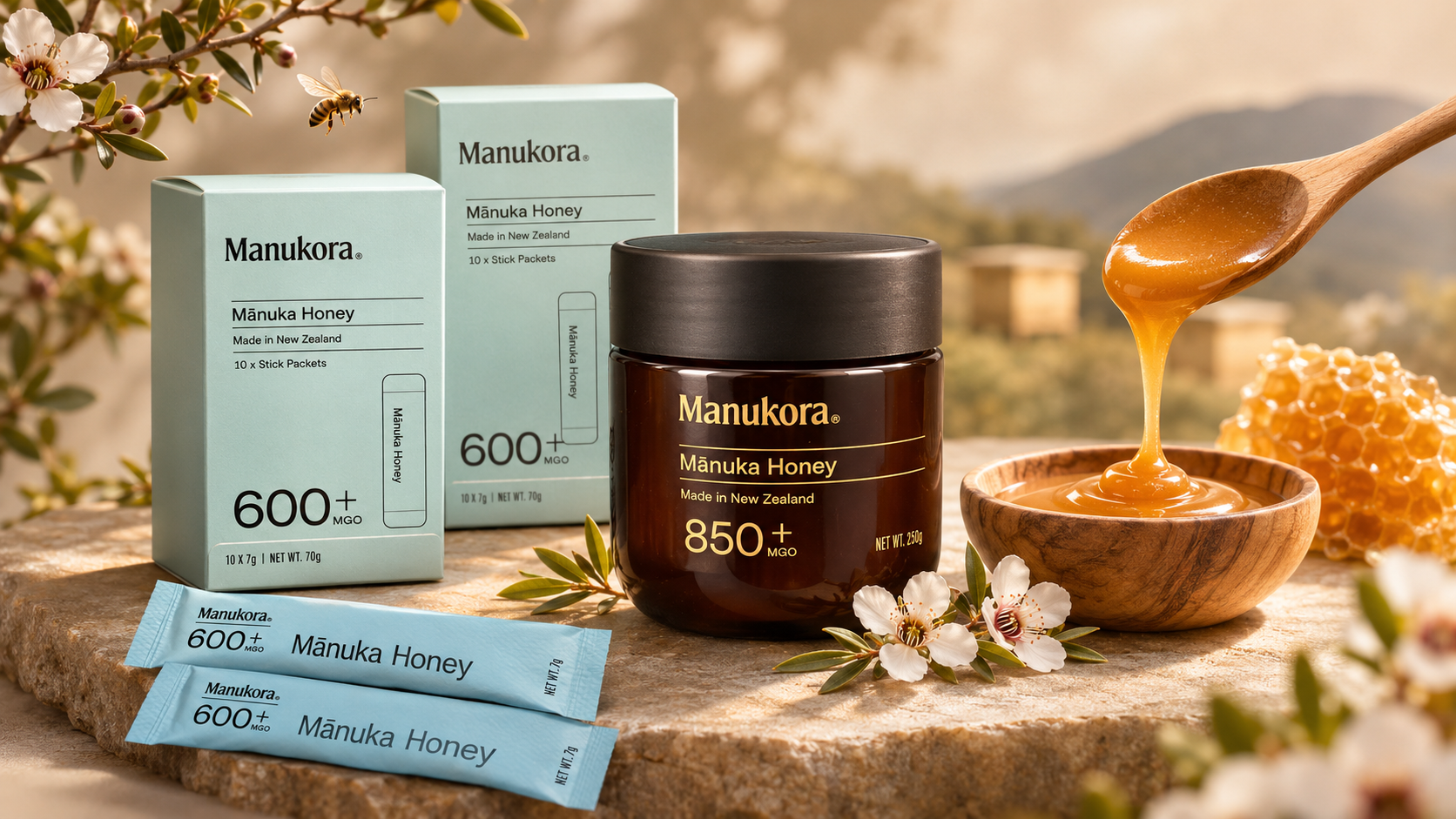
At Asiatic, some of the most memorable connections start in the simplest ways. This Manukora honey review began with an unexpected client connection and grew into more than 50 days of personal discovery.
Recently, a new client reached out to purchase massage gift vouchers for their team. As someone who enjoys the digital world and learning how independent brands present their craft online, I noticed their branded email address and explored their website.
I discovered Manukora, a New Zealand producer of raw Mānuka honey with an emphasis on provenance, traceability and thoughtful education.
What began as an appreciation of another company’s digital identity gradually became a personal discovery and a morning ritual lasting more than 50 days.
In this Manukora honey review, I share my first-hand experience with two MGO grades, their distinctive taste and texture, the research on Mānuka honey benefits and whether I would buy the product again.
Editorial disclosure: Manukora kindly provided the samples featured in this article. There was no payment, obligation to publish or agreement to exchange products for editorial coverage. This review reflects my personal experience.
Quick Search: Manukora Honey Review
Manukora is a New Zealand producer of raw Mānuka honey, offering different MGO grades and batch traceability. After over 50 days of daily testing, I found its distinctive flavour, creamy texture and practicality particularly appealing.
- Origin: New Zealand.
- Products tested: MGO 600+ sachets and MGO 850+ honey jar.
- Testing period: Over 50 days of daily consumption.
- Taste: Rich caramel sweetness with earthy and floral undertones.
- Texture: Thick, smooth and creamy.
- Daily ritual: A spoonful of honey first thing in the morning.
- Preferred format: MGO 850+ jar.
- Would I purchase it again? Yes. I intend to order a larger jar.
- Mānuka honey benefits: Naturally occurring compounds, including MGO, have attracted scientific interest for their antibacterial activity in laboratory studies. However, evidence of wider health benefits from daily consumption remains limited. For everyday use, it is best enjoyed for its taste and as a meaningful daily ritual rather than as a guaranteed health booster.
Discovering Manukora: Beyond the Packaging
Having spent many years developing websites and shaping Asiatic’s identity, I naturally appreciate businesses that invest time in communicating the story behind their products.
After exploring the information on the Manukora website, I wrote back to express my appreciation for the brand, its digital presentation and its educational approach.
Bonne and the Manukora team warmly acknowledged my interest and offered to send some samples to the studio.
Something was refreshing about the conversation. In an increasingly automated digital world, a straightforward exchange between two businesses created an unexpected opportunity to discover something new.
Manukora’s visual identity also resonated with me. Its earthy colours, understated packaging and emphasis on the natural environment reflect an appreciation of materials and craftsmanship that feels familiar to our approach at Asiatic.
As an independent massage boutique and wellness brand, we understand how considered design can communicate the values behind an experience.
As an independent massage boutique and wellness brand, we understand the power of considered design to communicate the ethos of an experience. That said, the only real measure of quality is in how it’s used.
Two Boxes of Sachets and a Jar: Putting It Into a Daily Rhythm
When the parcel arrived at the studio with two boxes of individual MGO 600+ sachets and a jar of MGO 850+ Mānuka honey, I decided to include it in a steady morning routine rather than an occasional pantry curiosity.
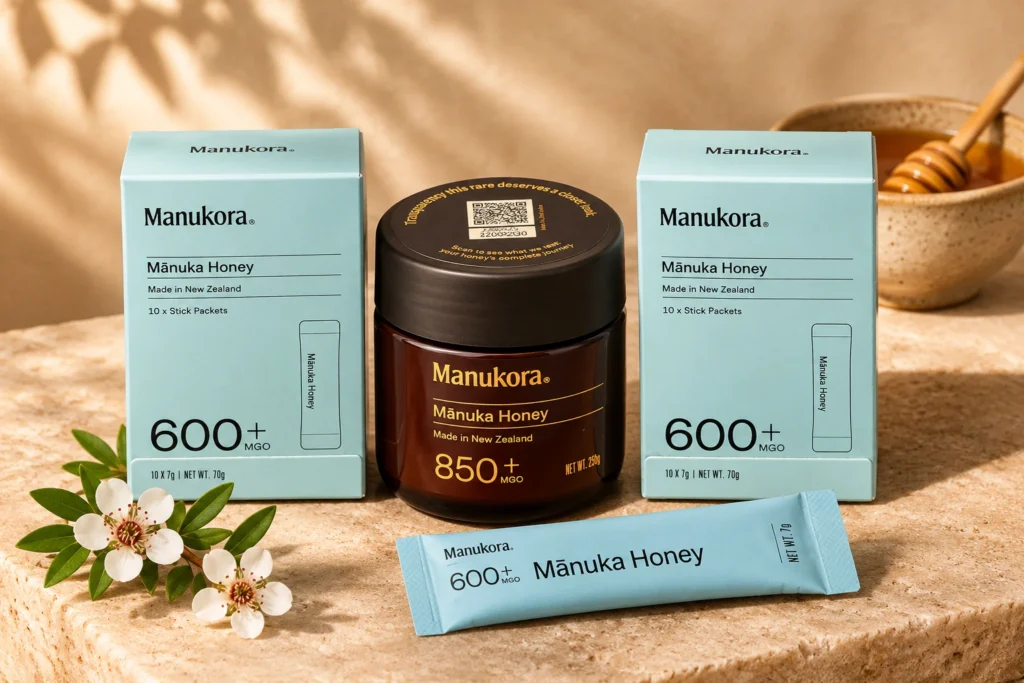
Rather than treating it as an occasional pantry curiosity, I made it part of my steady morning routine. For this Manukora honey review, experiencing the product consistently mattered to me.
I started with the sachets, taking one every morning before the London day picked up. There is something quietly effective about a format that removes unnecessary steps from a daily habit.
Whether heading towards Upper Street early or preparing for a busy studio schedule, having an individually portioned serving made consistency effortless.
After finishing the sachets, I transitioned to taking the honey directly from the jar using a wooden spoon.
Moving from individual sachets to a spoonful from the jar slowed the ritual slightly, allowing more time to appreciate the texture and flavour.
More than 50 days later, this small morning ritual remains part of my daily routine. Once I finish the current jar, I intend to purchase a larger one.
The experience has reinforced something I have long believed: products we enjoy are often easier to incorporate into our daily lives than those we consume purely out of obligation.
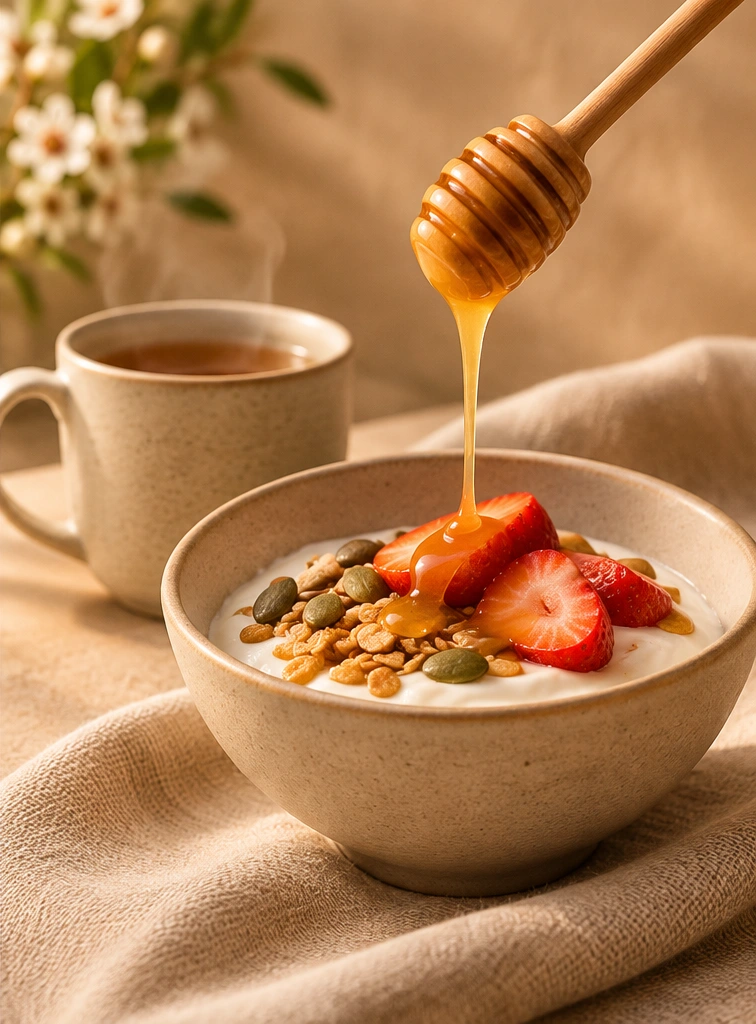
While my ritual has focused on enjoying the honey straight from the spoon, you can also drizzle Manukora honey over yoghurt, spread it on warm toast, or stir it into herbal tea. These are just a few ways to add its distinctive flavour to your daily routine.
Manukora Honey Review: Taste, Texture and First Impressions
The first thing that strikes you is the texture.
Manukora honey is thick, smooth and creamy, closer to a rich, velvety caramel than the runny honey commonly found on supermarket shelves.
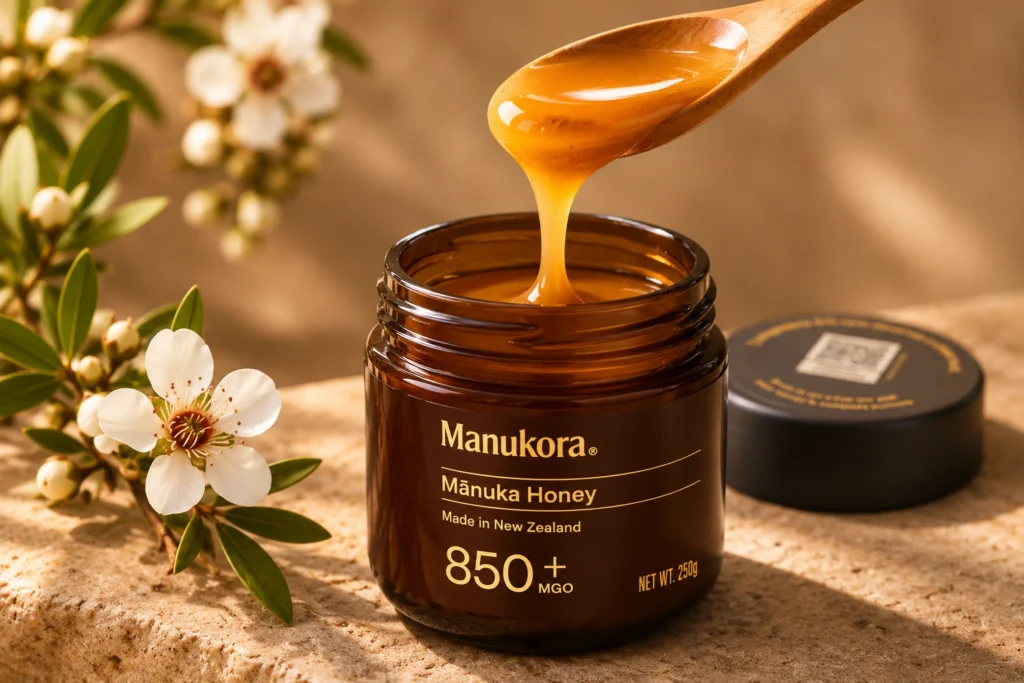
There is an initial richness of sweetness, followed by a more complex, earthy and floral finish. The flavour lingers pleasantly, making it especially enjoyable straight from the spoon.
Before discovering Manukora, I had tried Mānuka honey produced in Australia. When comparing the two products, I noticed a distinct difference in colour, aroma and flavour.
Manukora has a sensory character that I particularly enjoy.
Of course, honey varies by botanical source, geography, harvesting conditions and preparation. My preference for one product should not be seen as a judgement on all Australian or New Zealand honey.
Nevertheless, from a personal perspective, taste remains one of the strongest reasons I would purchase Manukora again.
What Makes Mānuka Honey Different from Regular Honey?
Mānuka honey is produced by bees collecting nectar from the mānuka plant, botanically known as Leptospermum scoparium, which grows naturally in New Zealand and Australia.
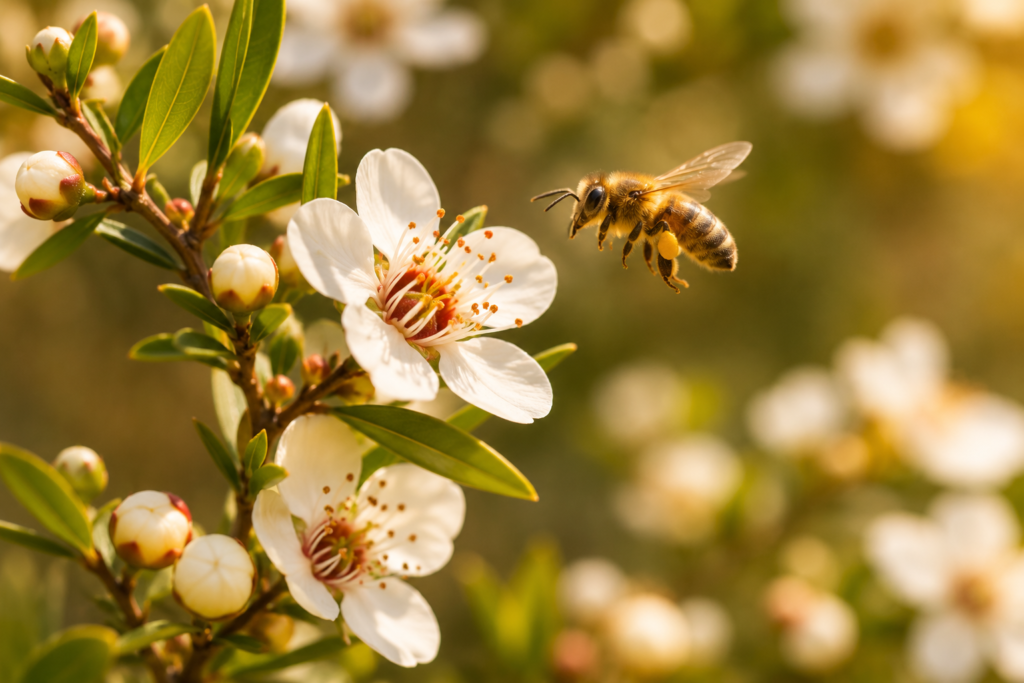
Its distinctive characteristics arise partly from its botanical origins and naturally occurring chemical compounds.
Among the best-known is methylglyoxal, commonly abbreviated to MGO. Scientific research has identified this compound as an important contributor to the antibacterial activity observed in laboratory studies of Mānuka honey.
New Zealand also maintains a scientific framework for authenticating exported Mānuka honey. Its Ministry for Primary Industries uses four chemical markers and one DNA marker to establish botanical authenticity.
These measurements help distinguish monofloral Mānuka honey, which predominantly comes from mānuka nectar, from multifloral Mānuka honey, which includes nectar from other flowering plants.
For consumers exploring premium honey, these measurements provide useful information that goes beyond appearance, flavour and marketing language.
Further information is available through the New Zealand Ministry for Primary Industries.
Understanding Mānuka Honey Ratings: What Does MGO Mean?
A Mānuka honey rating helps consumers understand measurable characteristics of the product. One common grading system is MGO, which indicates the concentration of methylglyoxal in milligrams per kilogram of honey.
For example, MGO 600+ contains at least 600 mg/kg of methylglyoxal, while MGO 850+ contains at least 850 mg/kg.
These measurements should not be interpreted as guaranteed health outcomes.
Mānuka Honey MGO Grading Explained
Two formats. Two different experiences.
The two products tested for this Manukora honey review were MGO 600+ sachets and the MGO 850+ jar.
A higher MGO rating indicates a greater concentration of this compound. However, it does not establish that consuming the honey will produce proportionally greater health benefits.
When choosing a product, I would consider its provenance, flavour, price and intended use alongside its MGO rating.
For me, understanding the grading system adds another dimension to appreciating the product and the information behind it.
Mānuka Honey Benefits: Research and Personal Experience
Mānuka honey benefits are frequently discussed in relation to its naturally occurring compounds, particularly methylglyoxal (MGO). While laboratory studies have demonstrated antibacterial activity, evidence supporting wider health benefits from eating Mānuka honey daily remains limited.
My professional background in bodywork and wellbeing has fostered a long-standing interest in nutrition and the impact of the small things we do day to day.
For many years, I have paid attention to my intake of vitamins, minerals and other micronutrients. I believe looking after ourselves requires a wider perspective that encompasses nutrition, movement, rest and consistency.
During my experience with Manukora, I particularly enjoyed how a spoonful of honey fitted into my morning routine.
Subjectively, I felt more comfortable beginning my day this way, without the jittery sensation I sometimes get from drinking coffee.
However, this was a personal experience, not a controlled nutritional experiment. It would be inappropriate to attribute changes in my wellbeing to one food alone.
Scientific interest in Mānuka honey extends to several of its naturally occurring compounds. Nevertheless, it is important to distinguish laboratory findings from proven clinical benefits associated with daily consumption.
A 2010 study published in the British Journal of Nutrition involving 20 healthy adults found no significant changes in the lower-gut bacterial groups measured after four weeks of daily Mānuka honey consumption.
This highlights the importance of distinguishing scientific evidence from anecdotal experiences and marketing claims.
For me, the attraction lies in the combination of flavour, provenance and the enjoyment of a consistent daily ritual, rather than expectations of extraordinary health outcomes.
Is Mānuka Honey Better Than Refined Sugar?
I personally prefer the complexity of natural honey to the relatively neutral sweetness of refined table sugar.
Beyond its sugars, Mānuka honey contains small quantities of other naturally occurring compounds. Its flavour and texture also provide a different culinary experience.
However, natural does not necessarily mean nutritionally superior in every respect.
Honey is still a concentrated source of sugar. The nutritional label on the Manukora MGO 850+ jar lists approximately 78.1 grams of sugar per 100 grams.
The NHS guidance on sugar includes honey within the category of free sugars, which should be limited as part of a balanced diet.
I therefore regard Mānuka honey as an enjoyable food rather than a substitute for a varied diet or a primary source of essential vitamins and minerals.
Its distinctive flavour is one reason I prefer it to ordinary sugar as an occasional sweetener.
Dietary Considerations: Who Should Be Mindful of Mānuka Honey?
Manukora Mānuka honey is suitable for vegetarians but is generally not considered vegan, as honey is an animal-derived product.
People managing diabetes or monitoring their blood glucose should account for honey’s sugar and carbohydrate content in their dietary plan.
Anyone with a known honey allergy should avoid it, and honey should never be given to babies under 12 months. Individuals with other allergies or specific dietary requirements should review the product labelling and seek professional advice if unsure.
From Hive to Jar: Provenance and Traceability
An important aspect of this Manukora honey review is provenance and traceability. One thing that initially attracted me to the brand was its focus on product transparency.
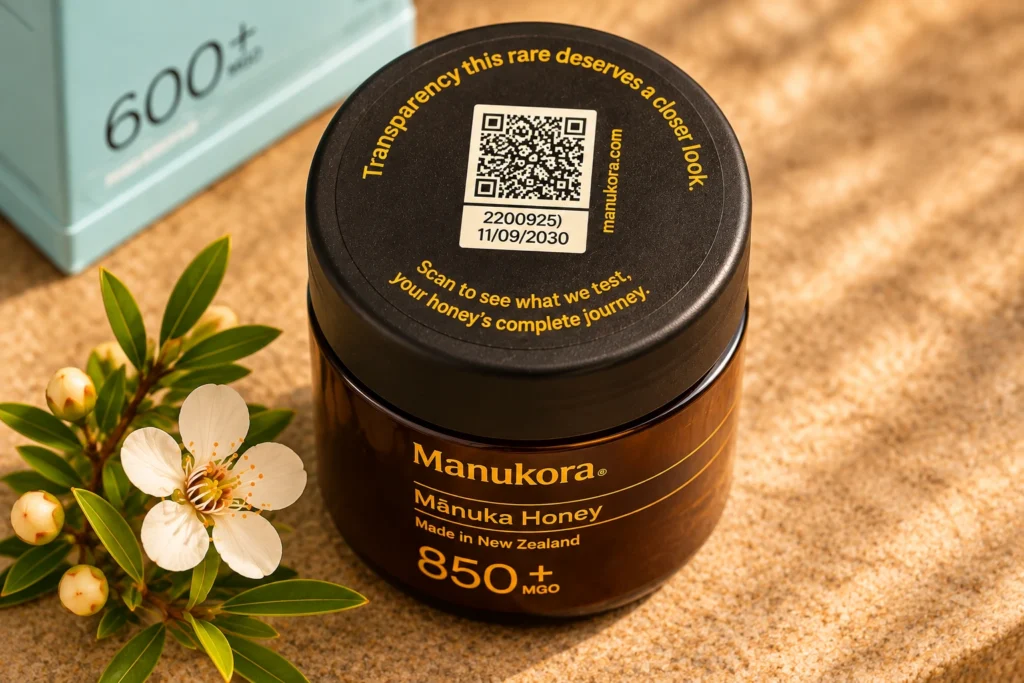
The company says it sources its honey from New Zealand and independently tests its batches to verify characteristics such as MGO concentration.
Manukora also provides a QR-code traceability system, allowing customers to explore information about the origins of their honey, its beekeeper and batch-testing details.
As someone who prizes craftsmanship, I find this particularly interesting.
Whether discussing a massage treatment, a carefully designed interior or a food product, understanding the processes behind the finished experience can be as meaningful as the experience itself.
The packaging and accompanying information encourage consumers to consider where their honey comes from rather than simply choosing a product based on its appearance or price.
This appreciation of provenance and attention to detail aligns with Asiatic’s philosophy.
Manukora’s Approach to Ethical Beekeeping
Manukora describes its approach to ethical beekeeping as one that prioritises bee health, responsible harvesting and respect for New Zealand’s natural environment.
The company’s stated commitment to responsible sourcing and environmental stewardship adds another dimension to my appreciation of the product.
As someone who values craftsmanship and transparency, I find the philosophy behind its production as interesting as the honey itself.
Although I have not independently assessed these beekeeping practices, I appreciate the brand’s willingness to share information about its production methods and the processes behind its products.
Manukora Sachets vs Jar: Which Would I Choose?
Having experienced both formats, I appreciate their different practical qualities.
The sachets made my morning routine easy, especially when preparing for a busy day.
However, the jar has become my preferred format.
Taking a spoonful with a wooden spoon feels more personal and allows me to enjoy the texture and flavour at my own pace.
Both formats have advantages. My preference for the jar is based entirely on how it enhances my daily ritual, allowing me to savour the texture and flavour more personally. It is not because I believe the higher MGO grade delivers greater health benefits.
Manukora Honey Review: Is It Worth Buying?
Premium Mānuka honey represents a more considered purchase than ordinary supermarket honey.
Its higher price may not appeal to everyone, especially those just looking for an everyday sweetener.
For me, the decision comes down to the quality of the experience, the distinctive taste, the product information and whether I genuinely enjoy using it regularly.
After more than 50 days of daily consumption, my answer is yes.
I would purchase Manukora again, choosing a larger jar for everyday use.
I would recommend trying it to anyone curious about the distinctive flavour of Mānuka honey, provided they appreciate it as a food rather than expecting extraordinary health outcomes.
Ultimately, a product’s value is not determined solely by its packaging, price or reputation, but also by how meaningfully it fits into our everyday lives.
Connecting Daily Rituals and Asiatic
Whether it is a quiet spoonful of honey before leaving the house or stepping off Upper Street into our studios for an unhurried treatment, the principle is the same: how we care for ourselves often comes down to small, intentional choices repeated over time.
At Asiatic, our approach to bodywork has never been about rushing through a routine.
From our original Angel massage studio at 93 Upper Street, welcoming clients since 2009, to our Highbury massage boutique at 262 Upper Street, we have always believed in giving quality, skill and attention to detail room to breathe.
Even the herbal tea we offer after a massage reflects an appreciation of the moments that surround the treatment itself.
A quiet morning ritual and an unhurried traditional Thai massage experience are very different things, but both offer an opportunity to make time for ourselves.
What began with a branded email and a gift voucher purchase has become a reminder that meaningful discoveries often arise from curiosity, conversation and genuine human connections.
Sometimes, the most rewarding rituals are the ones we never intended to discover.
Frequently Asked Questions
Is Manukora genuine Mānuka honey?
Manukora produces New Zealand Mānuka honey and provides batch-testing and traceability information. Customers can scan the QR code on their jar to learn about its provenance and product-testing details.
What are the benefits of taking Mānuka honey daily?
Mānuka honey can be enjoyed as part of a daily food ritual, offering a distinctive flavour and naturally occurring compounds such as methylglyoxal. However, regular consumption has not been conclusively shown to improve immunity, energy levels or digestive health in healthy adults. Like other honey, it should be consumed in moderation.
Can you take Mānuka honey every morning?
Adults can enjoy Mānuka honey in moderation as part of a healthy, balanced diet. There is no established requirement to consume it on an empty stomach. Honey should not be given to babies under 12 months.
What is the difference between MGO 600+ and MGO 850+?
MGO 850+ contains a higher minimum concentration of methylglyoxal than MGO 600+. This does not establish a corresponding difference in health outcomes.
Can you put Mānuka honey in tea?
Yes. Mānuka honey can be enjoyed directly from a spoon or added to warm herbal tea, yoghurt or breakfast according to personal preference.
Is Manukora honey worth buying?
Based on my personal experience with its flavour, texture, traceability, and practical use over more than 50 days, I recommend trying Manukora. My preferred format is the MGO 850+ jar, and I intend to purchase a larger one.
Is Mānuka honey part of Asiatic’s massage treatments?
No. This Manukora honey review reflects our independent editorial exploration of lifestyle and daily wellness rituals. Mānuka honey is not presented as a massage treatment or a medical recovery aid.