Modern life can feel loud, fast, and full of interruption. Between work, travel, screens, city noise, and daily responsibilities, many people rarely give themselves a quiet place to pause.
A sacred space does not need to be religious, expensive, or complicated. It can be a small corner of a room, a bedside table, a clean treatment area, or simply a chair near a window where you intentionally slow down. The purpose is not perfection. It is to create a space that helps your body and mind recognise: this is where I pause.
At Asiatic Massage Boutique & Wellness, we think of sacred space as a feeling: clean, calm, respectful, and intentional. In our Upper Street studios, we create calm through small details: soft light, quiet rooms, warm textures, gentle scent, careful communication, and a slower rhythm of care. A home sacred space can follow the same idea.
This guide explores simple ways to create a sense of relaxation at home through fresh air, scent, sound, natural textures, touch, and mindful rest.
2026 Editorial Update: This article has been reviewed and updated to offer a calmer, practical guide to creating a relaxing space at home, inspired by Asiatic’s Massage Boutique & Wellness studios in Angel and Highbury, Islington.
What Is a Sacred Space?
A sacred space is any place that helps you feel calm, present, and more connected to yourself. It does not have to look like a spa or meditation room. It can be simple, personal, and quietly practical.
For one person, it may be a clean corner with a candle and a blanket. For another, it may be an open window, a diffuser, a favourite chair, or a few minutes of silence before bed.
What matters is intention. When you return to the same space regularly, your body begins to associate it with rest. Over time, this small ritual can become a gentle reminder to breathe, slow down, and step away from the day’s pace.
Fresh Air and Light
The simplest way to reset a room is to open a window.
Fresh air changes how a room feels. It clears away stuffiness, brings movement into the space, and creates a sense of renewal. Morning light can help a room feel more awake and balanced, while softer evening light signals that the day is winding down.
A simple home ritual:
Open a window for a few minutes. Let fresh air move through the room. Clear one surface, fold a blanket, or adjust a small detail. Before doing anything else, take three slow breaths and allow the space to feel lighter.
This small act can be enough to mark the beginning of a calmer moment.

Palo santo can serve as a simple sensory cue to mark the start of a calmer moment.
Scent: Incense, Palo Santo or Essential Oils
Scent is powerful because it quickly creates an atmosphere. A familiar scent can help the body recognise a change of pace — from work mode to rest mode, from noise to quiet, from the outside world to home.
Incense, palo santo, essential oils, or a simple room spray can be used gently. The key is not to overwhelm the space. Choose one scent at a time and keep it subtle.
Palo santo and incense have long associations with ritual, reflection, and cleansing practices in different cultures. At home, they can serve as a sensory cue, marking the start of stillness, meditation, journaling, stretching, or rest.
If you use smoke, always keep the room ventilated, use a safe holder, and never leave anything burning unattended.

A small bowl of salt can become a quiet reminder to clear, reset and begin again.
Salt and Small Rituals of Reset
Salt has been used symbolically in many cultures as a marker of cleansing, simplicity, and renewal. In Japanese tradition, small piles of salt are sometimes placed near entrances or in specific areas as part of purification customs.
At home, you do not need to treat salt as if it were magical. You can use it as a simple ritual object: a reminder to clear, reset, and begin again.
A practical way to use this idea:
Place a small bowl of salt near your entrance or in the room you want to refresh. Leave it for a short time, then dispose of it mindfully. As you do this, take a moment to clear clutter, open the window, and set an intention for the space.
The value is not only in the salt itself. It is in the act of pausing, noticing, and carefully resetting the room.

A gentle sound can help create a quiet focal point for stillness and reflection.
Sound and Stillness
Sound can change the feeling of a room. Soft music, a singing bowl, a tuning fork, nature sounds, or simple silence can all help create a calmer atmosphere.
Some people enjoy gentle sounds because they give the mind something steady to rest on. Others prefer complete quiet. Both can be useful.
A simple sound ritual:
Sit comfortably. Play soft music or use a clear sound, such as a bell, bowl, or tuning fork. Let the sound fade naturally. Notice the space after the sound ends. This quiet moment can help the room feel slower and more settled.
You do not need a complicated practice. Even one minute of stillness can change the tone of the day.
Essential Oils and Diffusion
Essential oils can help create a softer atmosphere at home. Lavender, bergamot, sandalwood, eucalyptus, and chamomile are often chosen for their calming or refreshing scent profiles.
A diffuser can be useful, but should be used gently. Too much scent can feel heavy, especially in a small room. A few drops are usually enough.
Before choosing oils, consider who will be using your space. Some essential oils may not be suitable for pets, children, pregnant people, or those with allergies or other sensitivities. If in doubt, keep the scent light, ventilate the room, or choose fresh air instead.
A calming home ritual:
Fill your diffuser with water, add a small amount of essential oil, and let the scent settle quietly into the room. Use this moment to tidy one area, dim the lights, or prepare for rest.

A subtle scent can soften the atmosphere and help a room feel more restful.
Texture, Touch and Self-Massage
A sacred space is not only about what you see. It is also about what you feel.
Textures can make a room feel warmer and more comforting: a folded blanket, a clean towel, a soft cushion, a wooden tray, a ceramic cup, or a natural mat. These details help the space feel cared for.
Touch can also become part of your home ritual. Simple self massage can be a gentle way to reconnect with the body after a long day. You might massage your hands, feet, shoulders, scalp, or jaw with slow, comfortable pressure.
Keep it simple:
Warm your hands, take a slow breath, and apply gentle pressure to a tired area. Do not force anything. Let the touch be slow, respectful, and comfortable. Self-massage should never replace medical care, physiotherapy, or professional advice. If you have pain, injury, pregnancy-related concerns, or a medical condition, seek guidance from a qualified healthcare professional.
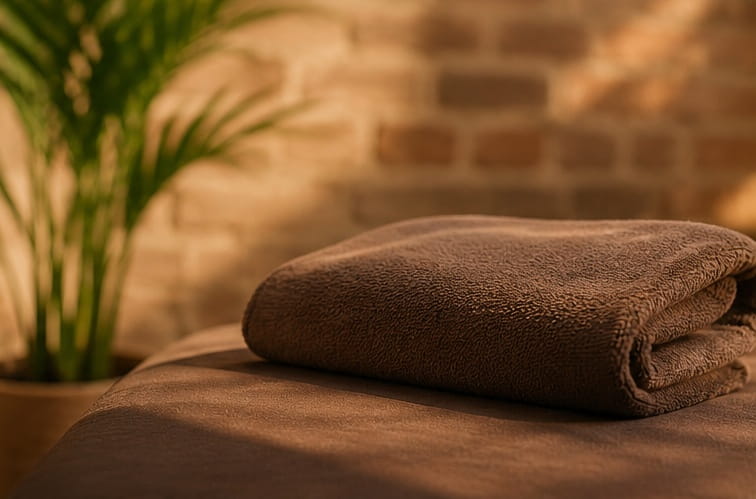
At Asiatic, calm is created through soft light, thoughtful details and a slower rhythm of care.
A Simple Five-Minute Home Ritual
A sacred space does not need a long routine. Five minutes can be enough.
Try this:
- Open a window or refresh the air.
- Clear one small surface.
- Add one calming detail, such as a folded blanket, incense, essential oil, or soft light.
- Sit down and take three slow breaths.
- Place your hand on your chest, shoulder, or abdomen and notice how your body feels.
- Set a simple intention, such as: “I am allowed to pause.”
This small ritual can be used in the morning, after work, before sleep, or whenever the day feels too full.

Incense can help mark the transition from a busy day into a quieter space.
How Asiatic Understands Sacred Space
At Asiatic Massage Boutique & Wellness, sacred space is not about decoration alone. It is about how a room makes the body feel upon entering.
The lighting, scent, sound, texture, temperature, and pace all matter. So does the way a client is welcomed, spoken to, and given time to settle.
In our Angel and Highbury studios on Upper Street, we create calm through small, thoughtful details: quiet rooms, soft lighting, natural materials, warm tones, respectful communication with therapists, and a sense of privacy. Each treatment room is designed to feel considered, not clinical.
A home sacred space can follow the same principle. It does not need to look perfect. It only needs to help you feel safe enough to pause.

Woman breathing fresh air as part of a mindful relaxation ritual.
Bringing Calm Into Everyday Life
Creating a sacred space at home is not about escaping life. It is about creating a small place where you can return to yourself.
A calm room, a favourite scent, fresh air, soft light, or a few minutes of stillness can help remind the body that rest is allowed. Over time, these small rituals can become part of how you care for yourself.
At Asiatic, we believe that calm is created through attention. Whether in a treatment room or at home, the smallest details can change how a space feels.
Visit Asiatic Angel or Asiatic Highbury
If you would like to experience a calm treatment space outside the home, you are welcome to visit our Massage Boutique & Wellness studios on Upper Street.
Asiatic Angel is located at 93 Upper Street, London N1 0NP.
Asiatic Highbury is located at 262 Upper Street, London N1 2UQ.
Our studios are designed for people who value thoughtful bodywork, calm rooms, professional care, and a slower rhythm away from the pace of London life.
Frequently Asked Questions
What is a sacred space at home?
A sacred space is a calm area of your home where you intentionally slow down. It can be a room, a corner, a bedside table, a chair, or any place that helps you feel peaceful and present.
Do I need incense or palo santo to create a sacred space?
No. Incense and palo santo are optional. Fresh air, soft light, a clean surface, calming music, or a few minutes of stillness can be enough.
How can I make my room feel calmer?
Start by clearing one small area, opening a window, softening the light, and adding one calming detail, such as a blanket, a natural scent, or a quiet sound.
Can scent help with relaxation?
Scent can help create a relaxing atmosphere, but it should be used gently. Essential oils, incense, or room sprays may not suit everyone, especially people with sensitivities, pets, children, or pregnancy-related concerns.
How does Asiatic create a calm treatment space?
At Asiatic, calm is created through quiet rooms, soft lighting, thoughtful design, natural textures, respectful communication, and professional massage care.
.