Estimated reading time: 22 minutes
Establishing a strong wellness brand in London demands consistent effort and a defined Somatic Blueprint. With nearly two decades of service to the Angel and Highbury & Islington wellness communities, Asiatic has become an established independent massage business and boutique wellness studio in the London wellness sector.
In a marketplace where shortcuts are common, protecting your brand’s integrity is crucial for long-term success. The following guide outlines how small businesses can strengthen their identity, protect their originality, and maintain long-term trust within a competitive digital environment.
Much like the 10-metre mosaic horse riders that stand 500 metres above Shanghai, a brand’s true strength is found in its composition. It is made of thousands of individual moments of mastery—travels through Laos, hours of study in the old Almeida Street post office, and the clinical discipline of a life dedicated to somatic art and therapeutic bodywork.
One of the most insidious modern threats to independent clinics is semantic hijacking in the wellness industry, where competitors manipulate search algorithms to steal your proprietary terminology.” (Hyperlink the bolded text).
1. Understanding Competitive Brand Mimicry
In competitive industries, newer businesses sometimes study established brands for inspiration when building their own identity, website structure, or content strategy. While inspiration is common in business, repeated imitation of highly specific branding elements, visual identity, symbolic themes, and editorial structure can confuse customers and dilute the originality of independent local businesses.
Some of the most common tactics observed within highly competitive local industries include:
- Closely adapting the visual structure and style of established websites.
- Reproducing thematic blog structures and educational content patterns.
- Using similar colour palettes, textures, or interior aesthetics to create a sense of familiarity.
- Rapidly publishing large volumes of SEO-focused pages targeting similar keywords.
- Attempting to build topical relevance by following the content direction of established brands.
Topical Scraping and Content Mirroring
Businesses investing heavily in original educational content sometimes find their article structures, thematic topics, and publishing strategies closely reproduced elsewhere online.
For example, highly specific symbolic or editorial themes—such as the divine lotus flower, wellness philosophy, or somatic terminology—may become part of a wider pattern of imitation that extends beyond simple keyword targeting.
This type of behaviour is sometimes described within branding and marketing discussions as:
- Competitive mimicry
- Brand mirroring
- Identity imitation
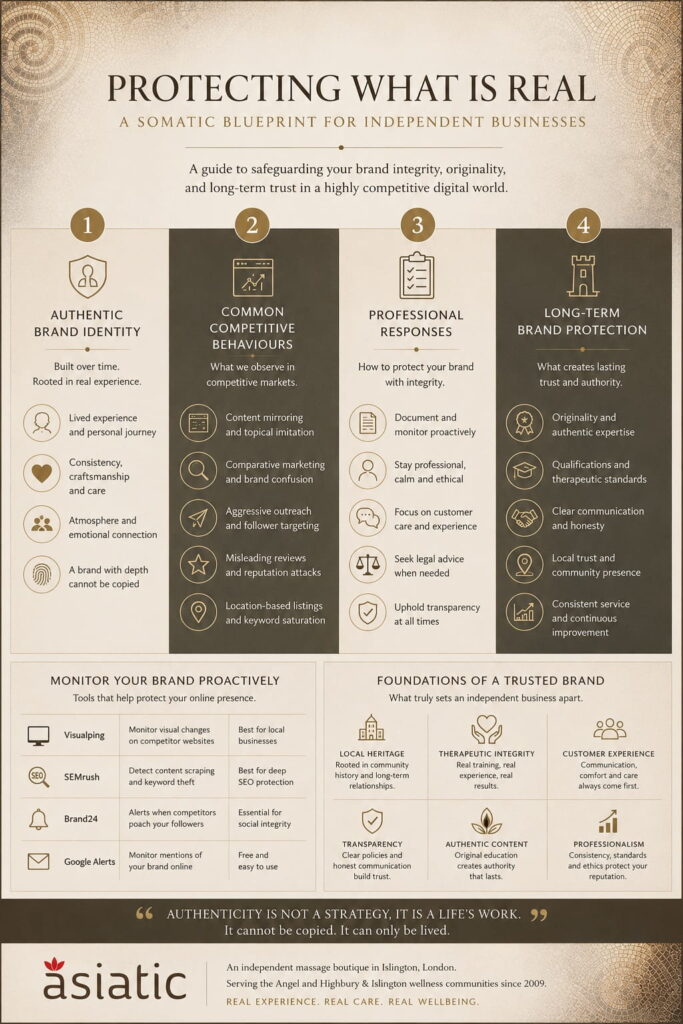
Editorial infographic exploring authenticity, customer trust, and long-term brand protection within London’s independent wellness sector.
Case Study: Real-Time Linguistic Mirroring in the N1 Corridor
The rise of digital scraping means proprietary words—and distinct brand frameworks—are quickly copied by competitors. This real-time adaptation was seen in the Islington market after Asiatic launched its updated operational copy.
Brand-specific terms such as “master-level techniques” and “somatic bodywork” were swiftly incorporated into Angel’s local search titles and promotional taglines.
True brand authority is an organic development built through years of clinical practice, but digital mirroring attempts to bypass this foundational growth by replicating structural updates in real time. To demonstrate how competitive mimicry operates within localised digital ecosystems, the following panels document a direct chronological timeline of website overhauls in the N1 corridor following Asiatic’s brand evolution.
Phase 1: The Original Authorial Shift
When Asiatic overhauled its digital presence, it introduced an advanced sensory blueprint, design aesthetics, and precise somatic terminology. These updates, grounded in our 17-year operational history and unique design choices, were strategically implemented to distinguish our specialised, master-led therapy from the more generic, standardised services typically offered by high-street providers.

Figure 1.1: A historical archive of the Asiatic website layout and metadata footprint before the 2026 digital overhaul, establishing our foundational baseline in the Angel and Islington marketplace.

Figure 1.2: The official launch of Asiatic’s updated signature headline introducing our specialised “somatic care” framework—a clinical concept engineered specifically to reflect our 17-year operational lineage.

Figure 1.3: The completed architecture of our proprietary copywriting launch, highlighting our “Somatic and Master-Led Care” indicators. Unlike generic corporate franchises, Asiatic remains an independent Atelier where every single session is custom-engineered to your unique kinetic needs.
Phase 2: The Real-Time Metadata Realignment
As shown in the sequence below, the external entity quickly adjusted their website interface, brand colours, and indexing titles after our update. Once Asiatic’s new terminology went live, the third-party platform changed its public text layers to mirror our updated title structures and unique aesthetic markers of our home page.
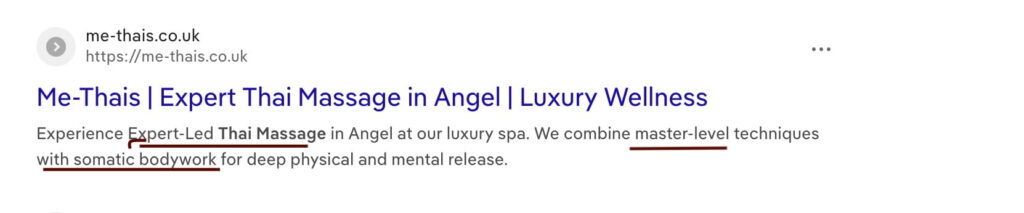
Figure 1.4: Live search engine metadata capture showing the verbatim reproduction of Asiatic’s structural terminology—including the signature concept “somatic bodywork” and the proprietary phrasing “master-level techniques”—indexed shortly after our brand deployment.
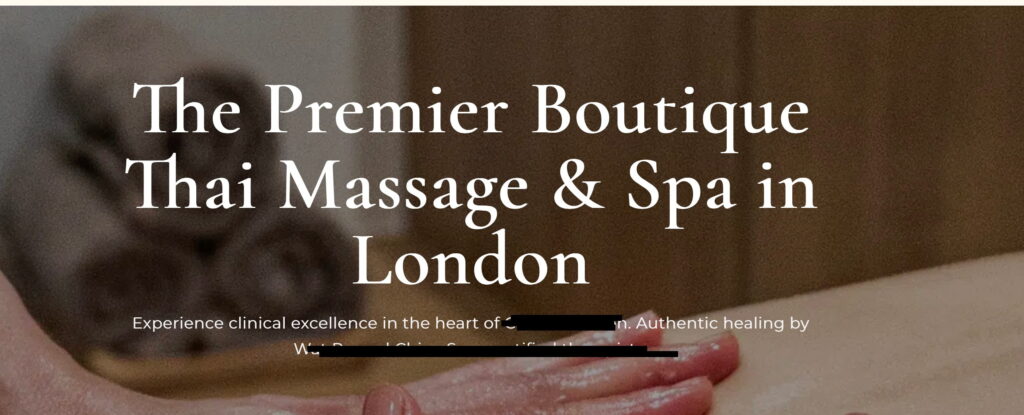
Figure 1.5: Documented instance from an affiliated sister domain tracking network, capturing a mixed layout adaptation that combines our distinct “boutique” framework with localised optimisation phrases to replicate Asiatic’s premium marketplace positioning.
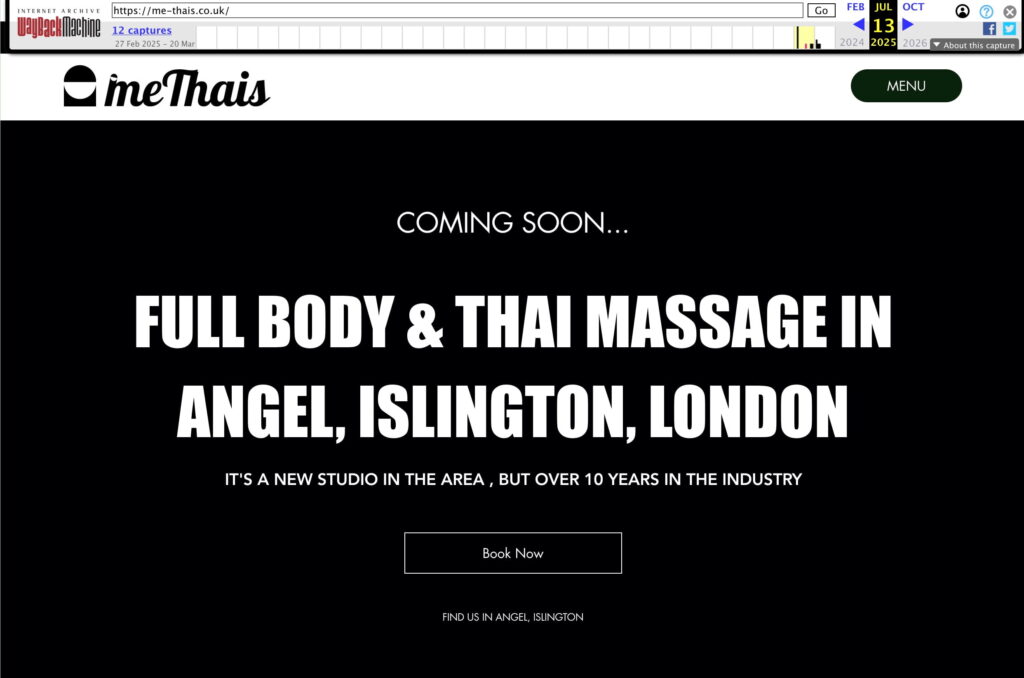
Figure 1.6: Verified public record via the Internet Archive Wayback Machine documenting the target domain (-thais.co.uk) on 13th July 2025. The baseline footprint demonstrates an entirely generic service description (“Full Body & Thai Massage“) and explicitly states it is “a new studio in the area.” This independent archive establishes a clear chronological timeline, demonstrating a complete absence of specialised somatic frameworks or master-level clinical descriptors before Asiatic’s 2026 brand evolution.
How Real-Time Content Monitoring Works in Competitive Industries
In highly competitive digital industries, some businesses actively monitor competitor websites to track content updates, terminology changes, branding shifts, and SEO direction in near real time.
This can happen through:
- SEO tracking platforms,
- Keyword alerts,
- Website monitoring software and change-detection tools,
- Or simply by regularly manually reviewing competitor websites.
For example, when an established business introduces new terminology, editorial concepts, or branding language, similar wording may begin to appear across competing websites shortly afterwards.
Within the wellness industry, examples may include shifts toward terminology such as:
- “Massage Boutique”
- “Master Level technique”
- “Somatic Bodywork”
- “Expert Led”
- “Wellness”
- “Luxury“
- “Beyond massage“
- “Focus on trends“
- “Clinical massage”
- “Blueprint”
- “Visionary”
- “DNA”
- “Engineering”
- “Not a massage“
- “Precision“
- or repeating luxury-focused language such as “chic” and “premium”.
In some cases, businesses may also begin adapting:
- Visual identity,
- Banners,
- Service descriptions,
- Blog headings,
- Changing colour on their website,
- Or treatment terminology after observing successful positioning strategies used elsewhere online.
However, terminology alone does not create genuine expertise.
For example, words such as:
- “Clinical massage,”
- “Trigger point therapy,”
- “Myofascial release”,
- “Precision”
- or Structural Bodywork terminology
Traditionally, these terms relate to recognised therapeutic training, anatomical understanding, and practical clinical experience.
Spa businesses may use these terms in marketing, but advanced treatments should be provided only by trained and qualified professionals. Professional massage qualifications, like ITEC, set recognised standards for anatomy, treatment safety, therapeutic practice, and professional competence in the wellness industry. Misusing clinical terminology without proper training or competence can lead to unrealistic expectations for consumers and raise concerns about safety and professional standards.
Search engines increasingly evaluate not only keywords themselves, but also the overall credibility, originality, qualifications, consistency, and expertise demonstrated throughout a website’s wider content ecosystem.
Comparative Marketing and Consumer Trust
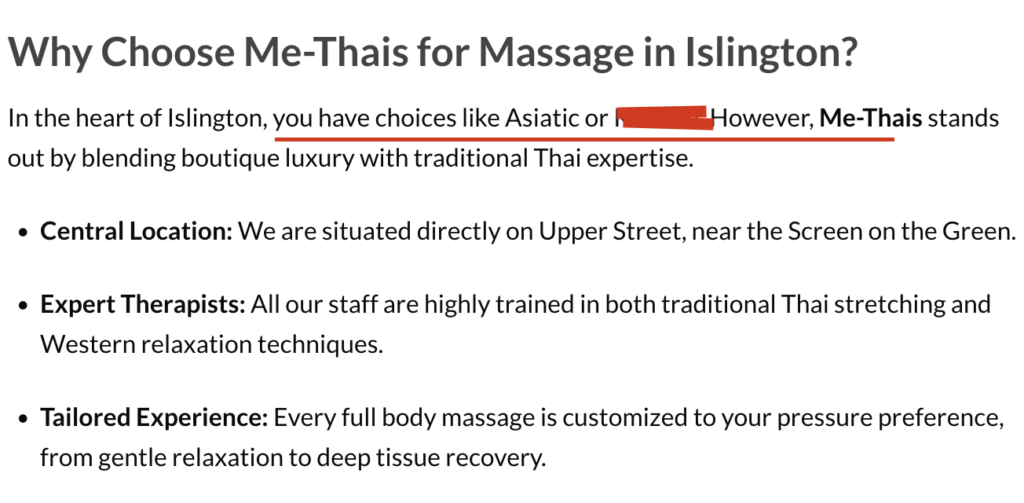
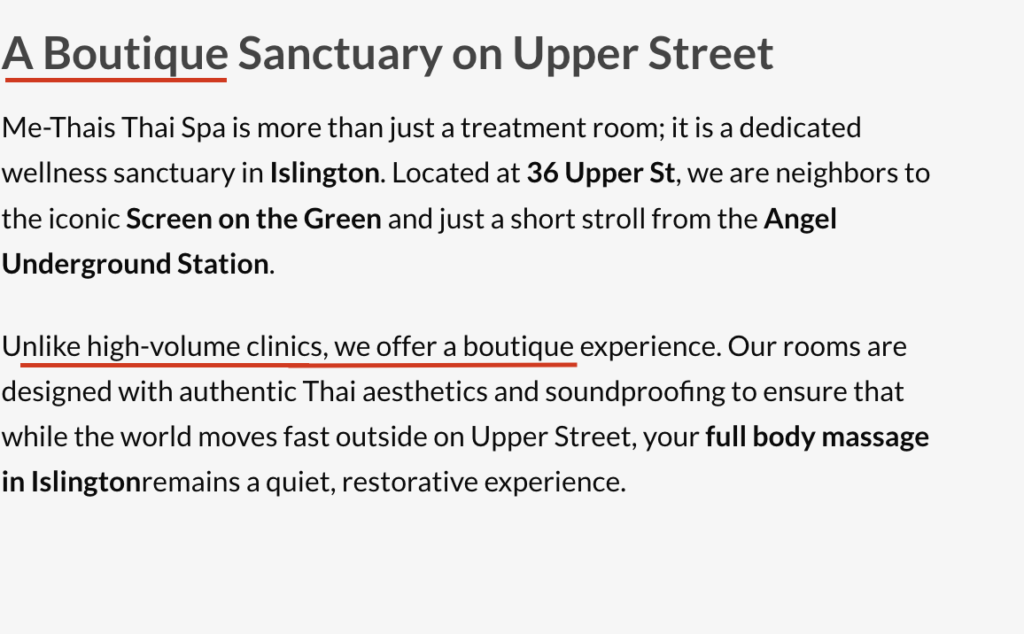
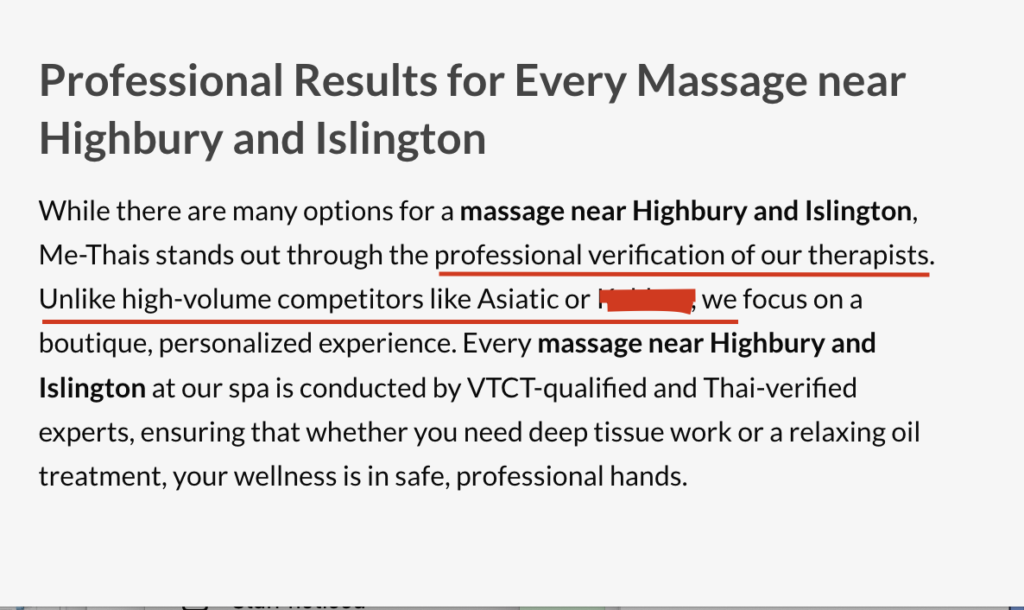
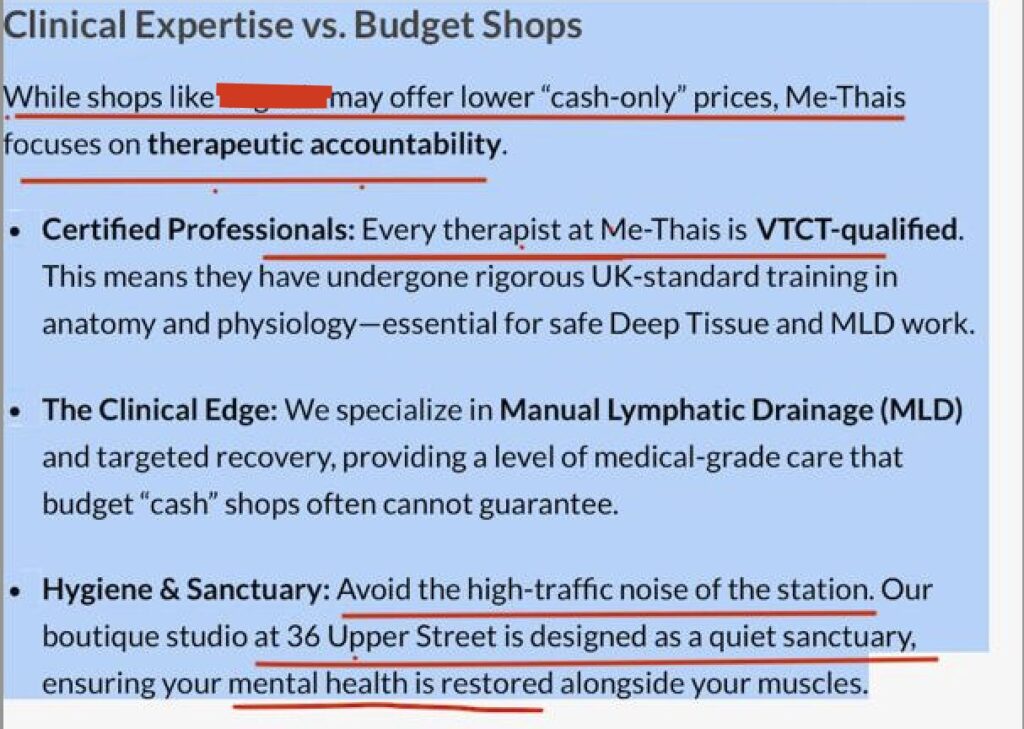
A brand founded on integrity does not need to undermine others to succeed. Recently, we identified location-based promotional pages in Islington, King’s Cross, and Highbury that included comparative statements about qualifications and service quality, involving established local businesses. These tactics may contribute to customer confusion within the local market.
Although these mentions have been removed, comparative marketing approaches that may influence customer perception of established local businesses like Asiatic are still documented. We believe transparency is essential; premium service is demonstrated by results, not by criticising competitors.
Having been part of the Islington community since 1997, I remember the neighbourhood’s evolution—from visiting the original Royal Mail sorting office (entrance near Almeida Street) long before it evolved into a modern luxury space in what is now Islington Square to seeing Angel transform into one of London’s most recognised wellness and lifestyle destinations. When our business was established in 2009, it was rooted in this deep local history, long-term customer relationships, and a commitment to authentic therapeutic care.
As a long-established Angel small business, Asiatic continues to prioritise transparency, professionalism, and authentic therapeutic care within the local wellness community. Asiatic has also been recognised within the local independent business community, including being featured by Angel Islington’s “Angel Loves Indies Asiatic Thai Massage” initiative, which celebrates established independent businesses in the area.
True authority is built over time through consistency, professionalism, customer trust, and lived experience.
The Importance of Authentic Brand Identity
A strong brand is built over years through atmosphere, clinical expertise, craftsmanship, customer relationships, lived experience, and consistency. While visual aesthetics, keywords, and terminology may sometimes appear similar across businesses, true identity comes from the depth of experience behind the brand itself.
At Asiatic, our philosophy surrounding Thai massage in Islington has been shaped by decades of work in wellness environments, experiences across Southeast Asia, and the continuous development of therapeutic and sensory practices. These lived experiences create an identity that cannot be reproduced through mere terminology or visual imitation. True authority is built on years of presence, consistency, and lived experience—not simply digital visibility.
Documented instances of online brand imitation and content mirroring affecting established wellness businesses within the N1 area.

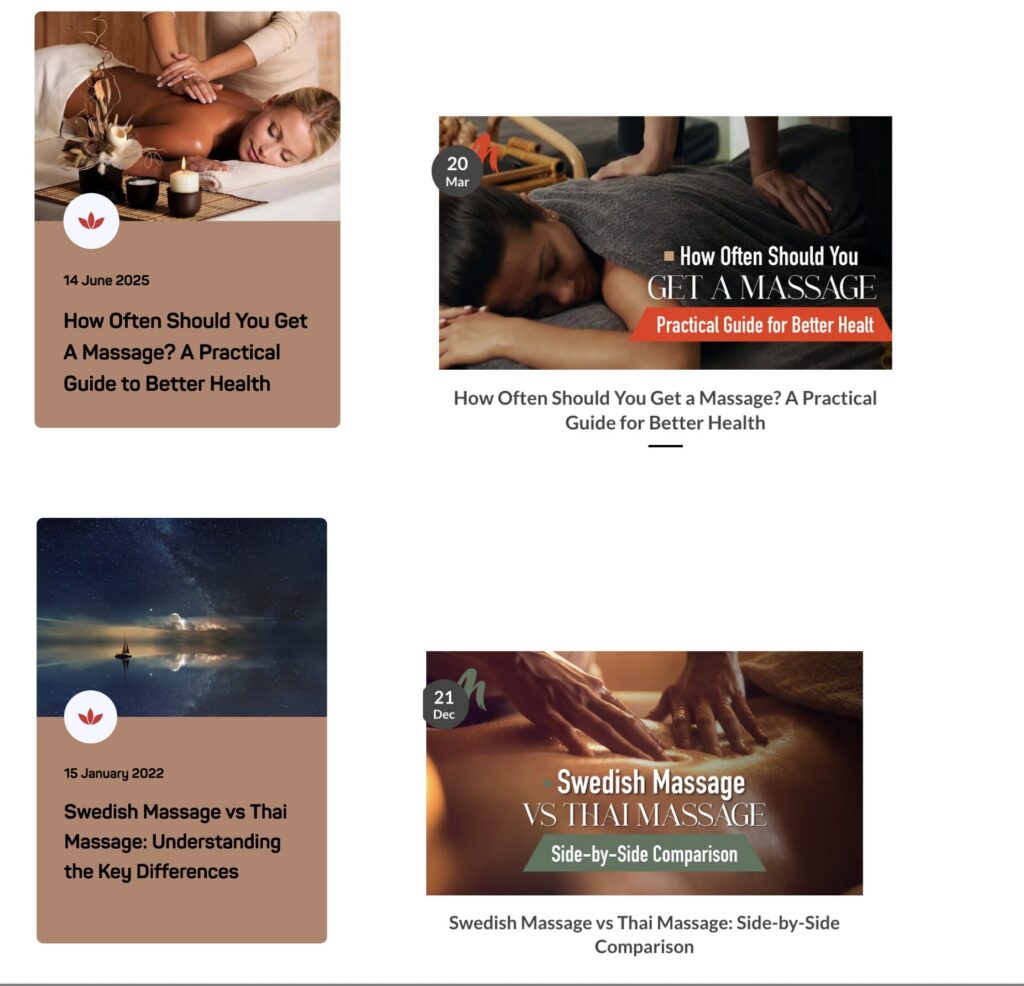
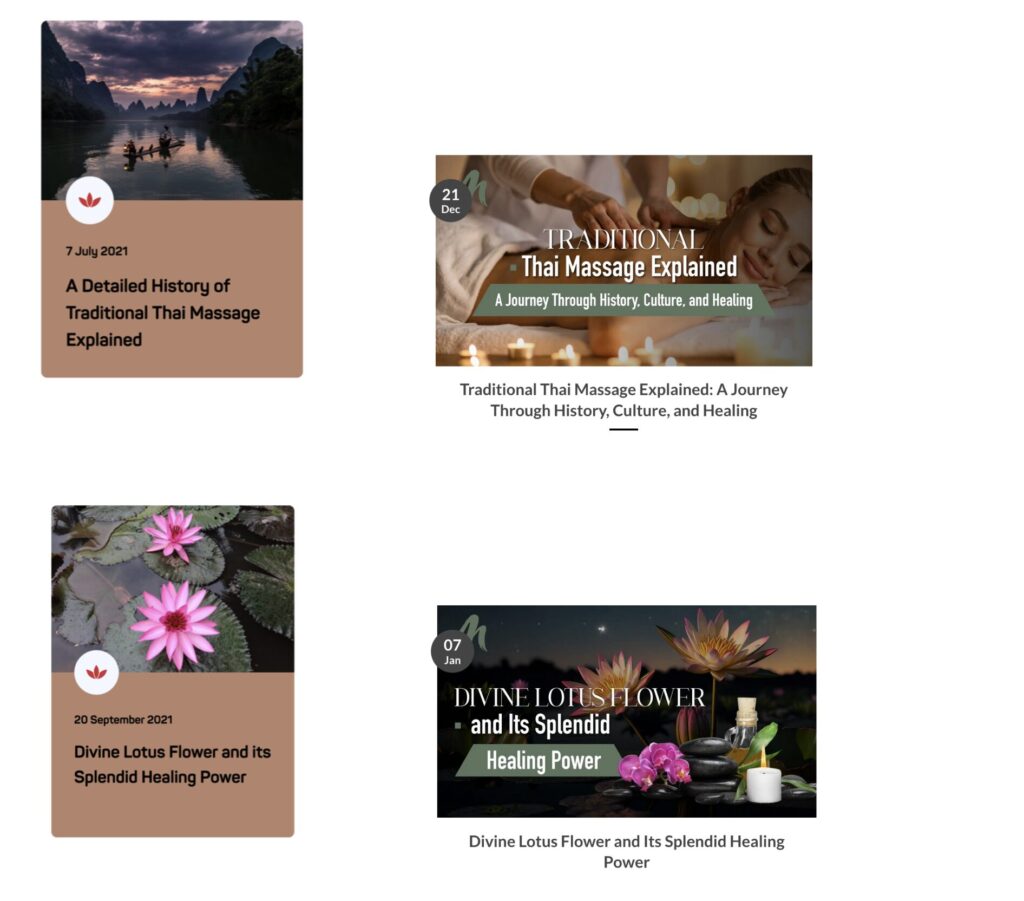
Documented instances of local marketing structures reproducing established Asiatic operational terminology and geographic identity identifiers.
2. Why Some Businesses Closely Imitate Existing Content Strategies
Many newer entities or websites analyse successful local businesses to understand which topics, keywords, and article formats perform well in search engines. In some cases, businesses may closely adapt existing blog structures, themes, or publishing styles rather than developing entirely original editorial strategies from the beginning.
This is especially common in highly competitive local industries where businesses attempt to accelerate online visibility by rapidly publishing large volumes of SEO-focused content. However, while keywords and article structures can be copied, genuine authority is much harder to replicate.
Google increasingly values first-hand experience, originality, expertise, and authentic brand identity. Businesses built on real history, consistent service, local trust, and lived experience tend to develop stronger long-term authority than those relying heavily on imitation or trend replication.
In fast-moving digital industries, some businesses prioritise rapid content expansion and broad keyword targeting as a shortcut to visibility. While this may create short-term online presence, long-term brand trust is usually built through originality, consistency, and authentic customer experience.
3. Build a Brand That Cannot Be Replicated
Over time, Asiatic has evolved into a recognised massage boutique in Islington, built on customer trust, therapeutic consistency, and a long-term wellness philosophy.
The strongest protection for any small business is originality rooted in genuine experience.
Focus on:
- Authenticity,
- Craftsmanship,
- Atmosphere,
- Education,
- and a consistent customer experience.
Share your real story:
- Travels through Laos, Vietnam, and Burma,
- Years spent studying and experiencing wellness culture,
- Experience within spaces such as Aveda and Neal’s Yard,
- And the philosophy behind your work.
When a business is built on lived experience and genuine expertise, imitation becomes far less powerful because authenticity creates emotional depth that cannot be easily replicated.
4. Monitor Your Brand Proactively
Catching problems early is one of the best ways to protect your online identity.
Here are some tools that can help businesses monitor their digital presence:
| Tool | Best For | Our Recommendation |
| Visualping | Monitoring visual changes to a competitor’s site (logos, decor, content). | Cheapest & most effective for local businesses. |
| SEMrush | Identifying “Content Scraping” and keyword theft. | Best for deep SEO protection. |
| Brand24 | Alerts for when competitors try to “poach” your social media followers. | Essential for Instagram integrity. |
Website Security, Spam Links, and SEO Monitoring
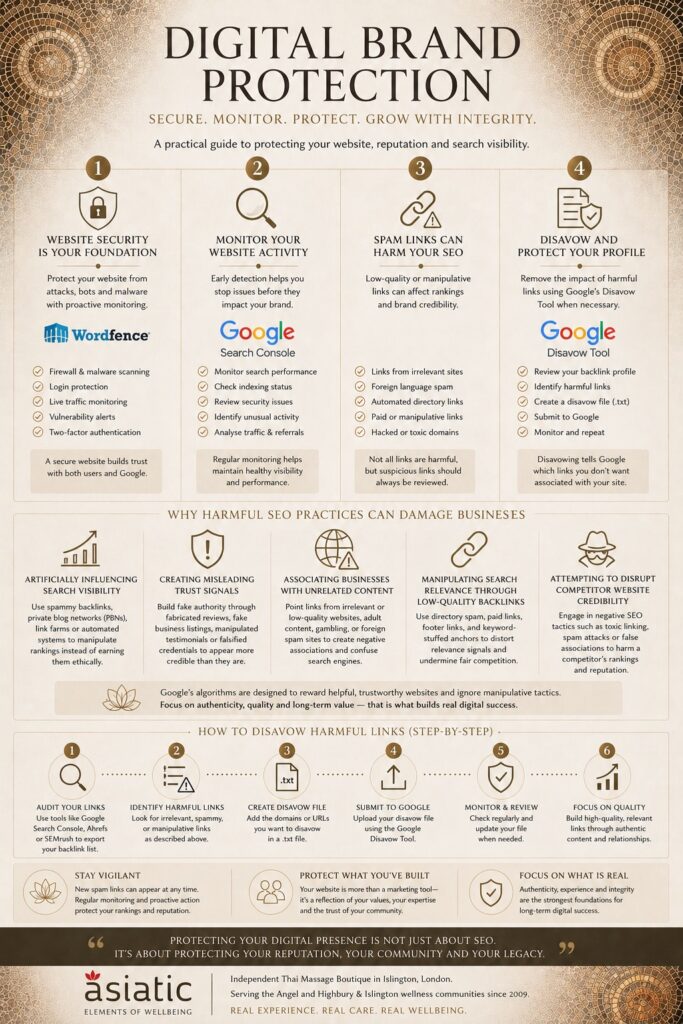
Independent businesses should monitor their website’s technical health and backlink profile. Spam-related SEO activity, such as suspicious backlinks, automated attacks, referral spam, or unrelated associations, can harm search visibility and brand reputation.
Tools such as Wordfence, Google Search Console, Cloudflare, and backlink auditing platforms help identify unusual activity, spam traffic, or harmful links. To begin with, Google Search Console verifies website ownership and submits a sitemap to track site health and link data. Installing a security plugin like Wordfence on WordPress enables real-time security monitoring. These steps help independent businesses protect and monitor their online presence.
When suspicious or low-quality backlinks are detected, review them carefully. Identify harmful links by checking for sources unrelated to your industry, spam content, or excessive outbound links. After compiling a list, use Google’s Disavow Tool: download backlink data, create a .txt file with the URLs or domains to disavow per Google’s guidelines, and submit it through the Disavow Tool to prevent these links from affecting your search profile.
With increasing digital competition, website security, technical SEO monitoring, and brand protection are essential for maintaining long-term trust and online visibility.
Why Website Security Monitoring Matters
As digital businesses rely more on online visibility, website security and technical monitoring are essential for long-term brand protection.
Independent businesses may encounter spam traffic, suspicious login attempts, automated bot activity, referral spam, or unusual website behaviour, all of which can impact performance, search visibility, and user trust.
Security tools like Wordfence help monitor suspicious activity, firewall attacks, malware risks, login attempts, and vulnerabilities on WordPress sites. For non-WordPress sites, alternatives such as Sucuri, SiteLock, or server-side malware scanners offer similar protection. Using these tools enables all website owners to maintain strong security, regardless of platform.
Regular monitoring with platforms like Google Search Console, Cloudflare, and security plugins helps businesses detect unusual activity early and maintain long-term website stability and search integrity.
Learn more here: Wordfence website security tools.
Understanding Spam Backlinks and Google Disavow Tools
Website owners should periodically review their backlink profile to identify any unrelated, suspicious, or low-quality links that may have appeared over time.
Websites may attract spam-related backlinks from automated systems, low-quality directories, hacked sites, or manipulative SEO practices aimed at influencing search rankings.
Although Google’s algorithms often ignore many spam signals, businesses should still monitor backlink quality. Google Search Console is a free, beginner-friendly tool that connects directly to your website and provides clear backlink reports. It requires only basic setup and no technical experience, making it ideal for small business owners new to SEO monitoring. Advanced options like Ahrefs, SEMrush, or Moz are also available, but Google Search Console is recommended for ease of use and immediate access to essential backlink data.
When website owners find harmful or irrelevant backlinks, Google’s Disavow Tool allows them to request that these links not be counted in their website’s backlink profile.
Maintaining a clean backlink profile, monitoring unusual referral activity, and prioritising ethical, long-term SEO practices are essential for protecting digital trust and search visibility.
Learn more here: Google Search Console
Learn more here: Google Disavow Tool guidance
How to Take Action: Reporting Digital Sabotage to the Authorities
If your independent brand faces malicious digital campaigns, negative SEO, or cloaked links, do not engage with the perpetrators. Instead, use official UK cyber defence frameworks to protect your business.
If your platform detects suspicious or malicious routing links, report them to the National Cyber Security Centre (NCSC) at www.ncsc.gov.uk. The NCSC leads the UK’s response to digital fraud and cyber-sabotage, collaborating with host networks to investigate and remove rogue domains. By reporting these incidents, independent businesses support a safer and more transparent digital marketplace.
Documented instances of digital disparagement against an established N1 wellness provider
Competitive Positioning and Brand Confusion in Local Markets
In highly competitive local industries, some businesses may attempt to position themselves rapidly by closely associating with the visual identity, language, customer base, or topical authority of more established brands.
This can sometimes include:
- Using highly similar branding aesthetics,
- Adopting comparable wellness terminology,
- Closely mirroring blog structures or service descriptions,
- Comparative marketing language,
- Or directly contacting followers and potential customers connected to competing businesses.
In some cases, a new entity may also attempt to strengthen its perceived authority through multiple location listings, aggressive promotional campaigns, or premium positioning statements designed to distinguish itself from longer-established local providers.
For independent businesses, these situations can create confusion, emotional stress, and reputational challenges—particularly when similarities become extensive across branding, messaging, and customer-facing identity.
The most effective long-term response is usually not emotional conflict, but continued investment into originality, transparency, professionalism, customer experience, and authentic brand development.
Some comparative marketing approaches attempt to differentiate a new entity by positioning themselves against established local providers.
5. Managing Negative Reviews and Protecting Your Business Reputation
Asiatic experienced a period on 17th March 2026 during which the business received a cluster of unusual negative reviews within a short timeframe. Following review investigations and reporting procedures, several reviews were later removed by platform moderation systems.
This reflects a broader issue affecting many independent businesses across the hospitality, wellness, tourism, and service industries, where online reputation systems can be vulnerable to misuse, spam, or coordinated review attacks.
Fortunately, awareness surrounding fake and misleading online reviews is increasing internationally. Governments, consumer protection agencies, and major review platforms are introducing stronger measures designed to improve transparency and help protect both businesses and consumers from manipulated online reputation practices. Recent guidance from the UK Competition and Markets Authority (CMA) and new UK consumer protection laws now place greater emphasis on preventing fake and misleading reviews online.
- UK Government fake reviews guidance (CMA)
- Short guide for businesses on fake reviews and consumer protection
- TripAdvisor Transparency Report 2025
- Google Maps review policies
The UK has introduced stronger enforcement powers under the Digital Markets, Competition and Consumers Act 2024, including measures targeting fake and misleading reviews.
Examples of Unrelated Review Activity Later Removed by Moderation Systems
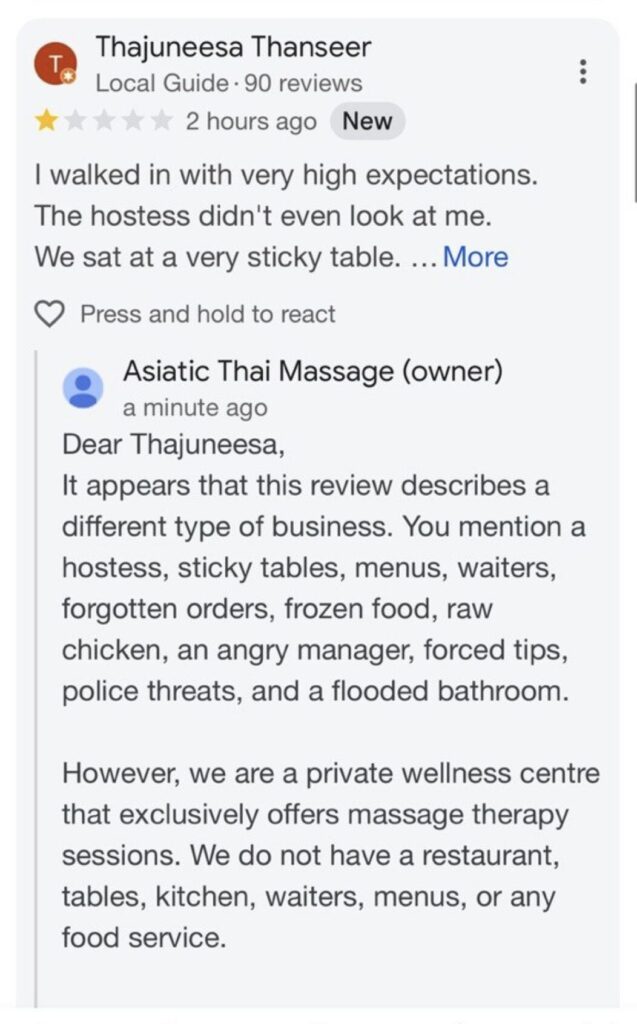
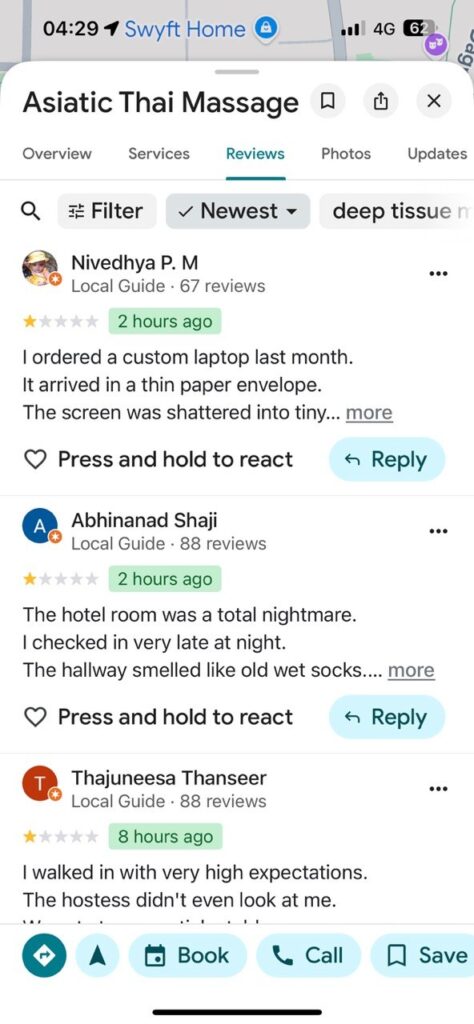
Coordinated review anomaly pattern targeting N1 wellness providers, later expunged by platform moderation algorithms for violation of compliance policies.
Responding to Negative Reviews Professionally
Not every negative review is fake. Genuine feedback can sometimes help businesses improve and refine customer experience standards.
When responding to criticism:
- Remain calm,
- Avoid emotional reactions,
- Thank the customer for their feedback,
- and invite them to continue the discussion privately where appropriate.
Professional responses often build more trust than defensive arguments.
At Asiatic, guest wellbeing, communication, and therapeutic comfort remain central to our approach. One of the systems we have implemented to support transparency and customer satisfaction is our 15-Minute Somatic Alignment Guarantee.
This policy allows guests, within the first 15 minutes of their treatment, to openly communicate if the pressure, technique, or treatment environment does not feel aligned with their needs and, if preferred, conclude the session at no charge.
The purpose of this approach is to encourage honest communication before deeper treatment work begins and to ensure that guests feel comfortable, respected, and listened to throughout their experience. In our experience, many guests continue beyond this initial alignment period because the treatment has been comfortably aligned with their preferences and therapeutic goals.
We believe that proactive communication, professionalism, organised customer records, and genuine care for guest wellbeing are among the strongest long-term protections against misunderstandings, service dissatisfaction, and misleading online criticism.
Over time, authentic customer relationships, consistency, and professionalism tend to speak far louder than temporary online negativity.
Aggressive Customer Acquisition and Digital Outreach
In highly competitive industries, some newer businesses may attempt to accelerate growth through aggressive digital outreach and comparative positioning strategies. This can include contacting potential customers through social media platforms, promotional campaigns, direct messaging systems, social media marketing tools, automated outreach software, or follower-targeted advertising designed to encourage users to switch providers.
In some cases, businesses may position themselves by emphasising perceived differences in atmosphere, qualifications, pricing, exclusivity, or service style when compared with more established local competitors.
While digital marketing and customer outreach are now common across many industries, long-term brand trust is usually built through professionalism, authentic customer experience, transparency, and consistent service quality rather than short-term promotional pressure alone.
Authentic Expertise vs Surface-Level Brand Mirroring
As digital competition in the wellness industry intensifies, it is important to distinguish between surface-level imitation and deep structural lineage. While a newer entity can easily mirror public vocabulary by adopting terms related to somatic structure, wellness engineering, or boutique positioning overnight, it cannot accelerate the underlying clinical literacy.
At Asiatic, our therapeutic vocabulary is supported by 17 years of hands-on experience and 220,000 completed treatments. Replicating a trademark phrase or an aesthetic layout on a screen does not provide the expertise required to master anatomical correction safely.
We have also become aware of situations in which followers connected to local wellness communities received unsolicited promotional outreach that encouraged them to switch providers by offering discounts or by positioning themselves comparably. While aggressive digital marketing techniques are increasingly common across many industries, we continue to believe that long-term reputation is best built through professionalism, customer care, authentic results, and genuine local trust.
6. Lead with Professionalism and Integrity
When facing competitive pressure or online imitation, it is important to remain grounded in professionalism, clarity, and long-term thinking.
In Thai culture, the principle of Metta — loving-kindness and respectful conduct — remains deeply important. Similarly, Japanese culture often emphasises concepts such as Omotenashi (thoughtful hospitality and sincere care), while traditional Chinese philosophy values harmony, integrity, and the importance of preserving honour through ethical conduct. Across many Asian cultures, professionalism is not only about commercial success but also about protecting the integrity of one’s work, originality, reputation, and long-term contribution to the community.
If you believe your original content, branding, or educational material has been closely adapted elsewhere:
• Document publication dates, screenshots, and relevant evidence carefully.
• Remain calm and professional in public communication.
• Seek private legal or professional advice where appropriate rather than escalating conflict publicly.
• Continue investing in originality, customer experience, and authentic innovation.
Digital trends, keywords, and visual aesthetics may change quickly, but genuine craftsmanship, consistency, and lived experience are far more difficult to replicate over the long term.
As businesses grow, maintaining professional internal policies on confidentiality, customer privacy, and conflict-of-interest awareness also becomes increasingly important. In competitive industries, team members may occasionally receive informal questions about operational information, such as customer volume, booking activity, marketing strategies, pricing structures, or business performance.
Establishing clear internal communication policies and encouraging staff to handle sensitive business information professionally can help protect both customer trust and long-term business integrity. Strong businesses are built not only through external branding but also through internal professionalism, ethical conduct, and team alignment.
7. Understanding Consumer Protection and Fair Commercial Practices
Small business owners should be aware that UK consumer protection laws are designed to promote transparency and fair commercial conduct within digital and physical marketplaces.
According to UK Government guidance on unfair commercial practices, businesses should not engage in misleading actions or provide inaccurate information that may distort consumer understanding regarding areas such as:
- Business identity,
- Qualifications,
- Reviews,
- Commercial history,
- Or the nature of services provided.
As online marketing becomes increasingly competitive, transparency, authenticity, and accurate business representation remain essential for maintaining long-term consumer trust.
For independent businesses, maintaining clear documentation, original branding, authentic customer communication, and accurate public representation is not only good practice but also an important part of operating responsibly within modern digital markets.
FAQs: Reflections on Authenticity, Creativity, and Brand Integrity
Why do businesses choose imitation over innovation?
A: In competitive local markets, new businesses often replicate established brands to reduce uncertainty and gain quick visibility. Innovation demands experimentation, investment, time, and operational confidence. Imitation is an attempt to bypass this foundational growth phase.
What drives genuine brand authenticity?
A: Authenticity is built on lived experience, consistency, qualifications, and a clear philosophy. While terminology can be copied instantly, the depth of execution behind those concepts cannot be mimicked.
Can customers recognise real-world authenticity?
A: Absolutely. Discerning consumers do not base long-term loyalty solely on digital presence or online advertising. They respond to energy calibration, atmosphere, professionalism, transparency, and tangible results.
Why does brand imitation feel personal for independent founders?
A: For independent founders, a brand reflects years of sacrifice, creativity, financial risk, and experience. When competitors closely replicate creative elements or philosophies, frustration and fatigue are understandable. Over time, however, the market favours original creators, as imitations lose depth.
Final Thoughts
In today’s digital landscape, visibility can sometimes be created quickly through trends, aggressive marketing strategies, or replicated content structures. However, genuine brand authority is rarely built overnight.
Authentic London wellness brands are shaped slowly through consistency, craftsmanship, customer trust, lived experience, and the ability to evolve while remaining grounded in their original philosophy.
For an independent boutique wellness studio operating within a highly competitive London market, long-term trust is ultimately built through consistency, professionalism, therapeutic integrity, and genuine customer experience.
At Asiatic, we believe that true wellness is reflected not only in treatment techniques but also in the integrity behind the business itself. While aesthetics, terminology, and digital strategies may change over time, authenticity, professionalism, and genuine care for people remain far more difficult to imitate.
In the long term, originality leaves a deeper imprint than imitation ever can.