Estimated reading time: 16 minutes
The lotus flower stands for purity, resilience, and spiritual awakening, especially in Eastern cultures. Its rise from muddy waters to full bloom represents renewal, mindfulness, and calm. This inspiring symbol is at the heart of traditional wellness philosophies.
At Asiatic Thai Massage in London, the lotus flower reflects our commitment to serenity, perseverance, and renewal. Since we opened in Islington in 2009, this symbol has shaped how we help guests find comfort and growth, even during difficult times.
The Lotus’s journey from darkness to beauty is our main inspiration at Asiatic. This symbol influences our architecture, interior design, and wellness philosophy. Throughout our space, from the wall panels to the calming atmosphere, our guests are reminded of personal renewal.
The Lotus is an important part of Thai culture and Buddhist philosophy, and it strongly influences traditional Thai massage and Eastern wellness. In this article, we examine how the Lotus’s meaning and enduring significance inspire today’s therapeutic spaces and practices.
Across Thailand and many parts of Southeast Asia, the lotus continues to appear within temples, wellness spaces, spiritual ceremonies, architecture, and therapeutic traditions.
Why is the Lotus Flower so Unique?
The lotus plant grows deep within muddy waters before rising towards the light and blooming into a striking flower. Across many Eastern cultures and religions, the lotus symbolises purity, renewal, resilience, and spiritual awakening because it can flourish beautifully despite difficult surroundings.
Lotus is an aquatic plant recognised for its broad floating leaves, long stems, and layered petals. Its roots spread through the mud beneath the water while the flower blooms above the surface, often opening at sunrise and closing later in the day.
Lotus plants thrive in moist environments with regular sunlight and warmth, contributing to their long-standing association with growth, balance, and renewal within nature and traditional wellness philosophy.
2026 Editorial Update
This article has been reviewed and updated in 2026 to reflect the cultural, spiritual, and symbolic importance of the lotus flower within traditional Thai wellness philosophy and the identity of Asiatic Thai Massage.

A calm garden scene at Oasis Spa, Bangkok, Thailand, featuring lotus flowers surrounding a calm swimming pool, reflecting the relaxing atmosphere of traditional Thai wellness spaces.
The Lotus Flower’s Evolution over Millions of Years
The mystery of the lotus flower lies in its status as a living fossil. Its history dates back to about 145.5 million years, and it survived the Ice Age (1.8 million to 10,000 years ago).
It was an era of significant geological and ecological change, during which most plants in the northern hemisphere went extinct.
This plant survived that period because of its exceptional longevity—indeed, it bestows the same on you. The flower also grows wild in Russia, Australia, the Philippines, China, and Iran, and it seems to survive in any extreme climate.
The Egyptian Lotus is believed to have been introduced to Egypt from India in the 6th century B.C. via the East-West trade route; however, some scholars suggest it originated in Iran. It thrived on the banks of the Nile, and later, the ancient Greeks, Phoenicians, and Romans cultivated it.
These facts add to the symbolism of the Lotus in cultures and religions throughout history.
Lotus and Its Interpretation in Major Religions
It’s common to observe the lotus’ prominence in Asia. Not only therapeutically, but socially and religiously.
The Lotus is a part of almost every religion in Asia, and its unique meaning permeates the lives of nearly every country and its people.
Let’s see how this beautiful flower emphasises its importance.
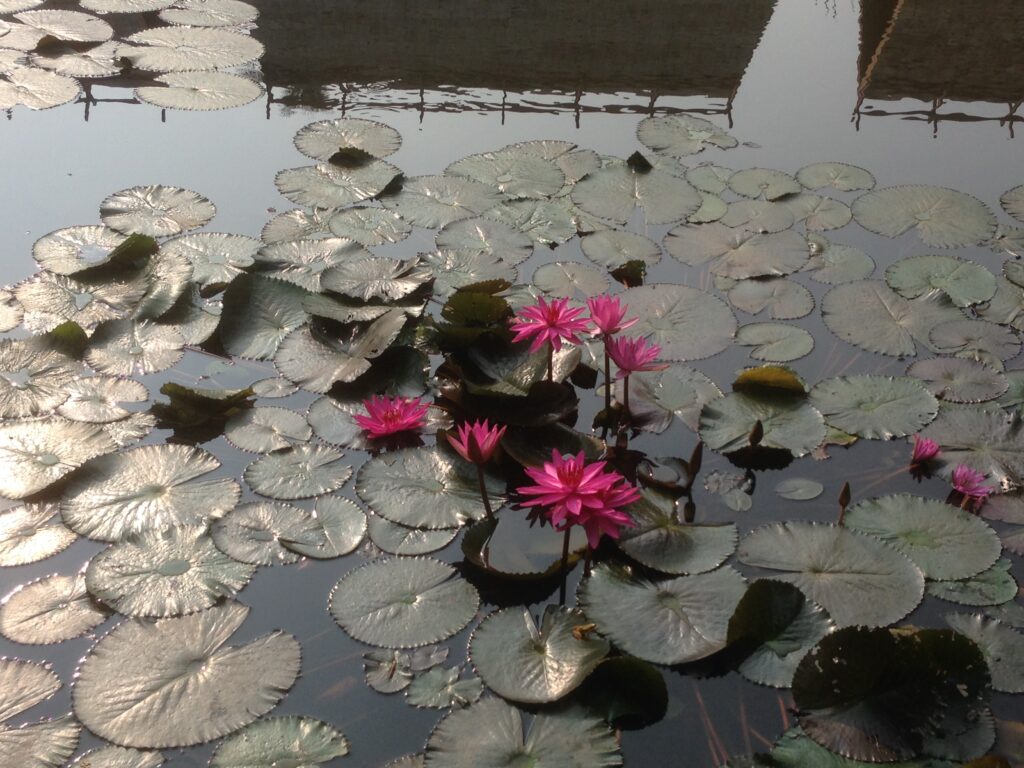
A close-up image of a fully opened lotus flower displaying its delicate layered petals and organic symmetry, symbolising purity, balance, and renewal.
Buddhism is a major adherent of the Lotus.
It’s part of the Buddhist belief system that all people have the potential to achieve enlightenment, and that it’s only a matter of time before each person begins to seek and discover the absolute truth. Buddhists believe it is necessary to undergo reincarnation to refine one’s being until one reaches nirvana, the ultimate state of awareness that a human can achieve.
For this reason, we find countless depictions of Buddha sitting on a lotus flower or on a seat with lotus petals carved into it. Like the lotus flower, which begins to grow in muddy, polluted water and blossoms into a perfect flower, these depictions represent an enlightened being who has overcome the suffering that pervades the material world. It’s also not uncommon to find many Hindu gods depicted sitting or standing on the lotus flower.
Lotus is the birthplace of Buddha.
Most of Buddha’s teachings originate in the Lotus Sutra (Lotus of the True Dharma), in which the sacred lotus flower symbolises the essence of Buddhism. Buddhists also believe that the Buddha was born on a lotus leaf.
Spiritual enlightenment in Buddhism through the Lotus
Buddhism believes this pure flower brings a smile to anyone who sees it.
Buddhism teaches that, like the lotus flower, we should be a source of happiness and delight for others, making their lives meaningful and beautiful, regardless of the difficulties or adverse circumstances that surround us.
Additionally, in Buddhism, the colour of each flower holds a distinct meaning. For example, the white Lotus is also part of the Four Noble Truths and represents inner righteousness and perfection, a spiritual concept.
Can you relate the eightfold path from Buddha’s teachings to the eight pearls of the White Lotus? You should do so because Buddha’s birth spot also connects with the eightfold path.
Just as the rose signifies love and emotional refinement, the red Lotus represents a pure heart. The characters for compassion, ardour, and love encode their nature.
The blue Lotus is a sign of triumph; it connotes a win over the senses. It also stands for truth and wisdom. The magnificent pink Lotus represents the Buddha and his teachings.
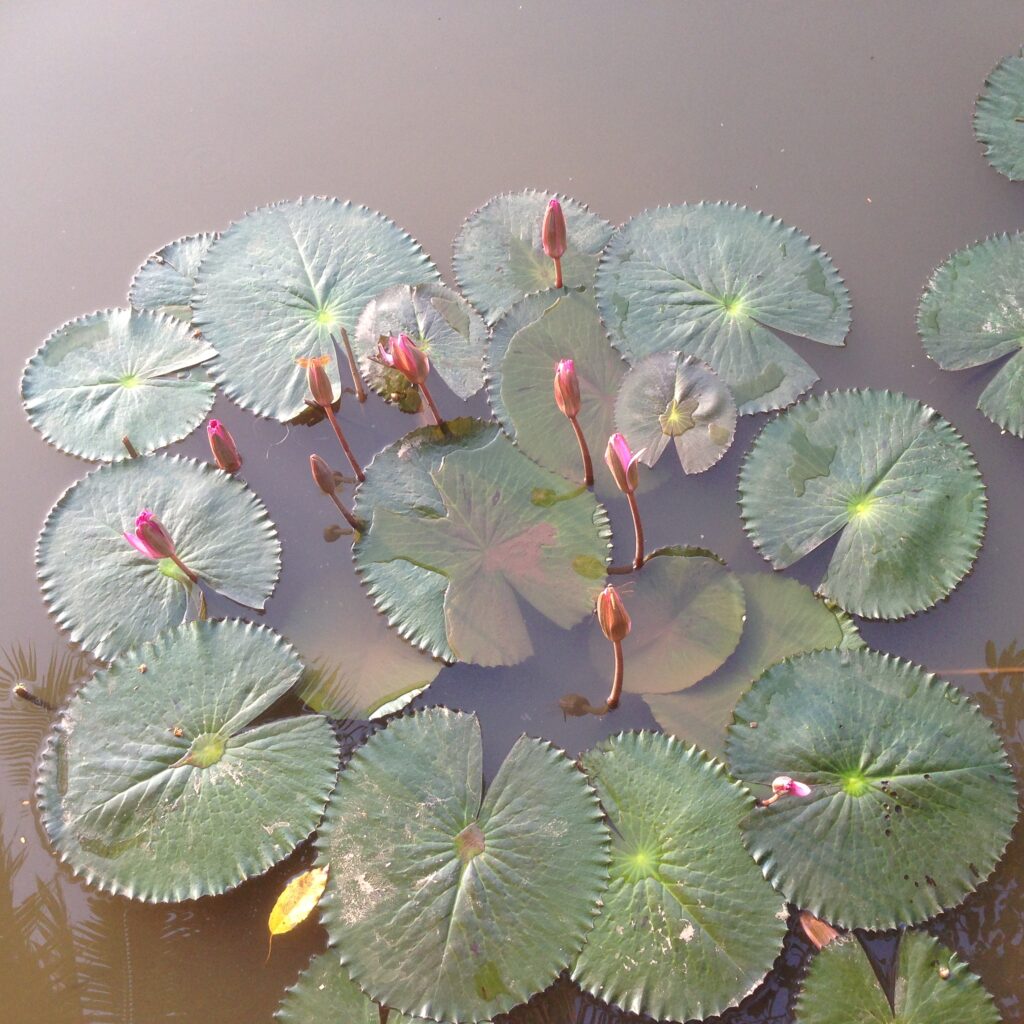
A blooming lotus flower photographed in Laos, reflecting the natural beauty, calm, and spiritual symbolism of Southeast Asian wellness traditions.
The magical effects of the Lotus in the Buddha Mantra
The Buddha’s mantra, “Om mani Padme hum,” carries spiritual meaning. In this mantra, the word “Padme” means “lotus.” The mantra is often referred to as “the jewel in the lotus.” It translates to “praise to the jewel in the lotus,” describing the oneness and fraternity of all beings.
The lotus remains an important symbol within Buddhist philosophy and art, often representing mindfulness, spiritual awareness, compassion, and the journey towards inner clarity.
Lotus in the Buddha art
In Asian art, the lotus throne or lotus platform refers to a stylised lotus flower that serves as the base or seat of a statue. (In Buddhist, Hindu, and Jain art, it is the usual pedestal for statues of deities.)
The Holiness of the Lotus in Hinduism
Another major religion on our planet, Hinduism, also affirms the holiness of the Lotus. Here is how you can see it blooming in every Hindu’s life.
Lotus is the seat of the gods.
The Lotus, a sacred icon in Hinduism and Indian culture, is mentioned in numerous descriptions throughout almost all Hindu holy scriptures. The universe’s chief creator, Lord Brahma, and another lord, Vishnu, the preserver, are each depicted as sitting or floating on a lotus.
Lotus is the birthplace and origin of the God Brahma.
Hinduism believes Lord Brahma was born from a lotus flower from Lord Vishnu’s navel.
Hinduism has noted several similarities between the bodies of Lord Krishna and Lord Vishnu. They believe the former’s body originated from Lord Vishnu’s, as he was as blue as a lotus flower.
Links to Brahma and Lakshmi
Many Hindu scriptures also associate the lotus flower with other gods and goddesses, especially Lakshmi, the Goddess of prosperity, who is often depicted floating above a fully open lotus flower in Hindu art.
In Hinduism, the lotus flower is particularly associated with the God Brahma, and the Goddess Lakshmi is a symbol of beauty, health, abundance, fortune, and eternity. Most primary rituals centring on Goddess Lakshmi also feature the Lotus flower.
The Lotus Flower is the centre of attraction in Indian art
Plankartha, one of the eight grand symbols of Indian classical art, which seems to illustrate the Lotus: buds, flowers, and leaves, is also considered an embodiment of ingenuity and creativity. This lotus motif is vital to the Taj Mahal’s heritage site in India.
Several ancient Hindu scriptures also describe Lord Krishna as a god with a Lotus Eye. Hence, the lotus flower is prominent in various scriptures or doctrines.
According to the Hindu scriptures, the Upanishads, the Lotus represents profound contemplation and introspection. The Upanishads also hold that the supreme inner self of man, the Atma, resides within the lotus heart (often depicted as a heart enclosing a lotus flower, a symbol of purity).
Lotus as a metaphor for the heart
Hindus use this flower to offer to God. As a symbol of attachment and devotion, known as “Bhakti,” this offering emphasises that their love for God should remain pure despite being busy with worldly affairs, as the muddy water does not influence the lotus’ purity and beauty.
A true devotee can turn his heart towards God, who exists nowhere else but in his heart. Although God exists everywhere, in human beings God appears as Param Atma, or the transcendent soul, in the heart, the spiritual centre. Therefore, finding God in temples is useless, as it is the devotee’s heart where the Param Atma resides.
The Maha Narayana Upanishad also explains the same idea: “Within the citadel of the body is the small, sinless, pure lotus of the heart, the residence of the Supreme.” In Hinduism, the lotus flower represents an individual’s heart.
Eastern poets, philosophers, sages, saints, masters, intellects, gurus, and historians have likened the lotus flower to the holy feet of gods and other heavenly beings.
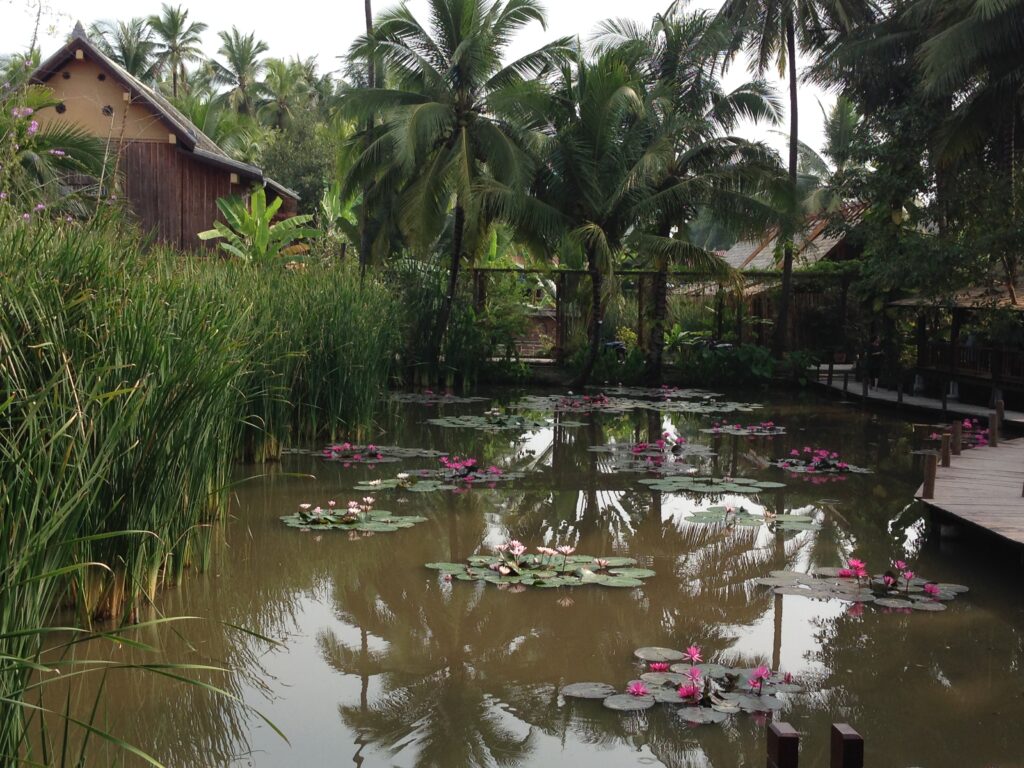
Maison Dalabua Wellness resort in Luang Prabang, Laos, features large palm trees, lotus flowers, and a spacious swimming pool surrounded by lush greenery and calming natural scenery.
Egyptian Mythology and the Holy Lotus
Ancient Egypt was the earliest civilisation to worship the lotus flower, which symbolised fertility, birth, purity, and many other qualities. It is also believed to be closely associated with the dead.
According to the Egyptian Book of the Dead, a dead person could be transformed into a lotus by a magic spell or talisman. The book referred to the lotus flower as an emblem of resurrection and rebirth.
The Lotus is often visible in Egyptian art and architecture, especially in temples. In the Lotus Sutras, the Sun god is believed to have emerged from a floating lotus. In the spiritual teachings of ancient Egyptian literature, the Lotus is referred to as “Seshen.”
Lotus signifies the sun, which in turn implies creation and rebirth. At night, the lotus flower closes its petals and dives to rest in the water. The following day, when the sun shines, the lotus flower rises and opens its petals, suggesting that the Lotus is born by the sun.
Blue lotuses have religious significance. The Egyptians believed the blue Lotus had a rich fragrance and a narcotic-like power to raise consciousness and bring peace.
Lotus’ Importance and Interpretation in Christianity
The Lotus is also depicted in the Lotusography of the Christian churches in Greece and Rome. In the Annunciation painting, the Archangel Gabriel appears before the Virgin Mary, the mother of Jesus. In these paintings, Gabriel is always depicted holding a water lily.
Unlike ancient religions, Christianity emphasises meaningfulness, which is why you can find many positive interpretations of the Lotus in Christian contexts.
Lilies and lotuses symbolise abstract ideas such as purity, fertility, and mental, spiritual, and physical purification. Since they emphasise positivity, they’re a part of many Christians’ everyday lives through various decorations and ornaments.

Wellness resort Maison Dalabua (House of Lotus) in Luang Prabang, Laos, features large palm trees, lotus flowers, and a spacious swimming pool.
Lotus Flower as a Symbol of Perseverance, Freedom, and Development
The lotus flower signifies the pure nature of the spirit. No matter how dirty the water is, the plant has survived and can still produce pure and enticing petals.
The flower also symbolises freedom. For instance, when you pour water on a lotus flower, the water drops will not have room to stay on the leaves and will roll off.
The lotus flower is also a sign of “svayambhu,” meaning self-renewal in Sanskrit. Considered one of the most aesthetic water lilies, it is a noble and spiritual flower in many religions and cultures worldwide.
This epitome of noetic procreation represents the birth of God, spiritual advancement, and even creation itself.
The lotus bud symbolises the hidden potential of spiritual essence and an individual’s mind, much like a lotus flower. As the lotus flower undergoes the initial stages of growth in the turbid water and then blooms into a beautiful flower, human intellect also goes through a similar stage to reach enlightenment.
The lotus flower also explains the chakra system. The crown chakra is associated with a lotus with a thousand petals, and its flowering signifies enlightenment.
Lotus as a Lesson of Detachment
The Lotus is an analogy for a spiritually enlightened person who carries out his work without concern for evaluation and is entirely free from attachment. The bloomed lotus flower and the unopened Lotus bud are perfect analogies for the human soul, with its ability to expand toward divine truth.
The Lotus also illustrates how to grow spiritually without being affected by the evil influences around us. Bhagavad Gita, one of the sacred books of Hinduism, reads: “Just as a lotus leaf is not immersed in water, so he who fulfils his duty without attachment and submits the result to the Supreme Being is not affected by sinful actions.”

A sunset scene along the Mekong River featuring a boat crossing reflective waters, tropical palm silhouettes, and the calm atmosphere associated with northern Thailand and Laos.
Lotus Flower Meaning in Every Culture
Lotus Flower in Chinese Culture
It is a part of religious and social ceremonies. They live with it and eat it.
In Chinese poetry, the stalk of the lotus flower is compared to a friend or family member. It’s because the lotus stem is bendable, yet it’s hard to break.
For the Chinese, the Lotus is a symbol:
- A man who licks out of the swamp but is not contaminated.
- Empty inside, upright outside.
- Purity
- The lotus’ fruit, flower, and stem are equal to past, present, and future.
Famous images and sayings about the Lotus in China illustrate this point.
- The lotus flower, with its leaves and buds, represents a complete union.
- A magpie sits on the stamens of a blooming lotus flower and collects seeds.
- If you receive a photo of a boy and a carp next to a lotus flower, you may live abundantly year after year.
- Two lotus flowers or a stem with a lotus flower and a single flower symbolise unity and the hope of a united heart.
- The Lotus (symbolising a girl) and the lionfish (symbolising a boy) signify love.
- Courtesans were often referred to as “red lotuses.”
- The bluestem of the lotus flower symbolises purity and modesty.
The Lotus also has excellent value in Taoism. One of Tao’s Eight Immortals is Ho Shen Ku, and her symbol is an open lotus flower, which signifies openness and wisdom. Taoist artists often paint the Lotus to represent the divine, symbolising light, beauty, and life, and to help us understand our path and place in the world.
Lotus Flower in Japanese Culture
The Lotus is primarily a symbol of Lotusity, and in Japan, it is revered for its ability to emerge from dirty, muddy water and blossom into a beautiful flower.
It is most often associated with attaining Buddhist enlightenment and is a popular symbol that symbolises living life to the fullest.
The lotus flower is said to be the most spiritual and enchanting. In Japanese culture, it symbolises the purity of body, speech, and mind, a concept derived from Buddhist symbolism.
Lotus Flower in Thai Culture
To your surprise, the colours of the lotus flowers carry different meanings. Blue represents wisdom, white represents spiritual excellence, and pink represents the Buddha.
Legend has it that the Buddha walked immediately after his birth. With his first steps, lotus flowers bloomed from the ground to support his shaky feet. The Buddha also preached about the Lotus’s growth and its four stages to help people understand how it represents enlightenment.
Since lotus flowers in Thailand are presented as gifts, are uniquely magnificent, have meaning, and are often associated with Buddhism, it is unquestionable why Thai people usually offer them to Buddha statues, along with a candle and three incense sticks.
They believe that offering nice things at the altar of Buddha will attract fortune and happiness into their lives. Some people also fold lotus petals to enhance the beauty of the already beautiful flowers.
Moreover, many Thais believe that they’ll eventually succeed in gaining enlightenment, just as the Lotus rises and blooms above the water. The famous Lotus flower is an integral part of traditional Thai massage, providing nourishment and symbolism.

A vibrant waterfall in Laos cascades through lush tropical greenery, with clear, emerald-toned water and dense natural forest surroundings.
American Culture and Lotus
Native Americans consider the lotus seed a highly sacred bean, which was once an essential part of many Americans’ diets. They say that the lotus flower, a sun symbol, can transform or infuse the sun’s energy into their food.
Amazing Facts About the Lotus Flower
The lotus flower is important in many Asian cultures and has a long history. It is the national flower of India, and the pink lotus is also a national symbol in Vietnam.
The lotus flower grows above the water, but its roots and stems can spread far below the surface. Lotus seeds are also known to last for centuries and can still grow after a long period of dormancy.
The lotus flower usually opens during the day and closes at night. This daily cycle adds to its meaning of renewal, rhythm, and spiritual reflection.
While traveling in Thailand and Laos, we often saw the lotus in temples, wellness resorts, meditation spaces, and traditional buildings. This showed us how deeply it is linked to calmness and spiritual reflection across Southeast Asia.
Historical Wellness Uses of Lotus Flower
In religions and cultures, the Lotus has deep roots. Yet, is Lotus’ usefulness scientifically proven?
The answer is yes.
Here are some fantastic health benefits of Lotus.
Lotus contains chemicals that can minimise swelling, inhibit the growth of cancer cells, help regulate blood sugar levels, break down fats, and protect the circulatory system, including the heart, arteries, and veins. Lotus chemicals also protect the skin, liver, and brain. Yet, to be more specific, the Lotus has much more to offer: Lotus, your betterment.
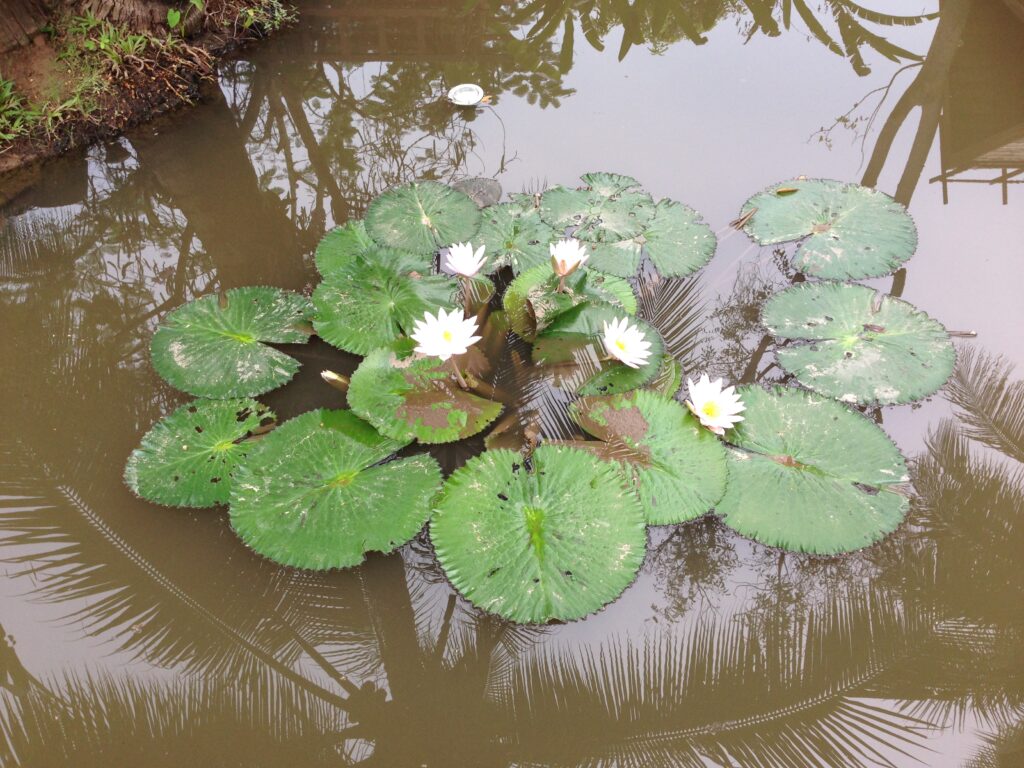
White Lotus flower is blooming.
The Lotus Within Contemporary Wellness Spaces
In modern wellness environments, the lotus flower embodies tranquillity, emotional equilibrium, mindfulness, renewal, and the journey from stress to clarity. In therapeutic spaces, the Lotus is linked to stillness, introspection, nervous system regulation, and holistic wellbeing.
At Asiatic Thai Massage London, the Lotus became integral to our identity because it mirrors the environment we strive to create. We offer spaces that invite clients to pause, breathe, restore physical and emotional balance, and reconnect with calm amid the pressures of city life.
Whether through therapeutic bodywork, mindfulness, movement, or simply creating space for stillness, the philosophy associated with the Lotus continues to inspire many contemporary wellness practices today.