Reusi Dat Ton, often translated as the Thai Hermit Exercise, is a traditional Thai movement practice that combines stretching, breath awareness, self-massage, and mindful body positioning. It is sometimes described as Thai yoga because of its gentle movements and focus on body awareness, although it has its own history and cultural meaning within Thai healing traditions.
Unlike Thai Yoga Massage, where a therapist assists the client with stretching and pressure techniques, Reusi Dat Ton is traditionally practised as a self-practice. It helps explain some of the principles of movement, breath, stretching, and body awareness behind traditional Thai bodywork.
This guide explores the meaning, origins, movements, potential benefits, safety considerations, and modern relevance of Reusi Dat Ton.
2026 Editorial Update:
This guide has been reviewed and updated to reflect the current understanding of Reusi Dat Ton, Thai Hermit Exercise, Thai self-massage, stretching, breathwork, movement-based wellbeing, and traditional Thai bodywork.
Quick Summary
Reusi Dat Ton, also known as the Thai Hermit Exercise, is a traditional Thai self-care practice that involves gentle stretching, breath awareness, self-massage, and mindful movement. It is not the same as Thai Yoga Massage because the individual traditionally practises Reusi Dat Ton, while Thai Yoga Massage is therapist-assisted. Both practices share a connection with Thai bodywork, stretching, pressure, breath, and body awareness.
What Does Reusi Dat Ton Mean?
Reusi Dat Ton is commonly translated as “Thai Hermit Exercise” or “the hermit’s self-stretching practice.” The word “Reusi” refers to a hermit, sage, or ascetic practitioner. “Dat” relates to stretching, adjusting, or training, while “Ton” refers to oneself or the body.
Together, Reusi Dat Ton is a self-practice involving stretching, breathing, self-massage, and mindful movement. In Thai tradition, it is associated with maintaining physical comfort, body awareness, energy balance, and mental focus.
Reusi Dat Ton vs Thai Yoga Massage
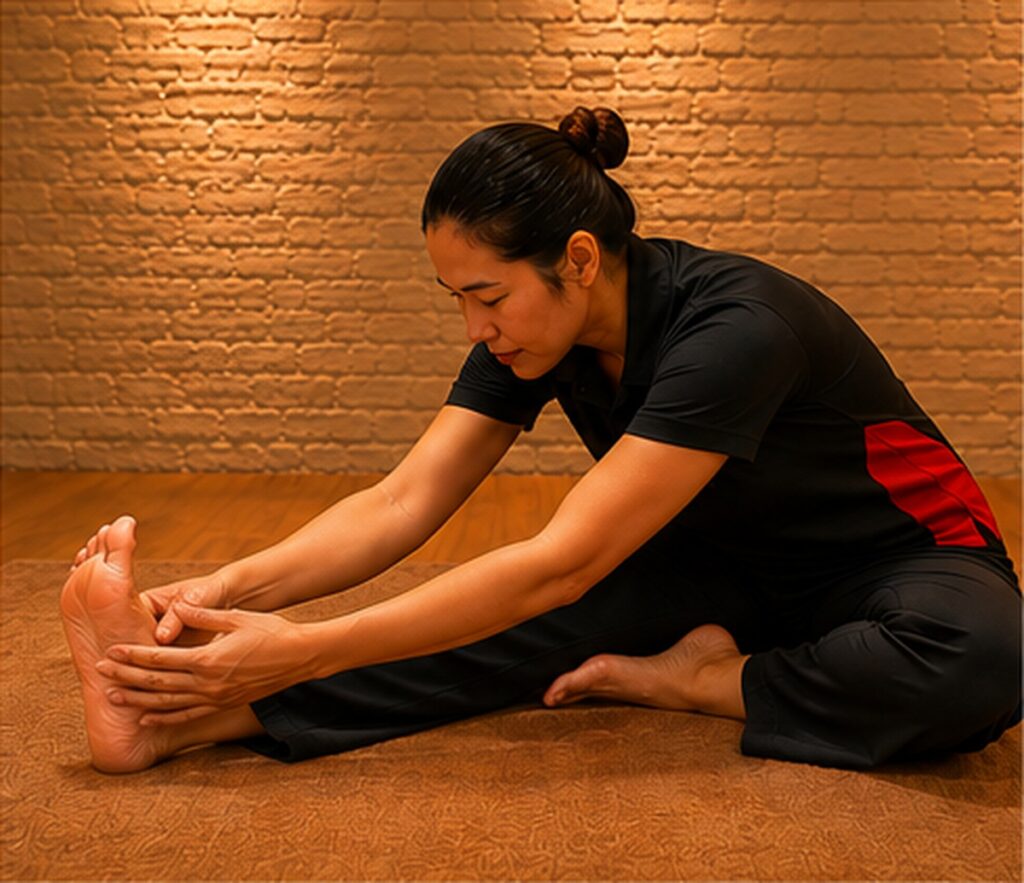
Reusi Dat Ton and Thai Yoga Massage are connected, but they are not the same practice. Reusi Dat Ton is traditionally a self-practice in which the individual performs gentle stretches, breathing exercises, self-massage, and postural movements.
Thai Yoga Massage is therapist-assisted. The client usually rests on a mat while the therapist uses assisted stretching, pressure, positioning, and rhythmic bodywork to support relaxation and mobility.
Understanding this difference helps explain why Reusi Dat Ton is often described as part of the broader heritage of Traditional Thai Massage and Thai Yoga Massage, rather than a massage treatment in its own right.
Benefits and Origins of Reusi Dat Ton
Reusi Dat Ton may support flexibility, mobility, posture awareness, relaxation, and a calmer connection between body and breath. The practice is associated with Thai hermits, or “Reusi,” who lived close to nature and used movement, breathing, self-massage, and meditative practices to maintain physical and mental balance.
Over time, these practices became part of Thailand’s wider bodywork and healing heritage. Today, Reusi Dat Ton is often discussed alongside traditional Thai massage, Thai Yoga Massage, breathwork, assisted stretching, and mindful movement.
The Philosophy and Modern Relevance of Reusi Dat Ton
Traditional Thai bodywork often refers to Sen lines, described as energy pathways in Thai healing philosophy. Reusi Dat Ton is connected with these ideas through movement, breath, posture, and self-massage.
In a modern wellness context, these concepts are understood as traditional cultural frameworks rather than medical diagnoses. Many people practise Reusi Dat Ton because it encourages gentle movement, body awareness, breathing, and relaxation.
The History of Reusi Dat Ton
The history of Reusi Dat Ton is closely connected with Thai traditional medicine, Buddhist culture, hermit practice, and Thailand’s wider movement and healing traditions. Historical accounts often describe the Reusi as wise hermits or ascetic practitioners who used stretching, breath, meditation, and self-care techniques to maintain their health and concentration.
Some historical records were lost or damaged over time, making it difficult to confirm the exact origins of Reusi Dat Ton. What remains important today is its role in Thailand’s traditional bodywork heritage and its continued presence in Thai wellness education.
Reusi Dat Ton became especially associated with traditional Thai knowledge preserved through temples, teachers, and classical Thai medicine. Today, it is still studied by people interested in Thai massage, Thai self-care, movement therapy, and traditional Thai wellness practices.
How Reusi Dat Ton Uses Stretching, Breathwork and Self-Massage
Reusi Dat Ton combines gentle stretching, controlled breathing, self-massage, postural awareness, and mindful movement. The practice is usually performed slowly and with attention to comfort.
Unlike a therapist-led massage, Reusi Dat Ton is practised by the individual. This makes it a form of self-care, movement education, and body awareness rather than a passive treatment.
The Purpose of Stretching in Thai Massage
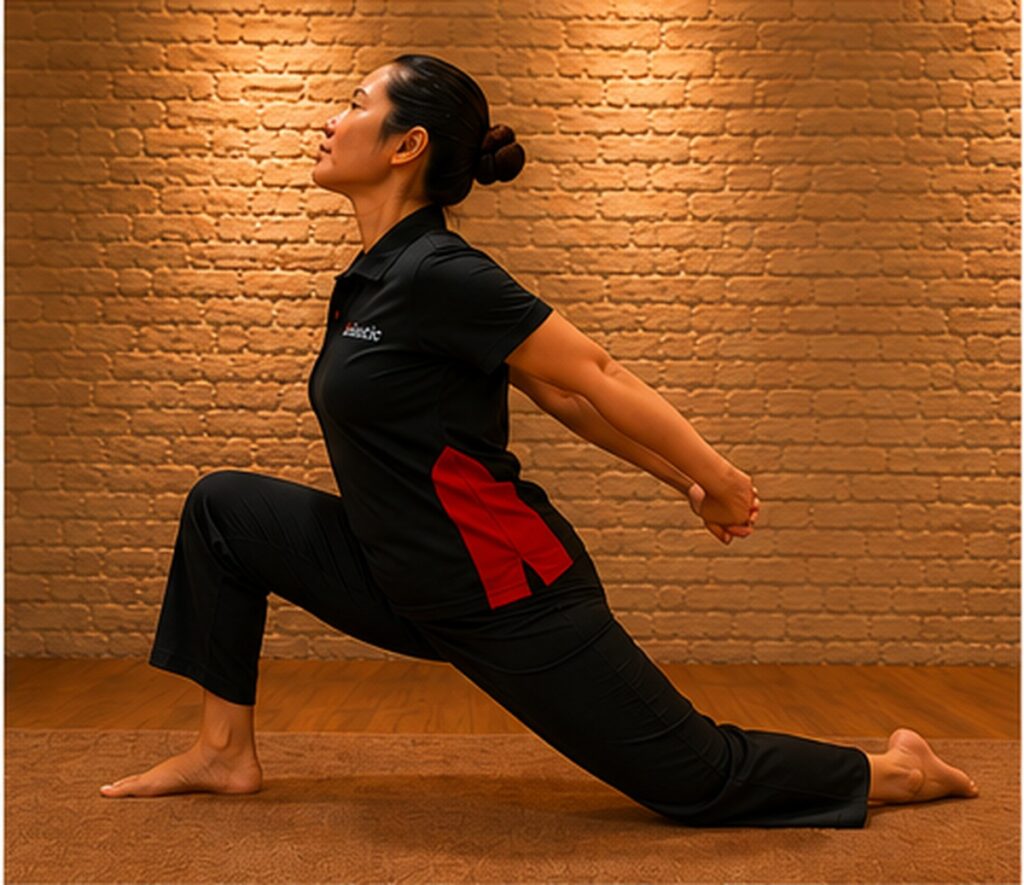
Stretching is central to both Reusi Dat Ton and Thai Yoga Massage. In Reusi Dat Ton, stretching may help the body feel more open, mobile, and aware. In Thai Yoga Massage, similar principles are applied through assisted stretching, pressure, and careful positioning guided by a therapist.
Potential Benefits may include:
- supporting flexibility and mobility
- Encouraging a sense of ease in the joints and muscles
- Supporting relaxation and body awareness
- Helping the body feel less tense after long periods of sitting or standing
- Supporting a calmer connection between breath and movement
Common Movement Principles in Reusi Dat Ton
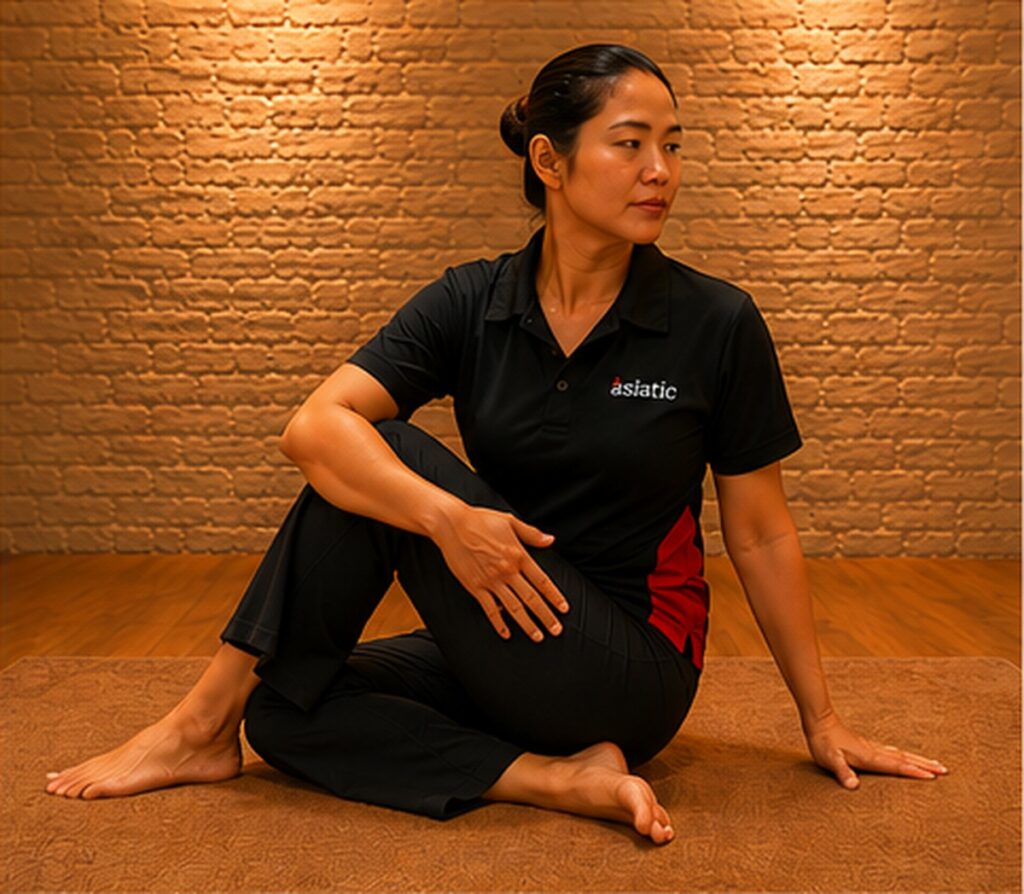
Common principles include moving slowly, coordinating breath with movement, avoiding force, and paying attention to how the body feels. Some movements may involve gentle spinal rotation, shoulder opening, hip mobility, leg stretching, or self-massage along areas of tension. The aim is not to push the body into extreme positions, but to encourage awareness, ease, and controlled movement.
Safety First: Guidelines for a Safe Practice
If you are new to Reusi Dat Ton, learn from a qualified teacher or experienced practitioner. Start slowly, avoid forcing stretches, and stop if you feel pain, dizziness, numbness, or discomfort.
Reusi Dat Ton should not replace medical care, physiotherapy, or professional advice. If you are pregnant, older, recovering from injury, have high blood pressure, balance issues, joint problems, spinal conditions, or any medical concern, seek advice from a healthcare professional before starting a new movement practice.
Who Should Be Careful with Reusi Dat Ton?
Reusi Dat Ton should be adapted carefully for each person. If you are pregnant, older, recovering from injury, have high blood pressure, balance issues, joint pain, spinal conditions, dizziness, or any medical concern, speak with a healthcare professional before starting a new movement practice.
Stop immediately if a movement causes pain, numbness, dizziness, sharp discomfort, or unusual symptoms. Reusi Dat Ton is best approached slowly, with patience, awareness, and respect for your body’s limits.
Potential Physical Benefits of Reusi Dat Ton
May support physical comfort: Some people find gentle stretching and breath-led movement helpful for general stiffness or tension, but Reusi Dat Ton should not be presented as a treatment for chronic pain, migraines, or other medical conditions.
A feeling of movement and lightness: Gentle stretching and self-massage may help the body feel warmer, looser, and more mobile.
Potential Relaxation and Mental Wellbeing Benefits
Breath-led movement and mindful stretching may help some people feel calmer, more grounded, and more aware of their body. It should not be presented as a treatment for anxiety or other mental health conditions.
Modern Adaptations and Global Popularity of Reusi Dat Ton Yoga
In recent years, Reusi Dat Ton has attracted interest from people exploring traditional Thai wellness, mindful movement, Thai Yoga Massage, breathwork, and gentle self-care practices. Its appeal lies in its slower pace, cultural depth, and blend of stretching, breathing, and body awareness.
Modern teachers may adapt Reusi Dat Ton for different bodies and abilities, but the practice should still be approached with respect for its Thai origins and traditional context.
The Asiatic Perspective on Reusi Dat Ton and Thai Bodywork
At Asiatic Thai Massage in Islington, we see Reusi Dat Ton as part of the wider heritage behind Thai bodywork, assisted stretching, breath awareness, and mindful movement. Since 2009, our team has supported clients in Angel and Highbury studio with traditional Thai massage, Thai Yoga Massage, assisted stretching, and comfort-focused bodywork. While Reusi Dat Ton is traditionally a self-practice, its principles help explain why Thai Yoga Massage and Traditional Thai Massage often include stretching, pressure, positioning, and a calm connection between breath and body.
Our work at Asiatic Massage Boutique & Wellness™ in Islington is rooted in respect for Thai massage tradition, professional care, and thoughtful bodywork adapted to each client’s comfort and needs.
Stretching Techniques in Reusi Dan Ton Thai Self-Massage
Research indicates that Thai massage utilises stretching to target specific areas of the body and address a range of issues. Thai self-massage and stretching techniques vary significantly from one another. These stretching methods enable practitioners to create a personalised and comprehensive treatment plan for each individual. Let’s look more closely at the most popular and valuable types of reuse for self-massage stretches:
Supine stretches
The person lies on their back as the therapist stretches them into a spinal position. These stretches are designed to increase flexibility in the chest, shoulders, and hips. Overall, this makes the upper body feel more open and relaxed.
Hip flexor stretch
The hip flexors and quadriceps are the primary focus of this Reusi Dat Ton stretch. It helps with posture correction and provides relief from lower back pain. The therapist may gently press their body weight onto the recipient’s thigh.
Spinal twist
A gentle spinal twist can help loosen tense back muscles and increase spine flexibility. You can do this stretch with either your legs straight out or one knee bent. This enables the energy and focus to change.
Chest opener
This resistance-based toning massage stretch opens the chest and shoulders by gently pulling the arms back. This method can help you breathe more easily and address the issues caused by poor posture.
Leg raises
You can stretch multiple muscle groups with different leg raises. You can work on your hamstrings with straight-leg raises. Additionally, you can work your lower back and hips with bent-knee raises.
Prone stretches
When performing prone stretches, the recipient lies face down on the ground. This type of resistance training works on the legs, shoulders, and back. When it comes to relieving stress in the back chain of muscles, these stretches work exceptionally well.
Cobra stretch
The cobra stretch position is excellent for opening the chest and strengthening the back. The person performing the massage may use their hands or feet to apply pressure to the person’s upper back to intensify the stretch.
Hamstring stretch
Your lower back will receive a good stretch with this Reusi Dat Ton exercise. It makes you more flexible and reduces your risk of injury. When the therapist lifts the recipient’s leg and keeps it straight, the back of the leg is stretched deeply.
Back arch
This stretch involves lifting the upper body, creating a gentle bend in the back. This technique relieves lower back tension and improves spinal flexibility.
Calf and foot stretch
The tension in your legs dissipates when you perform this stretch, and your feet become more flexible. The technique involves pressing down on the soles of the feet while gently bringing the toes up to the shins.
Side-lying stretches
Hips, shoulders, and sides of the body can be toned more specifically with side-lying stretches. When you perform these stretches, they help correct imbalances between the left and right sides of the body.
IT band stretch
The iliotibial band can relax after this stretch. Runners and bikers often feel pain in this area. The therapist may apply pressure to the outer thigh with their body weight while moving the other person’s leg through various ranges of motion.
Shoulder opening stretch
This stretch, which involves slowly pulling the arm back, increases shoulder mobility and helps release tension in the upper back. The therapist may use gentle rocking movements to help the person stretch and feel more relaxed.
Lateral flexion stretch
This reach stretch requires the receiver to bend sideways. The whole lateral line of your body will feel longer as a result. It can make you more flexible and ease tightness in your obliques and intercostal muscles.
How to Safely Perform Reusi Dat Ton Thai Massage Stretches
Thai self-massage therapy stretches can be beneficial, but it’s essential to use the correct technique and exercise caution. Here are some important rules to follow to make sure you do Reuse Dat on Thai massage moves safely:
1. The necessity for education and knowledge
Before you try the Reusi Dat Ton self-massage stretches, you need to be properly educated by a certified instructor so you know what to do, how your body works, and how to prevent harm to yourself.
2. A constant flow of information
There needs to be open communication between the client and the therapist at all times during the massage therapy treatment. Keeping track of how you feel and how much you like the stretching exercises may help the therapist.
3. Gradual progression
You need to start slowly and gradually increase the pressure applied to each stretch as the client’s muscles become looser and less tense. You should never force yourself past what is comfortable.
4. Using a good mechanical position
Using your body mass and leverage, rather than relying solely on your arms, when doing a stretch, will help you and the client avoid fatigue and injury.
5. Follow directions
If you have a medical condition or were injured in an incident that could make some of the stretches dangerous to perform, find out about it. Before you begin a Reusi Dat Ton Thai massage treatment, you will need to go through a full evaluation and intake.
6. Establish a consistent rhythm
By using breath coordination to establish a consistent rhythm to your stretching, you can improve relaxation and enhance your overall performance. Maintaining steady, deep breathing throughout the practice is important.
7. Apply proper support
When stretching, ensure the recipient has sufficient support. They need to use pillows or bolsters to maintain proper body alignment and stay comfortable.
8. Remain present and mindful
The entire session requires your complete concentration. It’s essential to observe the recipient’s verbal and physical language closely.
Philosophy and Principles of Reusi Dat Ton
How to do Reusi Dat Ton – Thai Massage Stretching Exercises safely
Balance & Harmony
Performing the RDT will keep your body’s energy flowing at its best. The concept of “sen” lines relates to this principle by describing the flow of energy through the body, much like the meridian system in Chinese Medicine. For many people, maintaining good health & having lots of energy is based on maintaining good energy flow.
Holistic Approach
Reusi Dat Ton is a method that takes into account the mind, body & spirit. In addition to the physical movements used in RDT, meditation & breathwork techniques can promote an individual’s overall well-being.
Accessibility
The basic RDT, also referred to as the Hermit Exercise, is available to individuals of all ages and fitness levels. Unlike other forms of exercise that demand a great deal of flexibility or strength, RDT features simple, adaptable movements that meet each person’s specific needs.
Physical movement
Reusi’s ton massage focuses on self-massage methods. These methods help to stimulate acupressure points, ease tension, and improve blood flow. Reusi Dat Ton’s movements improve coordination, posture, and sense of balance. Practitioners can engage in dynamic motions or standing positions. These may test your balance and sense of space, helping you gain more physical control and awareness.
The benefits of the Reusi Dat Ton or Thai Hermit Exercise begin your journey towards holistic wellness.
Reusi’s ton practices focus on mind-body balance and respect for nature. This is good for your health and mental peace. These Hermit or Reusi Dat Ton exercises have their roots in Buddhism and other ancient practices. The Thai Hermit Exercise, also known as Reuisi Dat Ton, benefits both your body and mind in many ways.
Physical Fitness
Increased flexibility: Regular practice can improve your joint range of motion and lengthen your muscles.
- Thai yoga improves circulation by stretching and self-massaging blood and lymphatic vessels. This boosts overall health and energy levels.
- Pain relief: If you have chronic pain (e.g., migraines, backaches, joint pain), you will likely experience relief using the Reusi Dat Ton stretches.
- Improved posture: These stretches help you stand tall and maintain a strong back, reducing strain on your body.
Conclusion
Reusi Dat Ton remains an important part of Thailand’s traditional movement and self-care heritage. Through gentle stretching, breath awareness, self-massage, and mindful body positioning, it offers a way to understand the relationship between movement, relaxation, and traditional Thai bodywork.
For modern readers, Reusi Dat Ton is valuable not as a quick fix but as a cultural practice that encourages body awareness, patience, and a slower, more mindful connection with movement.
Frequently Asked Questions
Is Reusi Dat Ton the same as Thai Yoga Massage?
No. Reusi Dat Ton is traditionally a self-practice, while Thai Yoga Massage is therapist-assisted.
What does Reusi Dat Ton mean?
It is often translated as Thai Hermit Exercise or the hermit’s self-stretching practice.
Can beginners practise Reusi Dat Ton?
Many movements can be gentle, but beginners should start slowly and, where possible, learn from an experienced teacher.
Is Reusi Dat Ton good for flexibility?
It may support flexibility, mobility, posture awareness, and body awareness when practised safely and consistently.
Is Reusi Dat Ton a medical treatment?
No. It is a traditional movement and self-care practice. It should not replace medical care, physiotherapy, or professional advice.
How is Reusi Dat Ton connected to Thai massage?
Both are part of Thailand’s broader bodywork heritage and share ideas on stretching, breath, pressure, body awareness, and the traditional Sen line philosophy.
© 2026 Asiatic. All rights reserved. Original editorial concepts, proprietary terminology, structural layouts, and creative content within this article are subject to ongoing digital monitoring and content protection systems and DMCA proceedings.