Estimated reading time: 19 minutes
Qualified therapist? | Look for recognised massage training, pregnancy-specific experience and appropriate professional insurance.
Pregnancy brings many physical and emotional changes. As hormones shift quickly, many women notice changes in how they feel both physically and emotionally.
The Asiatic Perspective: Choosing a pregnancy massage practitioner in London is about trust. At our Islington studios at 93 and 262 Upper Street, where skilled massage therapists have worked since 2009, we believe pregnancy massage should be gentle, informed, and tailored to each stage. It should focus on comfort, relaxation, safe positioning, and clear communication, always staying within safe massage practices. Drawing on our experience at Asiatic since 2009, this 2026 guide helps expectant mothers in London know what to look for in a safe and supportive prenatal massage.
Editorial note
Reviewed by Ben Pianese, Co-Founder of Asiatic and bodywork practitioner since 2001. This article is for general wellbeing information only and does not replace advice from your midwife, GP, obstetrician or healthcare provider.
| Question | Quick Answer |
|---|---|
| Best position? | Side-lying or supported seated with pillows or bolsters. |
| Deep tissue? | Avoid deep pressure during pregnancy. |
| First trimester? | Ask your midwife, GP, or obstetrician before booking. |
| Swollen legs? | Use only light, comfort-focused touch. Avoid deep lower-leg pressure. |
| Medical concerns? | Seek healthcare advice before booking a pregnancy massage. |
Our Experience Supporting Pregnancy Wellness in London
Since 2009, Asiatic Thai Massage has helped pregnant clients in Angel, Highbury, and throughout Islington feel comfortable and cared for. Our therapists tailor each session to your stage of pregnancy, comfort, health history, and personal needs. Pregnancy massage is different from regular massage, so we use careful judgment and clear communication, and we know when to suggest seeing a healthcare professional if needed.
The Anatomical Shift: Addressing Hormonal & Structural Changes
During pregnancy, hormonal and structural changes can affect posture, comfort, sleep, and mood. Many expectant mothers feel lower-back tension, hip discomfort, pelvic heaviness, tight shoulders, swollen legs, or fatigue. For readers experiencing pelvic discomfort, the RCOG information on pelvic girdle pain and pregnancy may be a useful healthcare resource. Pregnancy massage may help with comfort and relaxation as part of a broader wellbeing routine, alongside care from your midwife, GP, obstetrician, or other healthcare professional.
For many expectant mothers, pregnancy massage is a helpful part of a broader wellbeing routine, along with prenatal care, movement, rest, and advice from healthcare professionals. Understanding your massage options helps you make informed choices and feel more in control of your health. This guide covers pregnancy massage options, safety tips, and what to look for when choosing a prenatal massage practitioner in London.
Navigating Pregnancy Within Modern London Life
Pregnancy can put extra strain on the body, especially with London’s fast pace of life. Many expectant mothers balance desk jobs, long commutes, and hours of sitting, walking, or standing, all while managing the emotional ups and downs of pregnancy. These challenges can lead to swollen legs, back pain, tension in the hips and shoulders, trouble sleeping, and fatigue.
At Asiatic Thai Massage in Angel and Highbury, Islington, we often support pregnant clients who feel tired from the demands of city life.
Practitioner Observation from Our Islington Studio
Our specially adapted pregnancy massages may help you relax, feel more comfortable, ease muscle tension, and give you space to rest both physically and emotionally.
Since 2009, we have seen many pregnant clients in Angel and Highbury Islington come in with lower back tension, hip discomfort, swollen legs, tight shoulders, interrupted sleep, and fatigue from commuting, desk work, standing for long periods, and daily life in London. In later pregnancy, many clients notice posture changes as the body’s centre of gravity shifts and the muscles around the pelvis and lower back work harder. With gentle side-lying massage, supportive positioning, and a focus on relaxation, some clients tell us they feel lighter, calmer, and more comfortable after their session.
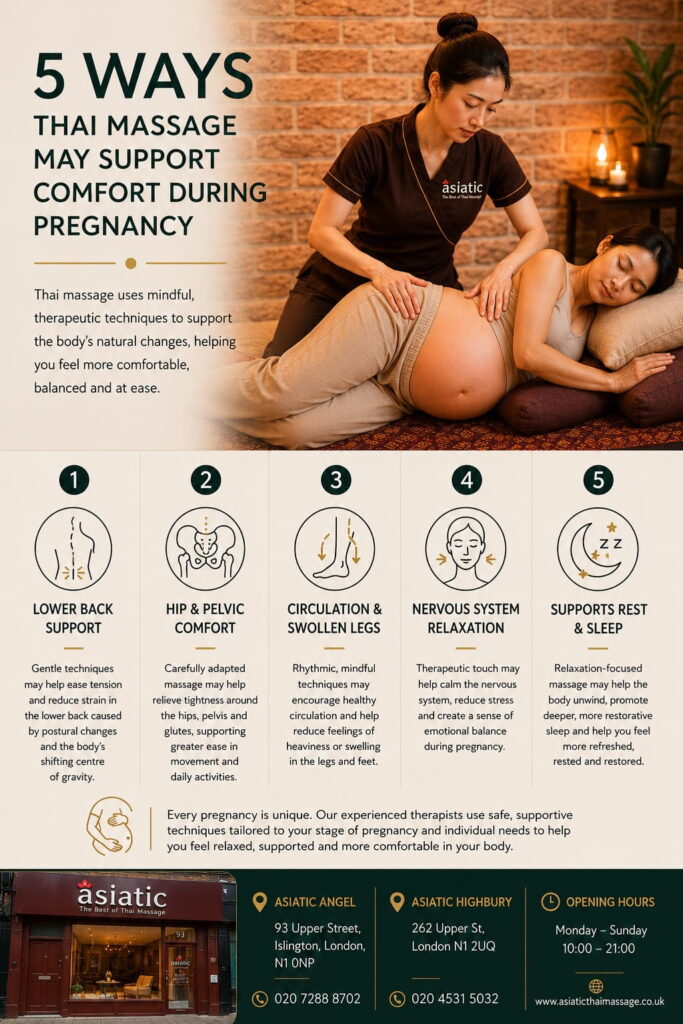
This infographic highlights five ways pregnancy massage may support comfort during pregnancy, including lower-back support, hip comfort, gentle leg relief, emotional calm, and better rest. At Asiatic Thai Massage in London, each pregnancy massage is adapted with safe positioning, gentle pressure, and clear communication to support the client’s stage of pregnancy and comfort level.
What is a pregnancy massage?
Pregnancy massage, also known as prenatal massage, is a gentle treatment designed for expectant mothers. It is usually done in a side-lying or supported seated position, using pillows and bolsters to support the hips, belly, knees, shoulders, and lower back. The massage therapist should adjust pressure, positioning, and technique based on your stage of pregnancy, comfort, and health history.
NCT guidance on pregnancy massage and wellbeing treatments suggests avoiding long periods lying on your back, using side-lying or supported seated positions, and avoiding deep tissue massage during pregnancy because of DVT risk. Unlike standard massage, pregnancy massage should be tailored to your needs and any advice from your midwife, GP, or obstetrician.
History of Pregnancy Massage
Many cultures have used massage and supportive touch to comfort pregnant women, help them rest, and feel at ease. Today, pregnancy massage is a specialised form of bodywork that focuses on safe positioning, gentle pressure, clear communication, and understanding pregnancy changes.
The most important part of pregnancy massage today is making sure it is safely adapted. A good therapist knows when to adjust pressure, avoid certain areas, use side-lying support, and when to refer you to a midwife, GP, obstetrician, or other healthcare professional.
Is pregnancy massage safe?
Pregnancy massage may not be suitable, or may require medical clearance, if you have a high-risk pregnancy, unexplained pain, bleeding, dizziness, fever, severe nausea, high blood pressure, sudden swelling, severe headache, vision changes, reduced baby movements, blood clot risk, placental complications, or recent medical concerns.
If you notice sudden swelling, especially in the face, hands, ankles or feet, or symptoms such as severe headache or vision changes, contact your midwife, GP, or maternity unit promptly before booking a massage. NHS guidance lists symptoms of pre-eclampsia, including severe headache, vision problems, pain below the ribs, vomiting, feeling very unwell, and sudden swelling of the face, hands or feet- symptoms that need urgent checking.
Pregnancy massage should be gentle, tailored to your needs, and based on clear communication. Therapists should avoid deep pressure on the abdomen and lower legs, especially if there is swelling, varicose veins, or concern about blood clots. Use pillows or bolsters to support the hips, belly, knees, shoulders, and lower back.
Massage can support comfort and relaxation, but it should never replace the care of your midwife, GP, obstetrician, or doctor. If back pain during pregnancy is very painful, NHS advice on back pain in pregnancy recommends speaking to a GP or midwife.
Why Pregnancy Massage Can Feel So Supportive
Pregnancy massage can feel supportive because it gives your body time to slow down, rest, and receive gentle touch tailored to pregnancy. Every pregnancy is different, but many expectant mothers seek massage for comfort, relief from lower-back and hip tension, heavy legs, emotional calm, and better rest. These benefits are for wellbeing and should not be seen as medical treatment.
May Support Leg Comfort and a Feeling of Lightness
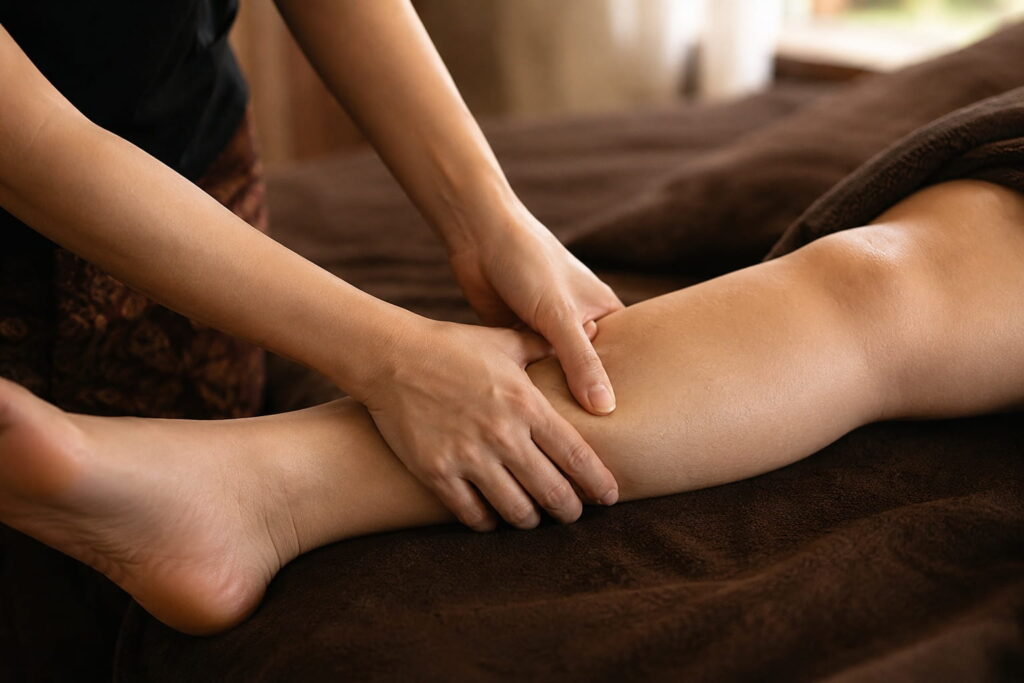
Many pregnant clients notice heavy legs, swollen feet, or tiredness in their lower body, especially later in pregnancy. A therapist trained in pregnancy massage uses gentle, light-touch techniques instead of deep pressure, particularly on the lower legs. The goal is to help you feel comfortable, relaxed, and lighter, not to treat swelling or any medical condition.
May Support Relaxation and Emotional Calm
Pregnancy can be emotionally demanding and physically tiring. Gentle, rhythmic massage may support relaxation and emotional calm as part of a wider approach to stress and mental wellbeing during pregnancy.
May Help You Rest More Comfortably
Many clients choose pregnancy massage because it gives them time to pause, breathe, and rest. While massage is not a treatment for insomnia, some expectant mothers find that relaxation-focused massage helps them feel more comfortable before resting.
Provides Nurturing Time to Pause and Reconnect
Pregnancy massage can give you a quiet moment to slow down and reconnect with your body during a time of big physical and emotional changes. The value often comes from its gentle approach, supportive positioning, calm environment, and clear communication.
How often should you get a pregnancy massage?
There is no one right frequency for everyone. Some clients book pregnancy massage only when they feel tired, tense, or need rest, while others prefer a routine during the second and third trimesters.
The right frequency depends on your pregnancy stage, comfort level, health history, symptoms, and advice from your midwife, GP, obstetrician, or healthcare professional. If you have a high-risk pregnancy, unusual symptoms, or medical concerns, seek healthcare advice before booking.
At Asiatic, we recommend listening to your body and talking openly with your therapist before and during each session.
What to expect during a pregnancy massage?
It helps to know what to expect before your first prenatal massage. A session usually lasts between 60 and 90 minutes, though sometimes it can be longer. Most sessions are at least 60 minutes.
A well-trained prenatal therapist understands a pregnant woman’s anatomy and physiology. They use this knowledge to recommend the best position for your massage and know which strokes and pressure points to avoid. Your massage therapist should check your comfort, pressure preference, and positioning. They may use pillows or bolsters to support the belly, hips, knees, shoulders, and lower back.
Most pregnancy massage treatments use gentle, slower techniques rather than deep pressure, especially around the abdomen and lower legs. You should feel able to speak at any time if you want the pressure reduced, your position adjusted, or the treatment paused. The session should feel calm, unhurried, and responsive to your body, with comfort and safety placed above pressure or intensity.
Aromatherapy and Pregnancy Massage Safety
Some clients enjoy gentle aromatherapy during pregnancy massage, while others are more sensitive to scents. Essential oils are not always recommended and should never be used casually. Use them carefully, properly diluted, and avoid them if you have allergies, nausea, scent sensitivity, headaches, skin sensitivity, or medical conditions. Aromatherapy should only support relaxation and comfort, not be used as a treatment for pregnancy symptoms, sleep problems, anxiety, pain, or any medical condition. If you are unsure about aromatherapy during pregnancy, speak with your midwife, GP, obstetrician, or healthcare professional before your massage.
Gentle At-Home Comfort Between Pregnancy Massage Sessions
Between professional pregnancy massage sessions, a partner can offer a gentle, light touch on the shoulders, upper back, hands, or feet if it feels comfortable. Avoid deep pressure, strong leg work, abdominal massage, or anything that causes discomfort. If you have pain, swelling, dizziness, bleeding, or any medical concern, talk to your midwife or healthcare professional before trying any massage at home. Keep all touch light, slow, and focused on comfort.
Myths surrounding prenatal massage
There is a lot of mixed advice about pregnancy massage. The safest approach is to avoid myths, choose a trained therapist, communicate clearly, avoid unsuitable pressure or positions, and seek healthcare advice if you have symptoms or concerns.
Myth 1: Pregnancy massage always causes miscarriage
There is no good evidence that appropriately adapted pregnancy massage causes miscarriage. However, many therapists avoid first-trimester massage or request medical clearance because the first trimester is a sensitive period and miscarriages are more common during this time. If you are unsure, speak with your midwife, GP, obstetrician, or healthcare professional before booking.
Myth 2: You must avoid massage for the whole pregnancy
Many expectant mothers can safely have pregnancy massage when it is adapted to their stage of pregnancy, health history, and comfort. The key is safe positioning, gentle pressure, and clear communication. If your healthcare provider has advised against massage, always follow their advice.
Myth 3: Foot or ankle massage will automatically induce labour
No reliable evidence shows that gentle, properly adapted foot or ankle massage will automatically induce labour. However, pregnancy massage should still be done carefully, especially in areas that are sensitive, swollen, painful, or affected by varicose veins or circulation issues. Deep work on the lower legs should be avoided during pregnancy because of DVT concerns.
How are pregnancy massage therapists trained?
Safe positioning, how to adapt pressure, pregnancy-related risks, good communication, and when to refer you to a healthcare professional.
When choosing a pregnancy massage therapist in London, ask if they have experience with pregnant clients, how they position clients safely, whether they use pillows or bolsters, and how they adjust pressure during each trimester. A good therapist should make you feel heard, supported, and never rushed.
How to verify a pregnancy massage therapist before you book
Since experience in the field of pregnancy massage is important, the positions you adopt, the amount of pressure applied, and the various treatment options all vary as your pregnancy progresses. Rather than relying on terms like “experienced” or “qualified” when choosing a therapist, ask about their specific training in pregnancy or prenatal massage.
Seek out therapists who have recognised qualifications in massage, professional insurance, and clear experience in working with pregnant clients. Membership in a professional organisation can also help ensure they are accountable. Most importantly, confirm that the therapist is trained and insured specifically to give pregnancy massages.
A good pregnancy massage therapist will be pleased to describe their training, explain the way in which they adjust their positioning and pressure for pregnant patients, and indicate when it may be necessary for you to speak to your midwife, GP, or obstetrician before receiving a massage.
Before You Book: 3 Questions to Ask a Pregnancy Massage Provider
1. Does the therapist have pregnancy-specific training or substantial experience working with pregnant clients?
2. How will I be positioned and supported during the treatment?
3. Will you ask about my pregnancy stage, health history and any current concerns before the massage begins?
If you have a high-risk pregnancy, are experiencing unusual symptoms, or have been told to take certain precautions, you should talk to your midwife, GP or obstetrician before making your appointment.
What to Look for in a London Pregnancy Massage Specialist
- Pregnancy-aware positioning: Side-lying or supported seated positioning with pillows or bolsters
- Clear safety boundaries: No deep abdominal work and no deep pressure on swollen or painful lower legs.
- Good communication: The therapist should ask about your stage of pregnancy, comfort, health history, and pressure preference.
- Referral awareness: The therapist should know when massage is not appropriate and when to recommend speaking to a midwife, GP, or healthcare professional.
- Calm environment: A clean, peaceful room with suitable support, gentle pacing, and space to rest.
The Asiatic Pregnancy Massage Experience
At Asiatic Thai Massage, pregnancy massage is designed for comfort, safe positioning, good communication, and gentle, pregnancy-aware bodywork. Our goal is to create a calm, respectful space where expectant mothers can rest, feel supported, and receive a massage tailored to their stage of pregnancy.
- Gentle support for pregnancy-related tension: We adjust pressure and positioning to support areas in the lower back, hips, shoulders, neck, and legs as needed.
- Relaxation and calming the nervous system: Gentle rhythm, quiet surroundings, and careful touch may help your body slow down and feel more deeply rested.
- Comfort-focused leg work: When appropriate, light, gentle techniques on the lower legs can help clients feel less heavy and more comfortable without deep pressure.
Our Asiatic Angel studio at 93 Upper Street and Asiatic Highbury studio at 262 Upper Street offer peaceful, professional spaces designed for comfort and relaxation during pregnancy. Since 2009, we have welcomed expectant mothers from Islington and London, providing pregnancy massage with a focus on clear communication, supportive positioning, comfort, and safe professional boundaries.
Pregnancy Massage in London: Choosing the Right Studio
London has many pregnancy massage options, from independent wellness studios to luxury hotel spas. The best choice should feel calm, professional, and carefully adapted to pregnancy, not just luxurious or convenient.
When comparing pregnancy massage studios in London, look for pregnancy-aware positioning, supportive pillows or bolsters, clear communication, gentle pressure, experienced therapists, clear safety boundaries, and a peaceful environment. A good prenatal massage should never feel rushed, too intense, or generic.
The best studio for you depends on your stage of pregnancy, comfort level, health history, location, and the type of experience you want, whether that’s a local Islington massage studio, a specialist clinic, or a luxury spa.
Please check our booking page for the latest treatment details and availability.
Clinic or at-home pregnancy massage: which is right for you?
Some pregnant individuals prefer visiting a clinic, while others prefer the convenience of getting a massage at home. There is no right or wrong choice, since what matters most is the therapist’s experience, whether the place is appropriate, and whether you can be positioned comfortably and safely.
A professional massage studio may have specially designed bolsters, pillows, and adjustable equipment for pregnancy massage. A massage at home can save you the trouble of travelling and may make the experience easier in the later stages of pregnancy. Whatever location you choose, be certain that the therapist has experience specific to pregnancy, is insured, and adopts a safe method of positioning before you book the appointment.
Whatever you choose, your session should feel relaxing, well supported, and adapted to your comfort rather than a standard massage.
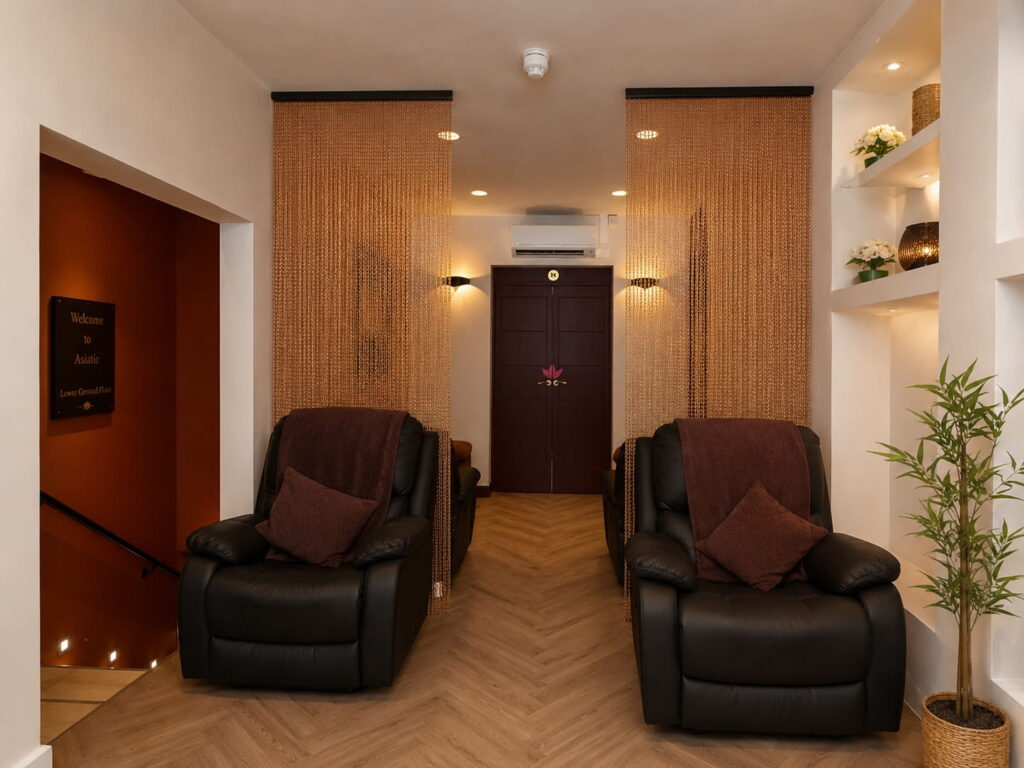
Asiatic 93 Upper Street reflects our original Massage Boutique & Wellness identity in Islington — a calm, refined environment created for thoughtful bodywork rather than generic spa styling. With copper curtains, reclining chairs, warm natural tones, and quiet treatment rooms, the space supports a slower, more considered approach to somatic care, pregnancy-aware massage, and restorative bodywork.
Asiatic Pregnancy Massage in Angel, Highbury and Islington
Asiatic Thai Massage is based in the heart of Islington, London, with two carefully designed spaces on Upper Street. Our Asiatic Highbury studio at 262 Upper Street sits beside Nourished Communities, while our original studio at 93 Upper Street is located next to Ten Health & Fitness.
Our rooms are bright, peaceful, and softly lit by natural daylight, reflecting an Asiatic atmosphere that’s calm, luxurious, and thoughtfully designed for guests who value professional bodywork in a refined London setting. From our Upper Street interiors to our “Revive and Unwind in Chic Style” philosophy, the experience centres on comfort, care, and quiet sophistication.
At Asiatic, we approach pregnancy massage with care, communication, and respect for each stage of pregnancy. It is one of our specialist therapies, alongside Thai Foot Massage, Thai Yoga Massage, Traditional Thai Massage, and Back and Shoulder Massage. Each prenatal massage is adapted to the client’s comfort, positioning needs, pressure preference, pregnancy stage, and relevant health considerations.
We believe pregnancy massage should be more than a simple foot or back rub. It should be a carefully held experience: gentle, reassuring, and attentive to the physical and emotional changes of pregnancy. Our therapists use calm, measured techniques and supportive positioning to help expectant mothers feel more comfortable, rested, and connected with their bodies.
With over 17 years of experience, Asiatic Thai Massage understands the importance of balancing gentle care with effective, pregnancy-aware bodywork. The treatment is not about intensity or deep pressure; it is about thoughtful adaptation, clear communication, and creating a sense of ease within the safe boundaries of massage therapy.
For expectant mothers in Angel, Highbury, and Islington, Asiatic offers a pregnancy massage experience shaped by calm surroundings, professional care, and a long-standing commitment to wellbeing in London.
Many clients choose Asiatic for its long-standing local presence, calm Upper Street studios, and experience supporting comfort-focused pregnancy massage in Islington since 2009.
Website address: Asiatic Thai Massage
Cost: £82
Phone: +44 20 7288 8702
Appointments: Book Online
Address: 93 Upper St, London N1 0NP, United Kingdom
Nearest tube station: Angel and Highbury & Islington
Pregnancy Massage in Angel and Highbury, Islington
At Asiatic Thai Massage, we offer pregnancy massage at our two Upper Street studios in Islington: Asiatic Angel at 93 Upper Street and Asiatic Highbury at 262 Upper Street. Each studio is set up to be calm and professional, so expectant mothers feel supported, heard, and comfortable during their treatment.
Our Angel studio is easy to reach if you live near Angel, King’s Cross, Clerkenwell, or central Islington. Our Highbury studio is a good choice for those in Highbury & Islington, Canonbury, Holloway, or anywhere in North London.
FAQs
Can I receive a prenatal massage at any stage of pregnancy?
Pregnancy massage may be suitable for many people during pregnancy when adapted appropriately, but some therapists prefer to begin from the second trimester or may request healthcare clearance. If you are in your first trimester, have a high-risk pregnancy, or have any unusual symptoms, speak with your midwife, GP, obstetrician, or healthcare professional before booking.
Who should avoid getting a pregnancy massage?
Some clients should speak with their GP, midwife, obstetrician, or healthcare professional before booking a pregnancy massage, especially if they are experiencing:
- Those experiencing nausea, vomiting, or severe morning sickness
- A high-risk pregnancy
- A history or risk of miscarriage
- Placental complications, such as placental abruption
- Risk of premature labour or early delivery
- Unexplained pain, bleeding, dizziness, sudden swelling, or high blood pressure
Pregnancy massage should always be adapted to your health history, pregnancy stage, and comfort level. If you are unsure, seek medical advice before booking.
How is pregnancy massage different from regular massage?
Pregnancy massage differs from standard massage because positioning, pressure, pacing, and safety considerations must be adapted to the needs of pregnancy. The therapist should consider your stage of pregnancy, comfort, health history, and any advice from your midwife, GP, or obstetrician.
What’s the best position to receive a prenatal massage?
Side-lying with pillows or bolsters supporting the belly, hips, knees, shoulders, and lower back is often one of the most comfortable positions for pregnancy massage. Some clients may also be supported in a seated or semi-reclined position. Avoid long periods of lying flat on your back later in pregnancy.
Should I get my abdomen massaged during a prenatal massage?
Avoid deep abdominal massage during pregnancy. Some clients may enjoy a very light, gentle touch over the belly, but only if they request it and it feels comfortable. At a professional appointment, the therapist should always prioritise comfort, consent, and safety.
What should I wear for a pregnancy massage?
You can undress as far as you’re comfortable. You will be professionally draped with towels throughout the treatment, with only the area being worked on left uncovered. If you prefer to remain more covered, tell your therapist before the session begins.
Is pregnancy massage painful?
Pregnancy massage should not feel painfully uncomfortable. Some areas may feel tender if they are already tight or sensitive, but the therapist should always adjust the pressure. Tell your therapist immediately if anything feels uncomfortable.
Is aromatherapy beneficial for pregnant women?
Some essential oils may be suitable when used carefully and diluted appropriately, but pregnancy can increase sensitivity to scent. If you have nausea, allergies, sensitivity, or medical advice to avoid oils, tell your therapist before the session.
How often should I get massages during pregnancy?
There is no single ideal frequency. Some clients book occasionally when they feel tired, tense, or need rest, while others prefer a more regular schedule during the second and third trimesters. The right frequency depends on your pregnancy stage, comfort level, health history, and any advice from your midwife, GP, or obstetrician.
How soon can I schedule a postnatal massage after delivery?
If you have a healthy pregnancy and delivery with no significant complications, you can schedule a postnatal massage as soon as you feel ready. However, in the case of a cesarean section, it is usually necessary to wait at least six weeks for the scar tissue to heal.
Are there any areas that should not be massaged during pregnancy?
Therapists usually avoid deep abdominal work, deep pressure on the lower legs, and any area that is painful, swollen, inflamed, or affected by varicose veins or circulation concerns. Always adapt pressure to the client’s comfort and health history.