Modern life often makes it hard to breathe deeply. Long work hours, screens, commuting, emotional pressure, busy schedules, and constant noise can leave your body tense and your mind overstimulated.
When we feel stressed, our breathing often becomes shallow. The shoulders rise, the chest tightens, and the body can begin to feel as though it is always preparing for the next demand.
Breathwork is a simple way to pause. You do not need special equipment, a perfect space, or a long routine. Even a few slow breaths can help you notice how your body feels and bring a moment of calm.
At Asiatic Massage Boutique & Wellness, we see breathing as part of body awareness. In our treatment rooms, breathing, touch, and stillness work together. As your body relaxes, your breath can become easier. When your breath slows, your body may also soften.
This guide shares gentle breathwork exercises for inner peace, explains how massage can support breath awareness, and shows you how to practise simple breathing techniques safely.
2026 Editorial Update: We have reviewed and updated this article to provide a calmer, more practical guide to breathwork, relaxation, massage, and body awareness. The advice now highlights gentle breathing, safer self-care, and how massage can help you slow down.
Why Breath Matters in Modern Life
Breathing is something we do all day, but many people rarely notice it until they feel stressed, tired or anxious.
During busy periods, the breath may become quick, shallow, or held without realising it. This can happen when we sit at a desk for many hours, rush between tasks, respond to pressure, train intensely, or carry emotional stress in the body.
Gentle breathwork helps your body slow down. It gives your mind something steady to focus on and brings your attention back to the present moment.
The purpose is not to breathe perfectly. The purpose is to notice.
Where does the breath move easily?
Where does the body feel tight?
Do the shoulders lift when you inhale?
Does the abdomen soften when you exhale?
Can you let the next breath arrive without forcing it?
Noticing these small details can help you return to a sense of calm.
Breath, Stress and the Body
Stress often shows up physically. Some people hold tension in the jaw, chest, ribs, neck, shoulders or abdomen. Others notice that they sigh often, hold their breath, or feel unable to take a full, comfortable inhale.
Breathwork can help you notice these patterns. A slow exhale, a relaxed jaw, or gently placing your hand on your abdomen can remind your body that it is okay to pause.
Breathing practices are not about forcing your body. They work best when you approach them with patience and gentleness.
If any breathing exercise makes you feel dizzy, uncomfortable, anxious, or unwell, stop and go back to your normal breathing. Breathwork should feel supportive, not forced.
How Massage Can Support Breath Awareness
Massage is not a treatment for breathing, but it can help you feel more relaxed and connected to your body.
Many clients come in with tension in their shoulders, upper back, neck, ribs, or jaw. These areas can affect how freely you breathe. When a therapist works carefully and communicates clearly, a massage can help you notice where your body is holding tension.
At Asiatic, our therapists adjust the pressure and pace to suit each person. Some people prefer firmer work on the back and shoulders, while others need a slower, gentler approach to help their body relax.
During a massage, we often encourage clients to breathe naturally, especially when a tense area is being worked on. The aim is not to force deep breathing, but to create enough comfort for the breath to return to a calmer rhythm.
The Asiatic Breath Pause™: A Three-Minute Reset
The Asiatic Breath Pause™ is a simple breathing ritual for anyone who feels tense, rushed, overstimulated, or disconnected from their body.
You can use it before a massage, after work, before sleep, between meetings, or whenever you need a moment of calm.
How to practise the Asiatic Breath Pause™
Sit comfortably with both feet on the floor.
Let your hands rest on your thighs, abdomen or chest.
Soften your jaw.
Drop your shoulders slightly.
Take one slow breath in through the nose.
Exhale gently through the mouth.
Now allow your breathing to become natural. Do not force it.
Bring your attention to three places:
Your chest.
Your ribs.
Your abdomen.
Notice which part of your body moves most easily as you breathe.
Now repeat silently:
“I am here.”
“My body is allowed to pause.”
“I return to calm one breath at a time.”
Take three more slow breaths.
Before you open your eyes or go back to your task, gently move your fingers, roll your shoulders, and notice one small change in how your body feels.
This short practice is especially helpful if you sit for long periods, work at a screen, exercise often, or carry stress in your upper body.
Six Gentle Breathwork Exercises for Inner Peace
There are many forms of breathwork. Some are very gentle, while others are more advanced. If you are new to breathwork, begin with simple exercises and avoid anything that feels too intense.
1. Diaphragmatic Breathing
Diaphragmatic breathing is sometimes called belly breathing. It encourages awareness of the abdomen, ribs and lower breath.
How to practise:
Sit or lie down comfortably.
Place one hand on the chest and one hand on the abdomen.
Inhale gently through the nose.
Notice whether the abdomen rises slightly.
Exhale slowly and allow the body to soften.
Repeat for one to three minutes.
This exercise can help when you feel tense, rushed, or disconnected from your body.
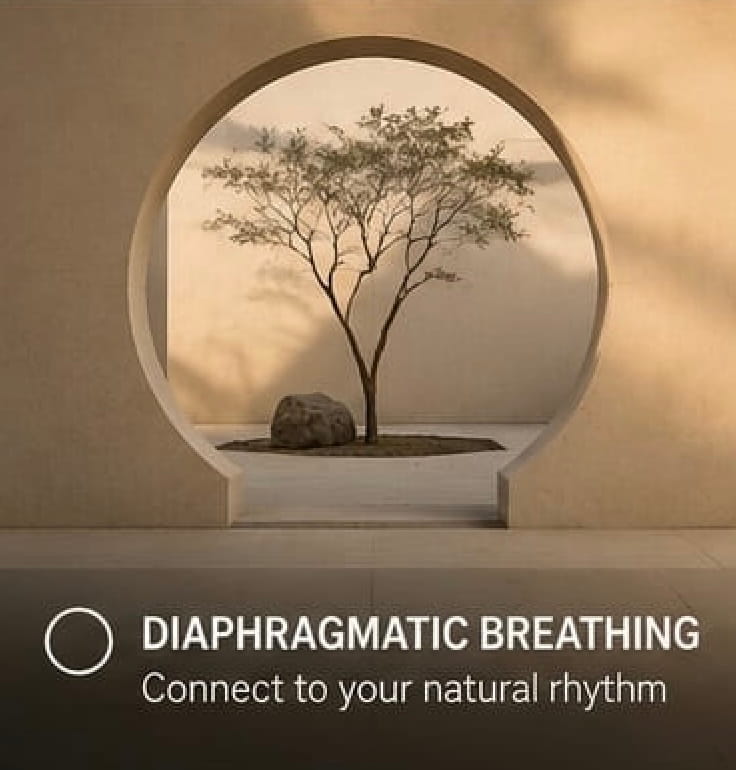
Diaphragmatic breathing invites the body to soften and return to its natural rhythm.
2. Box Breathing
Box breathing uses a steady rhythm. It can help when your mind feels busy by giving you a simple pattern to focus on.
How to practise:
Inhale for four counts.
Pause for four counts.
Exhale for four counts.
Pause for four counts.
Repeat gently for a few rounds.
Do not strain or hold your breath too tightly. If four counts feel too long, reduce the count to two or three.
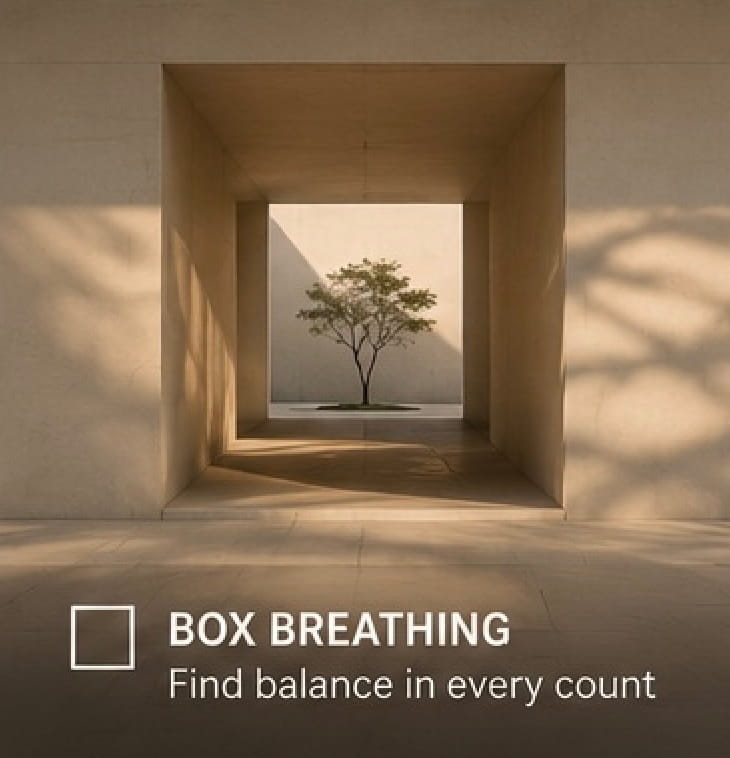
Box breathing gives the mind a simple structure: inhale, pause, exhale, pause
3. Triangle Breathing
Triangle breathing is a simple three-part pattern. It can be helpful if you like having a visual structure to follow.
How to practise:
Imagine tracing the sides of a triangle.
Inhale as you move up one side.
Pause gently across the top.
Exhale as you move down the final side.
You can use this calming exercise before sleep, after work, or before a massage.
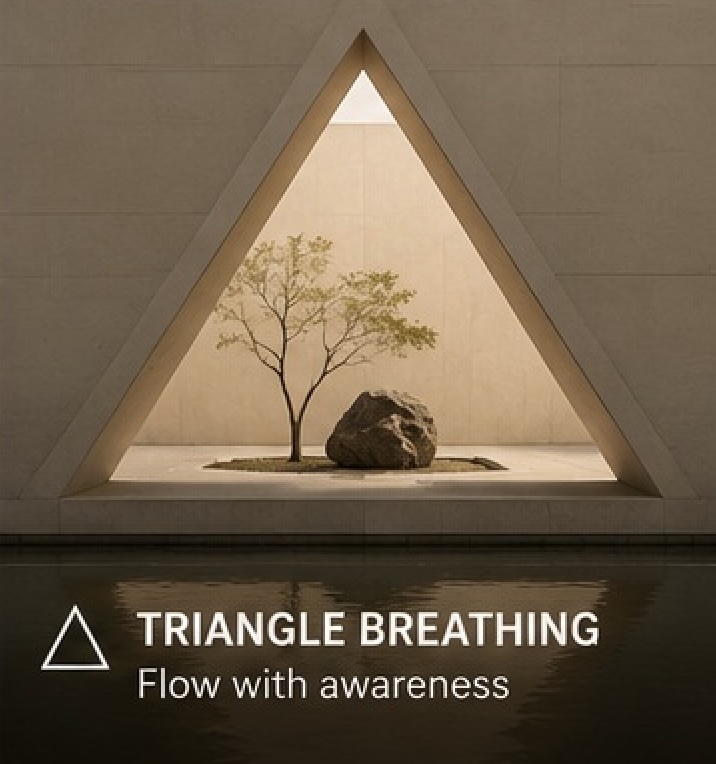
Triangle breathing uses a simple three-part rhythm to help the breath feel steady and present.
4. 4-7-8 Breathing
4-7-8 breathing is a well-known relaxation technique. Because the breath-hold is longer, it may not suit everyone.
How to practise:
Inhale gently through the nose for four counts.
Hold softly for seven counts.
Exhale slowly for eight counts.
Repeat for a few rounds.
If you feel dizzy, uncomfortable, or short of breath, stop and go back to your normal breathing. You can also shorten the count.
5. Alternate Nostril Breathing
Alternate nostril breathing is a yoga practice often used for calming.
How to practise:
Sit comfortably.
Use your finger to gently close one nostril.
Inhale through the open nostril.
Switch sides and exhale through the other nostril.
Continue slowly, alternating sides.
Keep the breath soft and natural. Avoid forcing the inhale or exhale.
6. Simple Walking Breath
Sitting still can be hard for many people. Walking breath is a gentle way to connect your movement and breathing.
How to practise:
Walk slowly.
Inhale for two or three steps.
Exhale for two or three steps.
Let your shoulders soften.
Notice your feet meeting the ground.
You can use this during a short walk, after lunch, between work tasks, or whenever you need to clear your head.
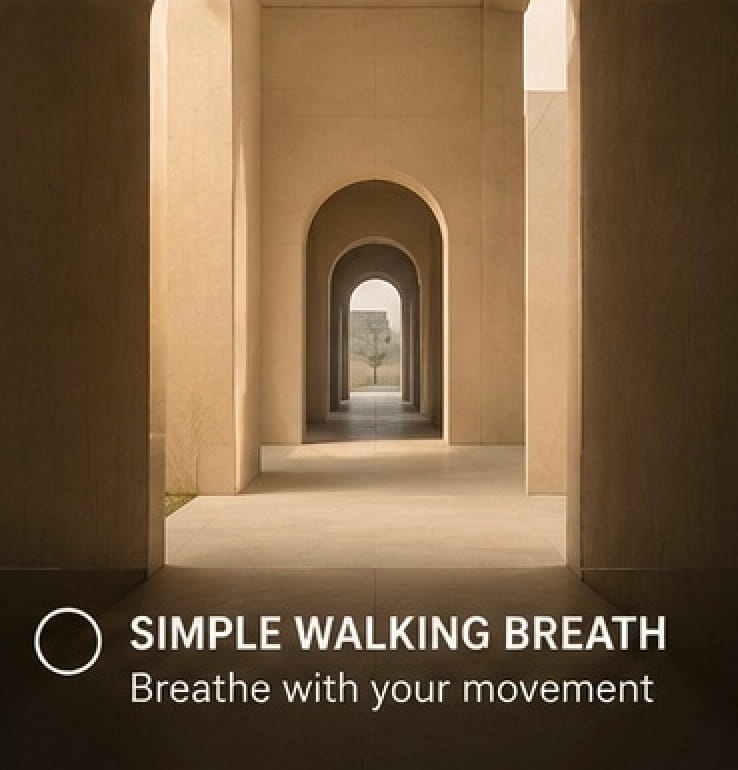
Walking breath connects movement, grounding and awareness one step at a time.
A Note on Advanced Breathwork
Some breathwork methods involve strong breathing, long breath holds, or cold exposure. These practices can feel powerful, but they are not right for everyone. If you are pregnant, feeling unwell, prone to fainting, living with a heart or respiratory condition, taking medication, recovering from trauma, or unsure whether a practice is suitable, seek guidance from a qualified healthcare professional before trying advanced breathwork.
For most people, simple and gentle breathing exercises are enough.
Breathwork should not feel like a performance. It should feel like coming back to yourself.
Breathwork Before and After Massage
Breathing can help you feel more connected during a massage.
Before a massage, taking a few slow breaths can help you settle in and let go of outside stress. During the massage, breathing naturally can help you connect with your body. Afterwards, pausing for a moment can help you notice how you feel before you return to your day.
A simple post-massage breath ritual:
Sit quietly for one minute.
Feel your feet on the floor.
Take one slow inhale.
Exhale gently.
Notice your shoulders, jaw and abdomen.
Drink water.
Move slowly.
This small ritual can help your treatment feel more complete.
Breathwork, Meditation and Body Awareness
Breathwork and meditation often support each other.
Meditation gives your mind a place to rest. Breathwork gives your body a rhythm to follow. Together, they can help you notice how stress, posture, movement, and emotion affect your body.
At Asiatic, we believe calm comes from paying attention, not from forcing it. A quiet room, thoughtful touch, clear communication, slow breathing and time to settle can all help the body feel more supported.
How Asiatic Creates Space for Calm
Asiatic Massage Boutique & Wellness has been part of Islington’s massage and wellness community since 2009. Our work is rooted in Thai massage tradition, professional care and a calm approach to bodywork.
In our Angel and Highbury studios on Upper Street, we design the treatment environment to help you slow down. This same idea also appears in our guide to creating a sacred space at home. Lighting, room temperature, scent, texture, therapist communication, and the pace of care all make a difference. Whether you visit for Thai massage, deep tissue massage, back and shoulder massage, or a slower, relaxation-focused treatment, the aim is the same: to create space for the body to pause.
When to Be Careful With Breathwork
Most breathwork is gentle, but some techniques may not be right for everyone.
Please stop any breathing exercise if you feel dizzy, faint, anxious, short of breath, uncomfortable or unwell.
Seek advice from a qualified healthcare professional before practising breathwork if you are pregnant, have a heart condition, have breathing difficulties, experience panic attacks, have a history of fainting, are recovering from surgery, or have any medical concerns.
Always practise in a safe position. Do not practise breathwork while driving, swimming, bathing or doing anything that requires full attention.
Visit Asiatic for Calm Bodywork in Islington
If you are trying breathwork, massage can support your self-care routine. A treatment gives you time away from screens, noise, and daily pressures, allowing your body to slow down in a calm setting.
Asiatic has two Luxury Massage Boutique & Wellness studios on Upper Street in Islington.
Asiatic Angel
93 Upper Street, London N1 0NP
Asiatic Highbury
262 Upper Street, London N1 2UQ
For current treatments, availability and booking, please visit our treatment or location pages.
Frequently Asked Questions
What is breathwork?
Breathwork is the practice of using breathing exercises to bring awareness to the body and mind. It can be simple, such as taking a few slow breaths, or more structured, such as box breathing or alternate nostril breathing.
Can breathwork help with stress?
Gentle breathwork may help some people feel calmer and more aware of their bodies. It should be practised softly and stopped if it causes dizziness, discomfort or anxiety.
Can massage help with breathing?
Massage does not directly treat breathing problems, but it can support relaxation and body awareness. A calm massage may help clients notice tension in the shoulders, ribs, chest or upper back, which can influence how spacious the body feels.
Which breathing exercise is best for beginners?
Diaphragmatic breathing, box breathing and simple walking breath are good places to start. Keep the practice short and gentle.
Is breathwork safe for everyone?
Not always. People who are pregnant, unwell, prone to fainting, living with heart or breathing conditions, or experiencing panic attacks should seek professional advice before trying more structured breathwork.
Where is Asiatic located?
Asiatic has two studios on Upper Street in Islington: Asiatic Angel at 93 Upper Street and Asiatic Highbury at 262 Upper Street.