Modern performance is not just about training harder. It also depends on how well your body recovers, how clearly your mind focuses, and how often you return to balance after effort.
If you are a runner, gym-goer, cyclist, footballer, tennis player, or just an active Londoner, your body often feels more than just physical tiredness. Long work hours, commuting, screen time, stress, competition, travel, and intense training can all affect how you feel.
Meditation and massage can both be part of a broader recovery routine. Meditation can help you feel calmer, while massage supports relaxation, body awareness, and muscle comfort. Together, they offer a slower pace in a city that is always on the go.
At Asiatic Massage Boutique & Wellness in Islington, we see massage as part of a bigger conversation about recovery, rest, and performance. Our aim is not to push the body, but to listen, adapt, and give it space to relax.
2026 Editorial Update: We have reviewed and updated this article to make it a clearer, more practical guide to meditation, massage, and sports recovery. It now includes safer advice for active clients, athletes, and busy Londoners.
Why Recovery Matters for Active Londoners
Training creates effort. Recovery allows the body to respond to that effort.
Many active people focus on workouts, steps, mileage, strength training, or competition, but often forget the quieter aspects of performance, such as rest, breathing, sleep, mobility, hydration, and body awareness.
Without enough recovery, your body might feel heavy, tight, or overstimulated. Desk work can make your shoulders tense. Running, walking, or commuting can leave your legs tired. Sitting or travelling for long periods can make your lower back feel compressed.
A good recovery routine does not have to be complicated. It can include gentle stretching, breathwork, meditation, massage, rest days, and paying attention to what your body needs.
Meditation and Mental Focus
People often think of meditation as being still, but for athletes and active people, it can also be a practical way to improve focus.
Taking a few quiet minutes can help you notice your breathing, slow your thoughts, and become more aware of tension in your body. This can be helpful before training, after competition, during stressful times, or when you feel overstimulated.
Meditation does not have to mean sitting for a long time. It can be simple, such as:
- Three slow breaths before a workout
- A short body scan after training
- Five minutes of silence before sleep
- Mindful breathing during a walk
- Noticing where the body holds tension
The goal is not to empty your mind. Instead, it is to give yourself enough space to notice what is happening.

A quiet moment of focus can help active people reconnect with the body before or after training.
How Massage Can Support a Recovery Routine
Massage can be a helpful part of a broader self-care and recovery routine for active people. It may help you feel more relaxed, more aware of your body, and more comfortable after physical or mental effort.
At Asiatic, our therapists adapt each session to your reason for visiting. Some people want firmer pressure after training, while others need a gentler treatment to unwind after a busy week. Many come in with tired legs, tight shoulders, or general heaviness from London life.
Massage is not a replacement for medical care, physiotherapy or sports injury treatment. If you have an injury, unexplained pain, swelling, numbness, recent surgery or a medical condition, it is important to seek advice from a qualified healthcare professional before booking a treatment.
The Link Between Touch, Breath and Body Awareness
A thoughtful massage can help you become more aware of how your body feels. Your breathing, the pressure used, and the pace of the session all make a difference.
When a therapist works slowly and communicates clearly, you have time to notice the difference between helpful pressure and discomfort. This awareness is important for active people because it helps them build a more respectful relationship with their bodies.
Instead of pushing through tension, you learn to listen to your body.
At Asiatic, this is part of our approach: thoughtful touch, clear communication, and bodywork tailored to each person.
Massage for Runners, Gym-Goers and Active Clients
Active people often come to Asiatic for many reasons, such as general muscle tension, feeling heavy after a workout, tired legs, back and shoulder tightness, or simply needing a slower recovery day.
Runners might feel tightness in their calves, hips, glutes, or lower back. Gym-goers may notice tension in their shoulders, upper back, or legs. Office workers who train after work can feel the combined effects of sitting, commuting, and exercise.
A massage session can be adjusted to your activity level, pressure preferences, and comfort level. The therapist may focus on specific areas or provide more general treatment to help your body relax.
Thai Massage and Assisted Stretching
Thai massage can be especially appealing to active people because it combines pressure, assisted stretching, compression, and mindful body positioning.
Unlike some oil-based treatments, Thai massage involves more movement and stretching. It suits people who enjoy a more active form of bodywork or want to feel more aware of their body’s movement.
At Asiatic, Thai massage is always adapted to the person receiving it. Stretching is never forced, and pressure is always communicated. The aim is to support comfort and mobility, not push the body beyond its limits.
Deep Tissue Massage for General Muscle Tension
Deep tissue massage may be right for you if you prefer firmer pressure and more focused work on areas of general muscle tension.
This style can help if you feel tight from training, desk work, commuting, or repeated movement. Many people choose deep-tissue massage for a more intensive treatment, but it should always feel controlled and respectful.
A good deep tissue massage is not about pain. It is about using the right pressure, pacing, communication, and paying close attention to how your body responds.
Meditation Before or After Massage
Meditation and massage work well together because both help your body slow down.
Before a massage, taking a few slow breaths can help you settle into the treatment room. After a massage, a brief moment of stillness lets you notice how your body feels before you head back out.
A simple post-massage ritual:
- Sit quietly for one minute.
- Notice your breathing.
- Feel your feet on the floor.
- Drink water.
- Move slowly before returning to your day.
These small moments can help the treatment feel more complete.
*At Asiatic, we believe recovery is not just for athletes. It is also for anyone who feels the quiet pressure of work, responsibility, and modern digital life.
The Asiatic Digital Reset™: A Five-Minute Meditation for Desk Fatigue and Mental Overload
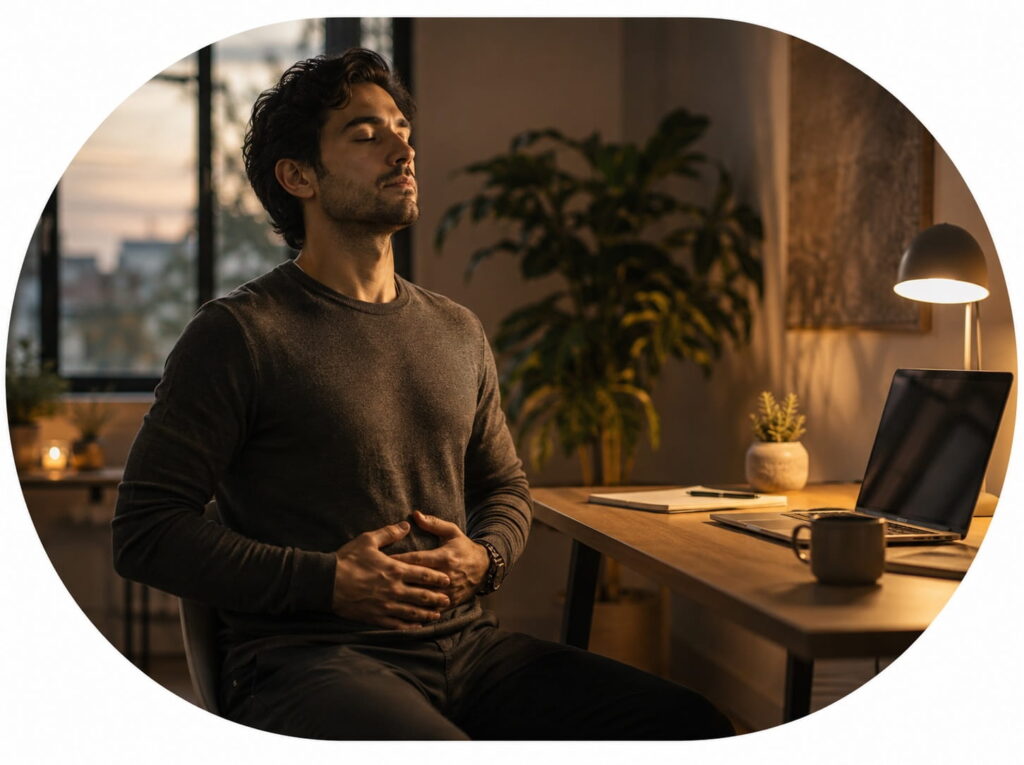
The Asiatic Digital Reset™ is designed for people carrying the quiet pressure of work, screens and modern digital life.
Not all performance pressure comes from sport. Many people feel stress from long hours at a desk, business responsibilities, digital work, being online, solving problems, or carrying the emotional weight of what they have built.
At Asiatic, we understand that modern tension is not only physical. It comes from sitting for many hours, staring at screens, managing deadlines, responding to messages, or carrying the mental load of work that never feels finished.
The Asiatic Digital Reset™ is a simple five-minute meditation for anyone who feels mentally overloaded, has been sitting still for too long, or feels tense after prolonged focus.
How to practise the Asiatic Digital Reset™
Sit comfortably with both feet on the floor. Let your hands rest on your thighs or gently over your abdomen.
Close your eyes, or soften your gaze.
Take one slow breath in through the nose.
Exhale gently through the mouth.
Notice where your body meets the chair. Notice the weight of your feet on the floor.
Allow the floor to hold you for a moment.
Now bring your attention to three areas:
Your jaw.
Your shoulders.
Your abdomen.
With each exhale, let one of these areas soften slightly. Do not force relaxation. Allow the body to receive the message that it is safe to pause.
Now repeat silently:
“I do not need to solve everything in this moment.”
“My body is allowed to rest.”
“I return to myself before I return to the task.”
Take three more slow breaths.
Before opening your eyes, gently move your fingers, roll your shoulders, and notice one small change in how your body feels.
You can use this practice before a massage, after a long work session, between meetings, or at the end of the day. It does not replace rest, movement, medical care, or professional support, but it can be a small ritual to help you reconnect with your body when your mind has been working too hard.
The Asiatic Approach to Performance and Recovery
At Asiatic Massage Boutique & Wellness™, we believe performance is not just for professional athletes. It also belongs to anyone who works long hours, trains after work, walks across London, cares for others, or quietly carries stress in their body.
Our approach is calm, professional, and personal. We listen to your reason for visiting, adapt the treatment to your comfort, and create a space where your body can slow down.
Asiatic has been part of Islington’s massage and wellness community since 2009. Our Angel and Highbury studios on Upper Street provide a calm space for people who value thoughtful bodywork, clear communication, and a slower pace of care.
When to Be Careful
Massage may not be suitable in every situation. Please speak with a healthcare professional before booking if you have:
- A recent injury
- Unexplained pain
- Swelling or inflammation
- Numbness or tingling
- Recent surgery
- A blood-clotting condition
- Fever or infection
- Pregnancy-related concerns
- Any medical condition that may affect massage suitability
Always tell your therapist about injuries, health conditions, medication, pregnancy, pressure preferences and areas you would like them to avoid.
Book a Massage for Recovery and Reset
Whether you are training for an event, coming back from travel, dealing with desk-related tension, or just feeling tired from London life, massage can be part of your recovery and self-care routine.
For clients who want a longer reset, our guide to summer massage packages in London explains how Thai massage, foot massage, deep tissue techniques, head massage and aromatherapy can be combined into a slower treatment experience.
Visit Asiatic Massage Boutique & Wellness on Upper Street in Islington to experience thoughtful massage and bodywork in a calm setting.
Asiatic Angel
93 Upper Street, London N1 0NP
Asiatic Highbury
262 Upper Street, London N1 2UQ
For current treatment details, availability and booking, please visit our location or treatment pages.
Frequently Asked Questions
Can massage help athletic performance?
Massage cannot guarantee athletic performance, but it may support a broader recovery routine by helping clients feel more relaxed, more body-aware, and more comfortable after training or physical demands.
Is meditation useful for athletes?
Meditation may help some athletes and active people with focus, breathing awareness and mental calm. It can be used before training, after exercise or as part of a regular self-care routine.
Which massage is best for active people?
It depends on the person. Thai massage may suit clients who enjoy assisted stretching and pressure. Deep tissue massage may suit those who prefer firmer work on general muscle tension. A therapist can help guide you based on your comfort level and the reason for your visit.
Should massage be painful?
No. Massage can feel firm or intense in some areas, but it should not feel painfully uncomfortable. Always communicate with your therapist so they can adjust the pressure.
Can I book a massage if I have an injury?
If you have an injury, recent surgery, swelling, unexplained pain or a medical concern, seek advice from a qualified healthcare professional before booking a massage.
Where is Asiatic located?
Asiatic has two studios on Upper Street in Islington: Asiatic Angel at 93 Upper Street and Asiatic Highbury at 262 Upper Street.