Estimated reading time: 14 minutes
If you have experienced a painful muscle knot in your upper back, shoulders, or neck after a long day at your desk, you are not alone. Many professionals in London, particularly in Angel, Highbury & Islington, and Central London, face stiffness and persistent muscular tension due to stress, commuting, poor posture, and prolonged periods sitting or travelling.
A muscle knot is a tight area of muscle tissue where fibres remain contracted instead of relaxing. These spots often feel tender, firm, and sore when pressed. Muscle knots can also cause pain that radiates to nearby areas, particularly the neck, shoulders, shoulder blades, and upper back.
Why London professionals experience muscle knots
At Asiatic Thai Massage in Islington, clients often seek relief from upper-body tension related to desk work, commuting, stress, gym recovery, and repetitive strain. Tailored treatments support relaxation, improved mobility, reduced tension, and enhanced physical comfort.
If you are new to Asiatic Thai Massage, booking your first session is simple. Visit our website or call the clinic to schedule a convenient time. During your initial appointment, your therapist will discuss your concerns, assess areas of tension, and customise the treatment to your needs, helping you take the next step toward relief with confidence.
Our experience in therapeutic bodywork
This content is informed by over 25 years of experience in sports massage, therapeutic bodywork, and muscular recovery. Ben Pianese has collaborated with osteopaths, physiotherapists, psychotherapists, movement specialists, and mental performance coaches to understand how stress, posture, movement, and emotional tension affect muscular pain and trigger points. Since 2009, Asiatic Thai Massage in Angel & Highbury, Islington, has supported thousands of London clients with upper-body tension, desk-related stiffness, commuting fatigue, and recurring muscle knots.
Clinical observations from London desk professionals
Over the years, we have frequently worked with London professionals experiencing persistent upper trapezius tension due to prolonged desk work, commuting, and elevated daily stress levels. Many guests present with restricted neck mobility, shoulder tightness, and muscular fatigue localised around the shoulder blades and upper back. Through targeted bodywork, movement awareness strategies, stretching, and consistent therapeutic interventions, clients often report improved mobility, greater physical comfort, and reduced restrictions in daily activities over time.
Deconstructing the tension: the brick in the upper back
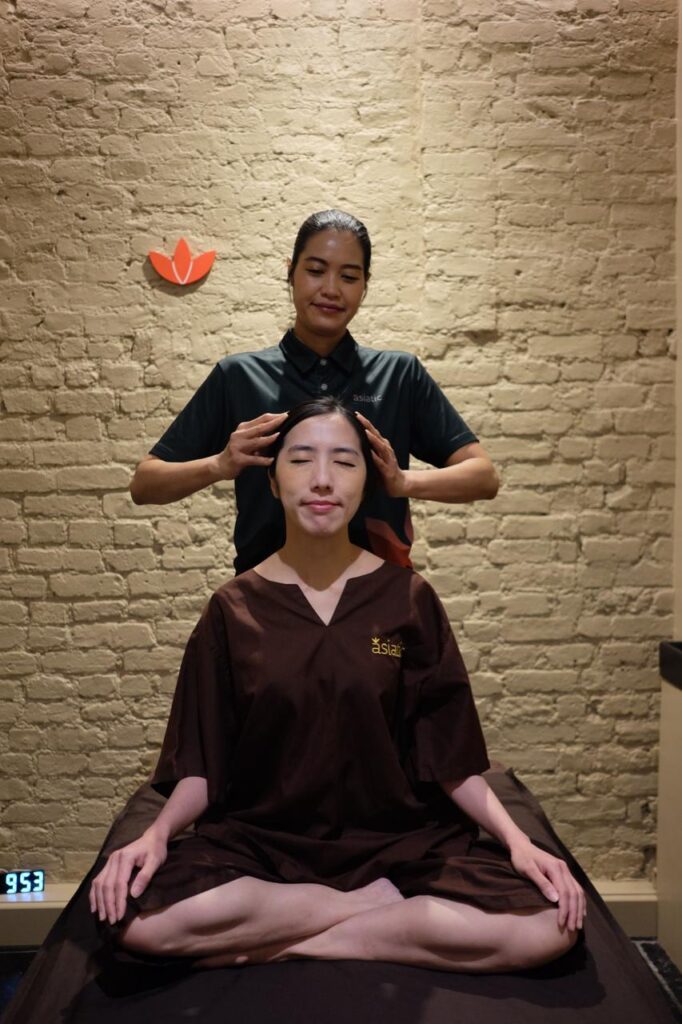
Chronic stress, long hours at a desk, and daily travel can leave your upper body feeling weighed down. It is more than just muscle tightness—it can feel like a heavy brick pressing between your shoulder blades. At Asiatic, our experienced therapists focus on your body’s structure. We go beyond surface relief and work carefully to release deep tension, helping you move more freely and feel lighter, the way light fills a room when a window is opened.
What is a muscle knot?
A muscle knot is not usually a literal knot in the muscle, but rather a sensitive area of tight tissue linked to a myofascial trigger point. These spots can develop when muscle fibres remain in a small spasm or when repeated strain affects the soft tissue. According to the NHS, muscular aches, tension, and soft-tissue discomfort are commonly linked to poor posture, stress, overuse, repetitive strain, and reduced movement throughout the day.
You may notice a knot as:
- A tender lump in a tight muscle
- Pain in the shoulders and neck
- Local soreness in the upper back
- Reduced range of motion
- Stiffness after sitting at a desk or after physical activities
A myofascial trigger point can cause referred discomfort. This means you may feel pain in a nearby area, not just where the knot is.
Understanding the difference between muscle knots and trigger points
While “muscle knot” and “trigger point” are often used interchangeably online, some therapists and manual therapy practitioners distinguish between them. A “muscle knot” is a broad term for a tender or tense area in a muscle. A trigger point is a hyperirritable spot within a taut band of muscle that produces referred pain. This distinction is emphasised in the education of sports massage, osteopathy, physiotherapy, and myofascial therapy.
In practice, detecting a muscle knot involves palpating the muscle to find firm, dense, or sore spots that might not consistently refer pain. In contrast, trigger points are identified as taut bands that, when pressed, cause localised pain and may refer pain to other regions. Observing referred pain patterns or a local twitch response confirms a trigger point, helping practitioners differentiate the two during assessment.
“Muscle knot” broadly refers to tense, constricted soft-tissue regions caused by stress, overuse, poor posture, or fatigue. Prolonged tension can make tissue feel stiff or rope-like, though this does not indicate calcification.
Trigger point therapy aligns with advanced bodywork and requires anatomical precision, recognition of referred pain, thorough muscular assessment, and refined manual techniques taught in sports massage, osteopathy, physiotherapy, and clinical bodywork education. Clients with ongoing muscle pain, referred sensations, or recurring trigger points may benefit from consulting practitioners skilled in musculoskeletal evaluation and therapeutic intervention.
What may happen during muscle knot treatment?
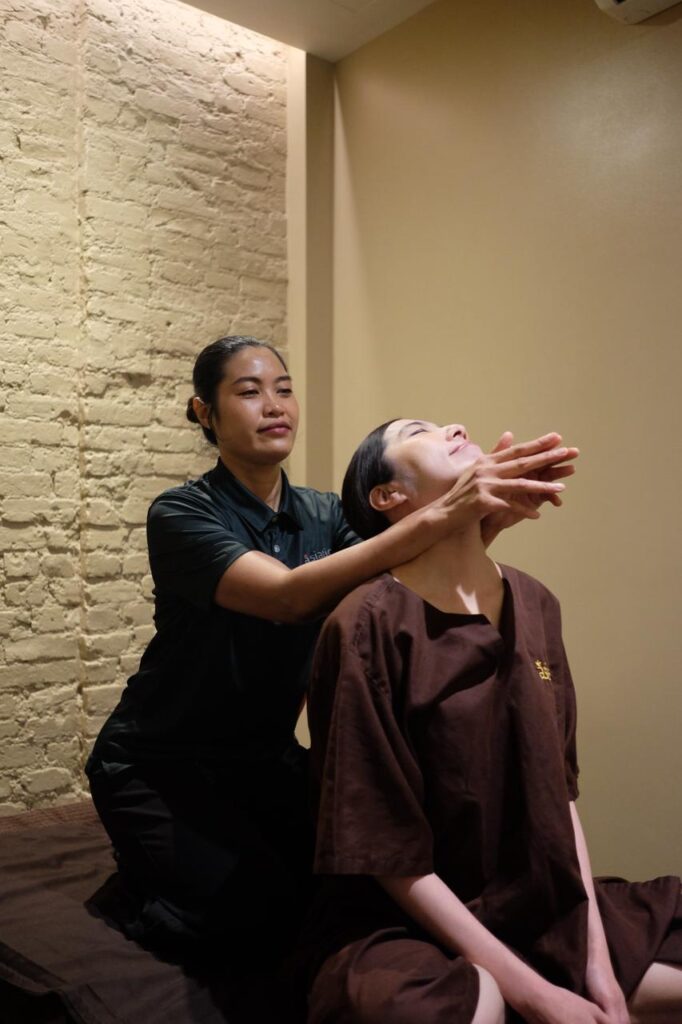
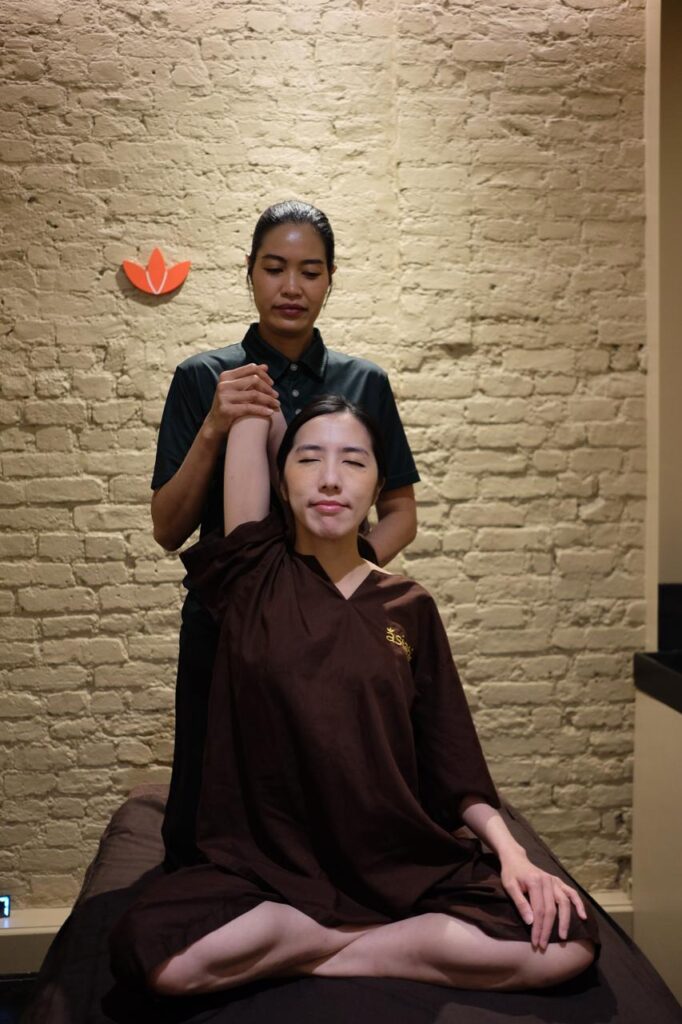
When a muscle feels tight, tender or restricted, a qualified therapist may use careful pressure, slower techniques and assisted stretching to encourage the area to soften. This can help improve comfort, support circulation and reduce the feeling of stiffness.
Some clients describe the area as feeling warmer, lighter or easier to move after treatment. The aim is not to force the body, but to work gradually with the tissue and the client’s comfort level.
Restoring the sliding surface of the fascia
Your muscles are wrapped in a thin layer of connective tissue called fascia. When you have a “knot,” the fascia can become sticky or dehydrated, causing it to adhere to the muscle. Thai bodywork and deep tissue techniques focus on “unsticking” these layers. Thai bodywork and deep-tissue techniques may also help the surrounding soft tissues feel less restricted. By combining pressure, movement and stretching, a therapist can support greater ease of movement and help the area feel more comfortable
Choosing a qualified therapist in London
Why professional standards matter for muscle pain
In a city with countless massage options, it is vital to choose a space that prioritises anatomical knowledge. A qualified ITEC massage therapist understands the difference between a simple “tight muscle” and a “referred pain pattern” that might be stemming from your neck but manifesting in your arm.
The Asiatic Thai massage standard
Our team is trained to recognise the delicate balance between therapeutic pressure and over-stimulation. We believe that effective muscle knot treatment shouldn’t be a “battle” with your body. Instead, we use targeted techniques that work with your nervous system to encourage a deep, lasting release rather than a temporary fix.
A simple 30-second desk stretch for London professionals
The “behind-the-back” trap stretch
If you are reading this at your desk in Central London, try this immediately to drop your shoulders and release the upper trapezius.
- Sit tall, ground your feet, and tuck your chin slightly.
- Reach your right arm behind your back, holding your right wrist with your left hand.
- Gently guide your right arm toward the left while tilting your left ear down toward your left shoulder.
- Hold for 30 deep, mindful breaths into the side of the neck, then switch sides to interrupt the daily pattern of laptop strain.
Simple desk-based stretch designed to help reduce neck, shoulder, and upper trapezius tension caused by commuting, laptop posture, and long office hours in London.
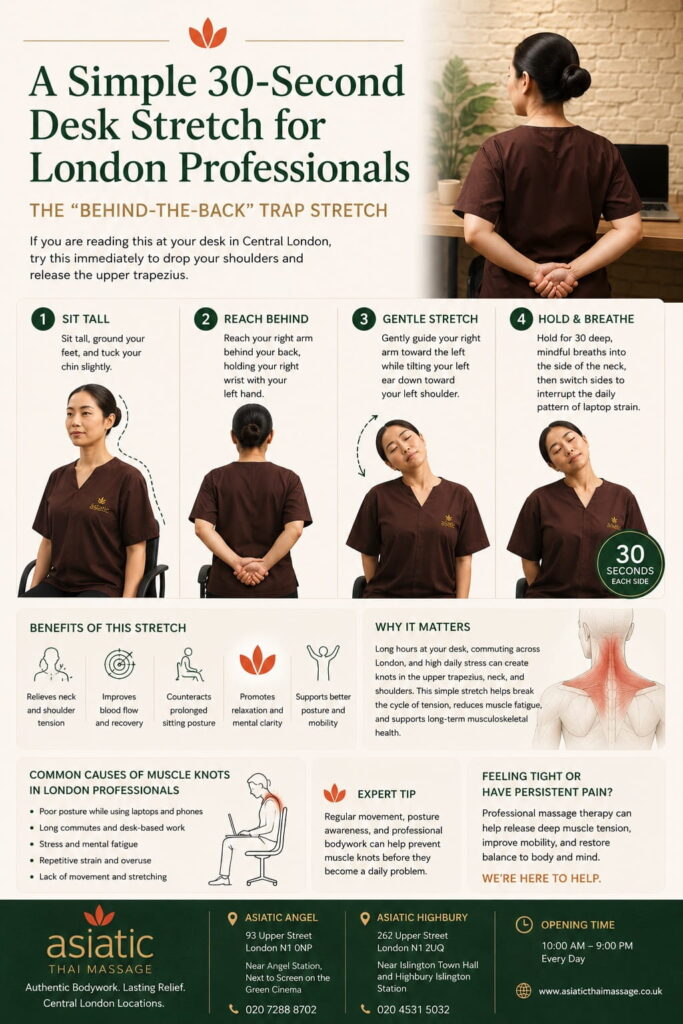
This simple posture-reset stretch is commonly recommended for desk-based professionals in Central London experiencing neck and shoulder tension associated with commuting, prolonged sitting, and muscle fatigue.
What causes muscle knots in modern Life?
There are several reasons muscle knots can develop within the body. In London, many people experience them because of a fast-paced routine that leaves little time for movement and recovery.
Common factors that cause pain and lead to muscle knots include:
- Poor posture at work or while using phones and laptops
- A sedentary routine with too much time sitting at a desk
- Repetitive strain and overuse
- Gym training or physically demanding work
- Stress-related muscle tension
- Lack of stretching and limited muscle movement
- Previous strain or minor muscle damage
Muscle knots are also common among runners, gym-goers, cyclists, and strength-training clients, particularly when recovery, mobility work, hydration, or stretching is neglected between training sessions.
When the body is under strain, muscle fibres can become overworked and irritated. Reduced circulation may limit the tissue’s ability to recover, while tension can keep the muscle contracted. Over time, this can contribute to the development of muscle knots and ongoing myofascial pain.
These muscle ‘knots’ may feel small, but they can have a big effect on comfort, sleep and concentration.
How to get rid of muscle knots safely
Self-care techniques for mild muscle knots
If the knot is mild, home care may help you relieve it before it becomes more stubborn. Useful steps include:
- A warm bath or heat pack to encourage muscle relaxation
- Light movement and aerobic exercise
- Using a foam roller carefully on the surrounding areas
- Taking breaks to get up and move
- Focusing on good posture
In many cases, stretching can help reduce tightness and restore movement. Gentle massage, hydration and rest may also support recovery.
That said, some knots are more persistent. If you have chronic muscle pain, significant tenderness or repeated flare-ups, it may help to see a trained physical therapist, sports medicine professional or massage therapist.
Massage for muscle knot treatment
Why does massage help relieve muscle knots?
Professional massage is one of the most popular options for treating muscle knots because it can help loosen tight tissue, increase blood flow, and reduce stiffness.
A skilled therapist may use controlled pressure to:
- Relieve muscle knots.
- Ease myofascial pain.
- Reduce tension in a tight muscle.
- Support pain relief.
- Improve range of motion.
- Promote deep relaxation
When applied with appropriate pressure, massage therapy may help soften tense tissue and improve circulation in the area. This is especially helpful for clients with upper back pain, shoulder discomfort and stress-related tightness.
For deeper muscular work, Deep Tissue Massage may be suitable when knots feel stubborn or deeply held. If the discomfort is concentrated across the upper body, a focused Back Shoulder Massage can be especially helpful.
Thai bodywork and deep tissue massage for muscle knots
Muscle tension is not always purely physical. Stress, mental fatigue, poor sleep, and nervous system overload can also influence how the body holds tension throughout the neck, shoulders, jaw, and upper back. This is one reason many people feel both physically lighter and mentally calmer after carefully applied bodywork.
At Asiatic Thai Massage, treatment is not one-size-fits-all. Experienced therapists assess where the tension lies, how the body holds stress and what level of pressure feels right for each client.
Traditional Thai-inspired bodywork can be valuable for people who want more than short-term comfort. By combining careful pressure, stretching and attentive technique, it can support flexibility, ease muscle tension and help clients find relief from everyday strain. You can explore Thai Massage in London if you are looking for a treatment that balances therapeutic work with relaxation.
For example, we often see London professionals arriving with deep muscular tension across the upper trapezius, neck, and shoulder blade region after long days spent working at desks or commuting across Central London. In many cases, careful bodywork, stretching, trigger point release, and improved movement awareness can help clients feel noticeably lighter, less restricted, and more comfortable in their posture over time.
Trigger point injections and injection-based options
Trigger point injections for severe or ongoing pain
Some people experiencing persistent or severe symptoms may choose to discuss medical options such as trigger point injections with a qualified clinician. In clinical settings, qualified medical professionals may administer trigger point injections using a local anaesthetic to help manage significant myofascial trigger pain.
Related approaches can include dry needling or a medical needle technique performed by appropriately trained professionals. These treatments are not massages and should always fall under the medical care of a qualified professional or physician.
Massage therapists do not diagnose medical conditions, and it is important to seek advice from a health care provider if you have severe pain, numbness, weakness, unexplained symptoms, or pain that does not improve.
When massage may not be appropriate
Massage therapy may not always be suitable for certain medical conditions, acute injuries, infections, fever, severe inflammation, unexplained swelling, or undiagnosed pain. If symptoms are severe, persistent, or linked to numbness, weakness, dizziness, or sudden changes in mobility, it is important to seek guidance from a qualified healthcare professional before beginning treatment. Responsible wellness care should always prioritise safety, professional boundaries, and appropriate referral when necessary.
Prevent muscle knots before they return
Prevent muscle knots with better daily habits
Learning how to prevent muscle knots is just as important as treating them. Small daily changes can make a real difference.
Try to:
- Keep your shoulders relaxed while working
- Maintain good posture
- Take regular breaks when sitting at a desk.
- Do light stretches during the day
- Stay active with walking or aerobic exercise.
- Avoid staying in one position for too long.
- Support recovery after strenuous physical activities
These habits can help with avoiding muscle overload and encourage healthier movement patterns. When you keep your muscles moving, you reduce the chance of chronic tightness building up.
Why regular bodywork helps prevent recurring muscle knots
If you have experienced a muscle knot more than once, regular bodywork may help prevent tension from building. Ongoing care can be especially valuable for people with desk-based routines, busy schedules or recurring back pain.
For a more calming experience that blends body care with soothing sensory support, Aromatherapy Massage may help settle both mind and body. If you want a longer reset, you can also browse the available massage packages for more tailored wellbeing support. For gentler bodywork approaches during pregnancy, clients may also explore Pregnancy Massage in London.
When to seek professional muscle knot treatment
A professional assessment may be worthwhile if:
- The knot has lasted for several weeks
- You have repeated muscle pain in the same spot.
- The discomfort affects sleep or daily life.
- Home care does not help you get rid of muscle knots.
- You feel pain spreading into the neck, shoulder blade or upper back.
At Asiatic Thai Massage, treatments are tailored with care, professionalism and respect for each client’s comfort. In a clean, calm London setting, expert ITEC & VTCT massage therapists focus on authentic bodywork, attention to detail and a reassuring client experience. Whether the goal is easing tension after commuting, improving mobility after desk work, or simply taking time to reset, the right treatment can help you feel more balanced in body and mind.
You can visit the massage Islington location or contact the team to explore suitable options for your needs.
Conclusion: choosing the right muscle knot treatment
Effective muscle knot treatment starts with understanding what your body is telling you. A painful knot in the back, neck, or shoulders is often linked to tension, overuse, stress, or poor posture. Gentle movement, stretching, better daily habits and professional massage therapy can all help support comfort and recovery.
For many people in London, professional treatment offers a valuable chance to slow down, ease physical tension and feel lighter again. At Asiatic Thai Massage in Angel and Highbury, Islington, long-term client trust is built through professionalism, consistency, anatomical understanding, careful pressure control and genuine care for each client’s experience.
Frequently asked questions
What is the cause of chronic muscle knots for London office workers?
Prolonged static loading—such as holding tension in the shoulders and upper trapezius for hours while working on laptops, phones, or multiple monitor setups. This constant low-level muscular contraction reduces fresh circulation, causing the fascia to adhere to the underlying muscle tissue and manifest as tender trigger points across the shoulder blades and neck.
What is the best muscle knot treatment for the neck and shoulders?
The most effective muscle knot treatment usually depends on the underlying cause of the tension, how long the discomfort has been present, the client’s posture and movement habits, and whether the pain is linked to stress, repetitive strain, or muscular overuse. Professional massage therapy, movement, stretching, posture correction, hydration, stress management, and regular bodywork can all play important roles in reducing muscular tension, improving flexibility, and enhancing overall comfort.
Can massage get rid of muscle knots?
Massage can often help relieve muscle knots or reduce their intensity by easing tension, improving blood flow, and promoting muscle relaxation. Deep-tissue work, Thai bodywork, and focused upper-body treatments may be especially useful for stubborn areas.
How does professional Thai bodywork get rid of stubborn muscle knots safely?
Responsible muscle knot treatment should not feel like a battle with the body. A qualified therapist may use careful pressure, stretching and slower techniques to help soften tight tissue, support circulation and encourage the area to feel less restricted.
Can poor posture cause muscle knots?
Yes, poor posture is one of the most common causes of muscle knots, especially in people who spend long hours sitting at a desk. When the body stays in one position for too long, certain muscles in the back, shoulders, and neck can become overworked, leading to tightness, stiffness, and painful trigger points.
How can I prevent muscle knots from coming back?
To help reduce the chance of muscle knots returning, try to move regularly, improve posture, stretch gently throughout the day, and avoid overuse without enough recovery. Regular massage therapy, gentle exercise, and taking breaks from sitting may also help keep muscles more relaxed and reduce recurring tension.