Estimated reading time: 12 minutes
A full body massage can feel reassuring when you know what to expect. Whether booking your first treatment or returning after a break, some preparation can help you feel comfortable, confident and ready to enjoy the experience.
A good massage is not just lying on a table while someone follows a fixed routine. It is a conversation with the body. Your therapist listens through touch, pressure, rhythm, and response, adapting the session to your comfort, the reason for your visit, and how your body feels that day.
This guide explains what a full body massage usually includes, how to prepare, what happens during the session, and how to choose the right treatment style for your needs.
Quick answer
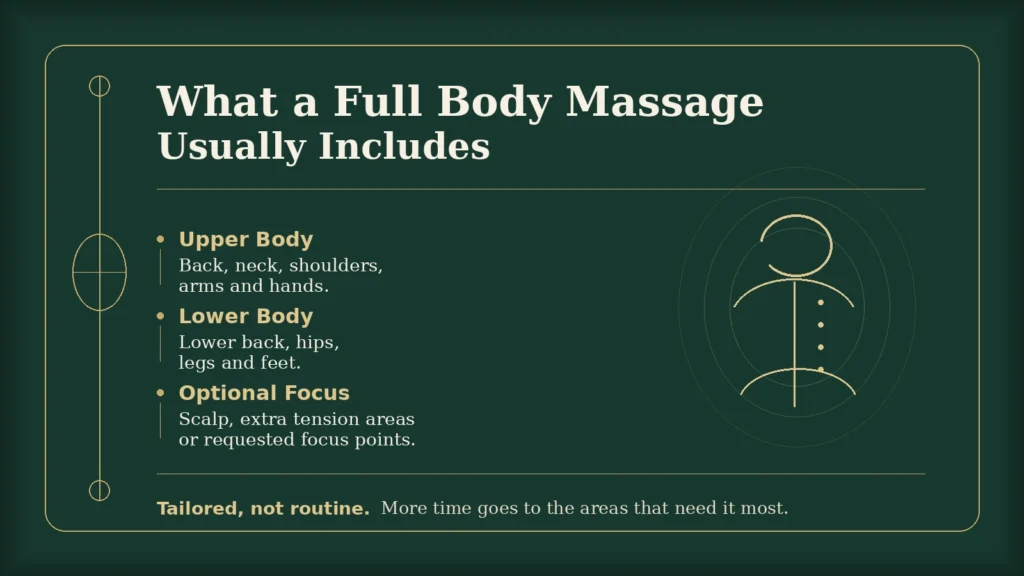
A full body massage usually covers the main areas of the body, such as the back, neck, shoulders, arms, hands, legs, and feet. Depending on the treatment style, it may also include the lower back, hips, scalp or areas that need extra attention.
The pressure, pace, and focus should always suit your comfort level. Before the session, your therapist should ask about your preferences, sensitive areas and anything you want to avoid.
Wellbeing note
This guide is for general wellbeing information only and does not replace medical advice. If you have a medical condition, recent injury, severe pain, swelling, numbness, pins and needles, or worsening symptoms, please speak with a GP, physiotherapist, or an appropriate healthcare professional before booking.
What is a Full Body Massage?
A full body massage works across the main areas of the body rather than focusing on one small area. It may include the back, neck, shoulders, lower back, hips, legs, feet, arms and hands. Some treatments may also include the scalp or extra attention around common tension areas.
The aim is not to work every area with the same intensity. A thoughtful therapist gives more time to areas that need it most while helping the whole body feel balanced and connected. Some clients choose a full-body massage for deep relaxation. Others want firmer pressure, assisted stretching or support for general muscular tightness. The right session should feel personal rather than automatic.
What areas are usually included?
Most full body massage treatments include the larger areas first: the back, shoulders, legs and arms. Depending on the length and style, your therapist may also work on the feet, hands, neck, lower back, hips and scalp.
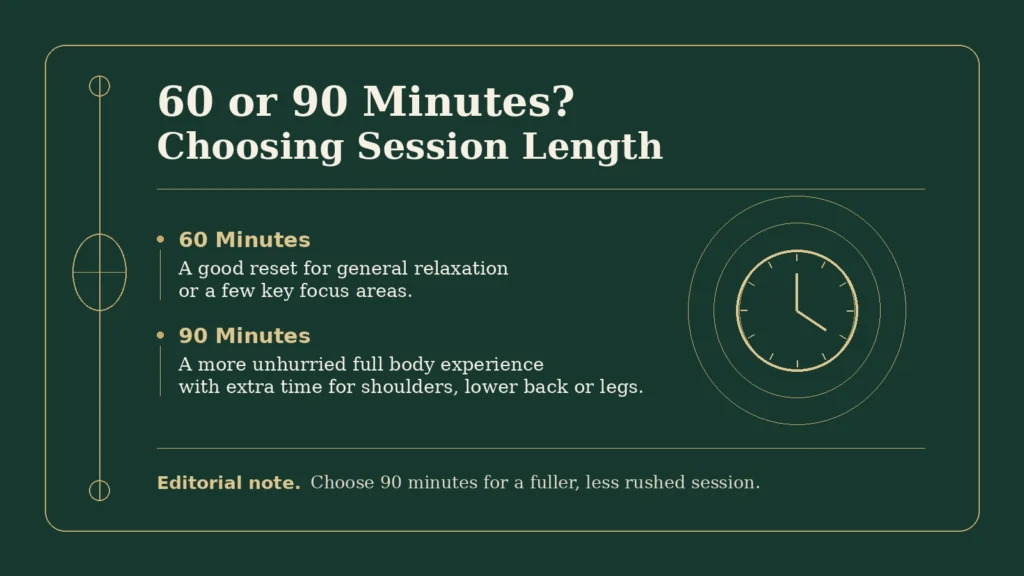
A 60-minute session can give a good overall reset, especially if your therapist focuses on key areas. A 90-minute treatment usually allows for a more unhurried full body experience, with extra time for the shoulders, lower back or legs.
A full body massage does not mean you cannot ask for focus. If your shoulders feel tight, legs heavy, or your lower back needs care, mention this before the treatment begins.
.
Who is a Full Body Massage for?
A full body massage suits many people. It may be a good option if you feel generally tired, tense or heavy rather than having a specific area of concern.
It can be especially helpful for people who sit at a desk for long hours, commute regularly, exercise often, stand for much of the day, carry stress in the shoulders or need time to pause.
Many people book a full body massage when they feel disconnected from their bodies. After busy weeks, long screen days or demanding routines, the body can feel tight without an obvious cause. A full body treatment gives the therapist time to work broadly and help you notice where tension may be held.
Why professional training matters
A professional massage should feel safe, respectful and well-adapted to your body. Training matters because massage is not only about pressure. It involves positioning, comfort, communication, hygiene, sensitivity and knowing when massage may not be suitable.
A trained therapist should adjust pressure, respond to feedback and work carefully around sensitive areas. They should also ask about anything important before the session, including injuries, pregnancy, recent surgery, medical conditions or areas you prefer to avoid.
The best massage experiences often feel effortless to the client, but they are not random. They come from skill, attention and good judgement.
Will I be covered during the massage?
Yes. In a professional setting, your privacy and comfort should always be respected. Your therapist should explain what to expect before the treatment. You will be covered with towels, and only the area being worked on will be uncovered.
If you are new to massage, it is normal to have questions. You can ask your therapist what to wear, how towels will be used or whether a particular area can be avoided. A good therapist will want you to feel informed, comfortable and in control.
How to give feedback during your treatment
Feedback is not rude. It is part of a good massage.
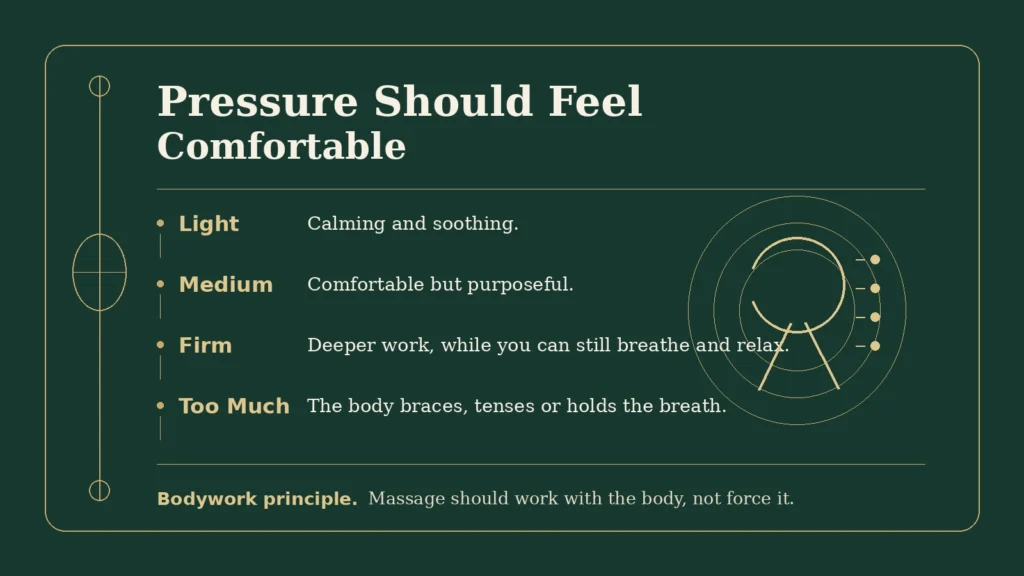
Your therapist may ask if the pressure feels comfortable, but you do not need to wait. If the pressure feels too strong, too light, too fast or too focused on one area, you can say so. A pressure scale can help:
- Light pressure feels calming and soothing.
- Medium pressure feels comfortable but purposeful.
- Firm pressure may feel intense in tight areas, but you should still be able to breathe and relax.
- Too much pressure can make the body tense, brace or hold its breath. That is a sign to ask for less.
- Massage should not feel punishing. The aim is to work with the body, not force it.
What happens before the massage?
Before the treatment starts, your therapist should ask a few questions. This may include your reason for booking, preferred pressure, areas of tension and any areas to avoid.
You may want to mention:
- Neck or shoulder tightness
- Lower back discomfort
- Leg heaviness after walking or training
- Sensitivity around certain areas
- Whether you prefer quiet or gentle conversation
- Whether you want relaxation or firmer bodywork
This short conversation helps shape the treatment and gives you a chance to feel settled before the session begins.
What happens during the massage?
During a full body massage, your therapist may use various techniques depending on the style. These include flowing strokes, kneading, thumb pressure, forearm work, gentle stretching or slower focused pressure.
The treatment may begin with the back and shoulders, then move to the legs, feet, arms and hands. Some sessions include the neck, scalp or hips if appropriate and time allows.
The rhythm should feel considered. Softer treatments feel slow and soothing. Firmer treatments feel more focused and purposeful. Thai-inspired treatments include more pressure, assisted movement and stretching.
A professional massage should always be adaptable. If something feels uncomfortable or you would like more attention in one area, tell your therapist.
What happens after the massage?
After a full body massage, many people feel calmer, lighter or more aware of their bodies. Some feel sleepy, others refreshed and more mobile. Everyone responds differently.
Take your time getting up, drink water and avoid rushing into a packed schedule if possible. If you had firmer pressure, you may feel mild tenderness afterwards. Gentle movement, rest and hydration can help you feel more comfortable.
The best aftercare is simple: notice how your body feels, move gently and give yourself space before returning to the pace of the day.
Which type of massage should you choose?
The right massage depends on how you want to feel and what your body needs.
If you want to relax, aromatherapy or a softer oil-based massage may suit you. These treatments are slower, more calming and designed to help the body settle.
If you prefer firmer pressure, deep tissue massage may be a better choice. This style is often chosen by people who feel tight, heavy or overworked in the back, shoulders, hips or legs.
If you feel tight or restricted, Thai massage or Thai yoga massage may suit you. These treatments can include pressure, assisted stretching and a more movement-led approach.
If your tension is mainly in the neck, shoulders and upper back, a focused back, neck and shoulder massage may be more useful than a full body treatment.
A full body massage is best when you want a complete, balanced session rather than focusing on just one area.
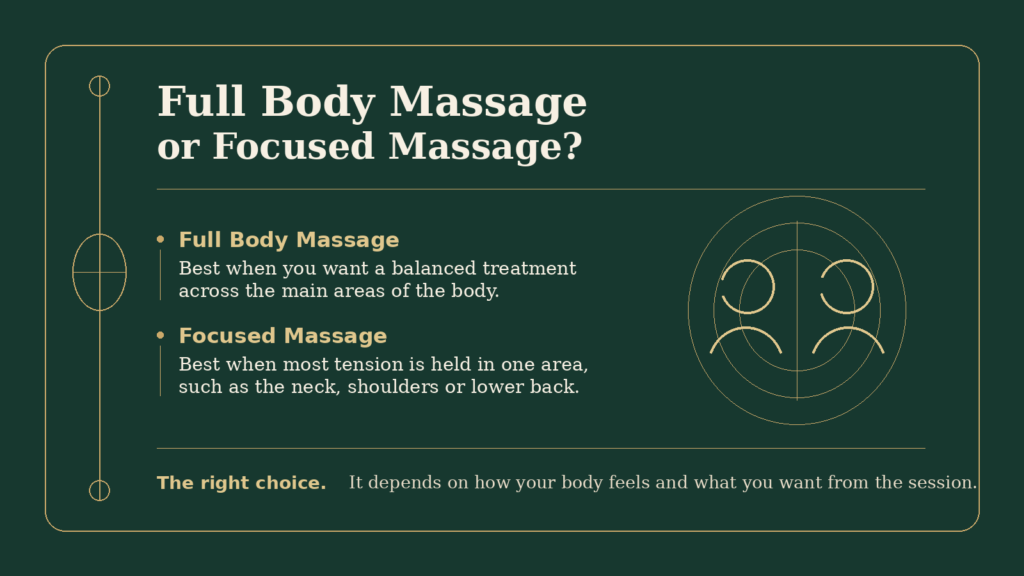
Full Body Massage vs Focused Massage
Full body massage: Best when you want a balanced treatment across the main body areas.
Focused massage: Best when most of your tension is in one area, such as the neck, shoulders or lower back.
Case study: first Full Body Massage after months of desk tension
A client booked her first full body massage after several months of long workdays, commuting and poor sleep. She had no specific injury but felt heavy in the shoulders, stiff in the lower back and tired in the legs.
Before the session, the therapist asked about pressure preference, sensitive areas and whether she wanted a relaxing or firmer treatment. The client chose medium pressure, with extra attention to the shoulders, lower back, and legs.
The treatment began slowly to help the body settle. The therapist worked on the back and shoulders, then the lower back, legs, feet, arms and hands. Pressure was adjusted throughout, with slower work around the shoulder line and gentler pressure where the client felt sensitive.
Afterwards, the client said she felt lighter and more aware of where she held tension. She also realised she often lifted her shoulders while working at her laptop. The therapist suggested taking regular movement breaks, gentle stretching and choosing a 90-minute session next time for more full body work and focused shoulder care.
This kind of case is common. Many clients do not arrive with one dramatic problem but with the accumulated weight of daily life. A well-adapted full body massage can help the body soften, settle, and reset.
Massage at home vs professional massage
Massage at home can be comforting, especially for mild tension. A partner may rub your shoulders, or you may use oil, a massage ball or a foam roller. These are useful self-care tools.
A professional massage is different. A trained therapist can adjust pressure, work safely with the body, and create an environment where you only need to receive treatment. A calm room, clean linen, thoughtful communication and a clear beginning and end can help the nervous system settle. For many people, that is part of the benefit.
How often should you book a Full Body Massage?
There is no single answer. Some people book monthly as part of their wellbeing routine. Others book when they feel tired, tense or in need of a reset.
Frequency depends on your lifestyle, stress levels, physical activity, posture and reason for booking. Someone who trains regularly or works long hours at a desk may choose to have a massage more often than someone who books for occasional relaxation.
If unsure, start with one session and notice how your body feels afterwards. Your therapist may help you decide whether a 60-minute, 90-minute or longer session suits you next time.
When massage may not be suitable
Massage is generally safe for many people, but there are times when it may not be appropriate or when medical advice should come first.
You should seek professional medical advice before booking if you have severe pain, swelling, unexplained symptoms, a recent injury, fever, signs of infection, numbness, pins and needles, or worsening symptoms.
You should also tell your therapist if you are pregnant, have recently had surgery, are taking medication that affects bruising or bleeding, or have any medical condition that may affect treatment.
A professional therapist will always prefer to know this information before the session begins.
Ready to choose the right treatment?
This guide is designed to help you understand what to expect before your first full body massage. When you feel informed, it is easier to relax, ask for what you need and choose the treatment that suits your body.
If you are ready to compare treatment styles, session lengths and studio options, visit our Full Body Massage London service page. You can also explore our massage treatments or contact the team if you are unsure which option to choose.
Key Takeaways
- A full body massage usually includes the back, neck, shoulders, arms, hands, legs, and feet.
- The treatment should be adapted to your comfort, pressure preference and focus areas.
- A 60-minute session can work well for general relaxation, while a 90-minute session allows a more unhurried full-body experience.
Massage should not feel painful, and your therapist should adjust pressure when needed.
If you have severe pain, numbness, swelling, recent injury or worsening symptoms, seek medical advice before booking.
FAQs About Full Body Massage
What should I do before a full body massage?
Arrive a little early, if possible; avoid a very heavy meal beforehand, and tell your therapist about any areas of tension, sensitivity, or discomfort. It can also help to keep your schedule lighter afterwards so you do not have to rush.
How long should a full body massage last?
A 60-minute session can work well for general relaxation or a shorter full body treatment. A 90-minute session usually provides more time for the whole body and extra attention to areas such as the shoulders, lower back, or legs.
Is a full body massage painful?
It should not be painful. Some firmer techniques may feel intense around tight areas, but you should still be able to breathe and relax. If the pressure feels too strong, ask your therapist to adjust it.
Can I talk during a massage?
Yes. Some people prefer quiet, while others feel more comfortable speaking occasionally. The most important thing is to tell your therapist if you would like the pressure changed, an area avoided or extra attention somewhere.
What should I wear to a massage appointment?
Wear comfortable clothing that is easy to put on and take off. Your therapist will explain everything before the session begins, including how you will be covered and what to expect.
Do I need to undress for a full body massage?
Your therapist will explain this clearly before the treatment. You will be properly covered with towels, with only the area being worked on left uncovered. Your comfort and privacy should always come first.
Is full body massage suitable for office workers?
Yes, many office workers choose full body massage because long hours sitting can leave the neck, shoulders, back and hips feeling tight or tired. Your therapist can adapt the session around the areas that feel most affected.
Which massage should I choose for my first full body treatment?
If you want to relax, choose a gentler oil-based treatment such as aromatherapy massage. If you prefer firmer pressure, deep tissue may suit you. If you feel stiff or restricted, Thai massage or Thai yoga massage may be a good option.